
How Many Items Should a Barbecue Menu Have?
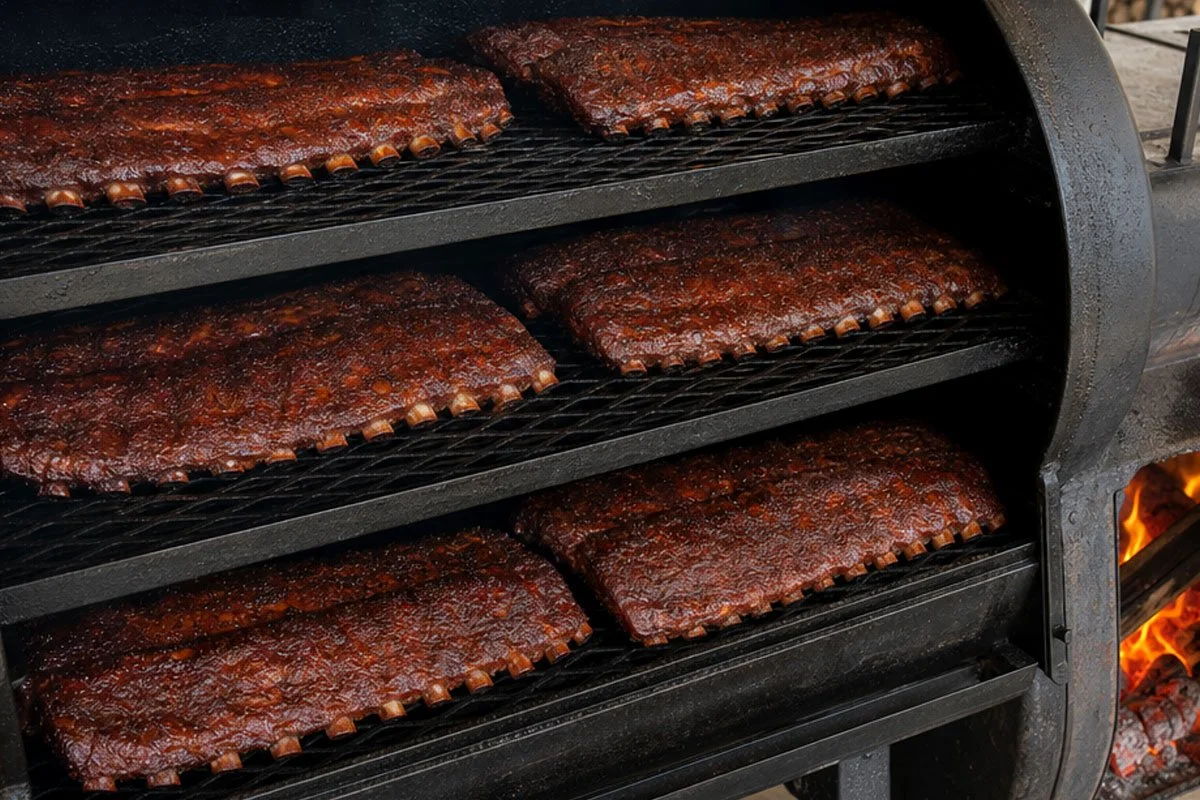
Why smaller, tighter menus can outperform bigger ones in live-fire kitchens.
If you’re thinking about opening a barbecue restaurant, one of the first questions that probably comes to mind is: “How big should the menu be?”
A lot of chefs focus on how many items they should have on their menu. It’s definitely an important question to consider for a number of reasons, but there’s no perfect answer or universal perfect number.
Fortunately, however, there is a clear approach to use as a guide to get you there.
In my opinion, a lot of live-fire barbecue menus are way too big for the way the food is cooked. And while a big menu with pages of choices may sound like a good idea (lots of choice is good, right?), the truth is that it’s probably not a great way to go. Too many options is often bad for a live-fire barbecue restaurant (or any restaurant, for that matter).
The Hidden Cost of More Items
When you start to plan your barbecue restaurant menu, consider that every item on your menu carries a certain amount of weight with it. It’s not only the ingredients you need to create it (and everything that goes along with that — from supply chain to storage), but more importantly it’s the execution of the dish at scale. Something that was easy to pull-off to rave reviews in your backyard doesn’t always translate to a commercial kitchen in a restaurant setting.
In a live-fire cooking environment, adding items means adding a few more things you may not have considered:
More fire management complexity
More prep processes
More timing variables
More opportunities for inconsistency
Unlike a conventional restaurant kitchen, when you’re a live-fire barbecue restaurant you can’t just add another burner. So your capacity to produce is directly tied to your fire set-up considerations.
And fire has its limits beyond an electric or gas stove.
Why Smaller Menus Often Perform Better
Live-fire or not, a tighter restaurant menu is a smart move for many reasons. It allows you to:
Get very consistent
Improve product quality
Reduce waste and
Increase speed of service
It also makes the decision-making process a lot easier for the customer and it allows you to really dial-in on the quality and consistency of your dishes. This is an important point and it matters a lot more than many new restaurant operators think.
A menu that’s easier to navigate often sells better, even if it has fewer options.
The Illusion of Variety
The illusion that more is better is a potential restaurant killer. I have seen quite a few menus expand their offering because they thought that adding more would help turn their fortunes (i.e. save their restaurant).
It’s the flawed assumption that your customers want more choice that can make things more challenging for you. Running a restaurant is a big enough challenge all on its own. For most places, customers come for a few key items. And restaurants that thrive on a massive menu are probably using a food service for heat-and-serve fare. That is definitely not what a live-fire barbecue restaurant is all about. That’s a much different sandbox.
When you have pages of offerings, nothing stands out. And that’s not good.
A Practical Way to Think About Menu Size
To change your mind-set when it comes to menu planning, consider this approach. Instead of asking “how many items,” ask:
How many items can we execute at a consistently high level?
How many distinct fire processes can we realistically manage?
How many items can we produce without slowing service down?
The answers to these questions are usually lower than you expected, but they’re also critical in bringing a dose of reality to your menu planning and restaurant operation.
Menu Focus Drives Performance
A strong barbecue menu is built around a core strategy. The strategy for a live-fire barbecue restaurant is that a small number of items done well (supported by a few complementary options) can lead to a high-performance operation (assuming your processes and personnel are on point).
A long list that tries to cover every preference leads to bottlenecks and slowdowns, along with degrading food quality overall, in my experience.
But when the menu is aligned with the fire you have, it becomes a lot easier to operate and easier to scale. It also becomes a lot more fun because you’ll be running on all cylinders and not as likely to get caught in the weeds during service.
Freedom, not Limitation
Menu size isn’t about limitation, it’s about freedom.
With a lean and focused menu, you’ll be fully in control of your output. The tighter the menu, the more control you have over quality, consistency, and flow. And all of that leads to a certain sense of mental freedom, which will allow you to focus on all of the other challenges that are part of the deal when you’re opening a new restaurant.
In live-fire barbecue, control is just as important for the menu and processes as it is for the fire itself. So do yourself a favour and plan your menu with a little thoughtful intent right from the start.
By Mike Belobradic
Founder Smoke Fire Grill™ and the Northern Barbecue™ Method of Live-Fire Cooking