
Lump Charcoal vs Briquettes: How to Pick the One for You

In live-fire cooking, fuel isn’t just heat: It’s an ingredient.
When you’re new to charcoal barbecue, one of the first decisions you have is how to choose between the two stacks of bags in the store: lump charcoal on one side, briquettes on the other.
A lot of posts on this topic make it about convenience. And while there is an argument to be made there, that’s still too shallow of an assessment.
Most comparisons I’ve seen frame the decision around convenience versus performance. Lump burns hotter. Briquettes burn longer. End of story.
But that misses the real point.
If you cook seriously over charcoal, your fuel isn’t just a heat source, it’s part of the flavour equation.
It shapes combustion.
It influences airflow.
It determines how closely you interact with the fire.
And consideration for these thing might just change how you look at those two different bags of charcoal.
What Lump Charcoal Actually Is
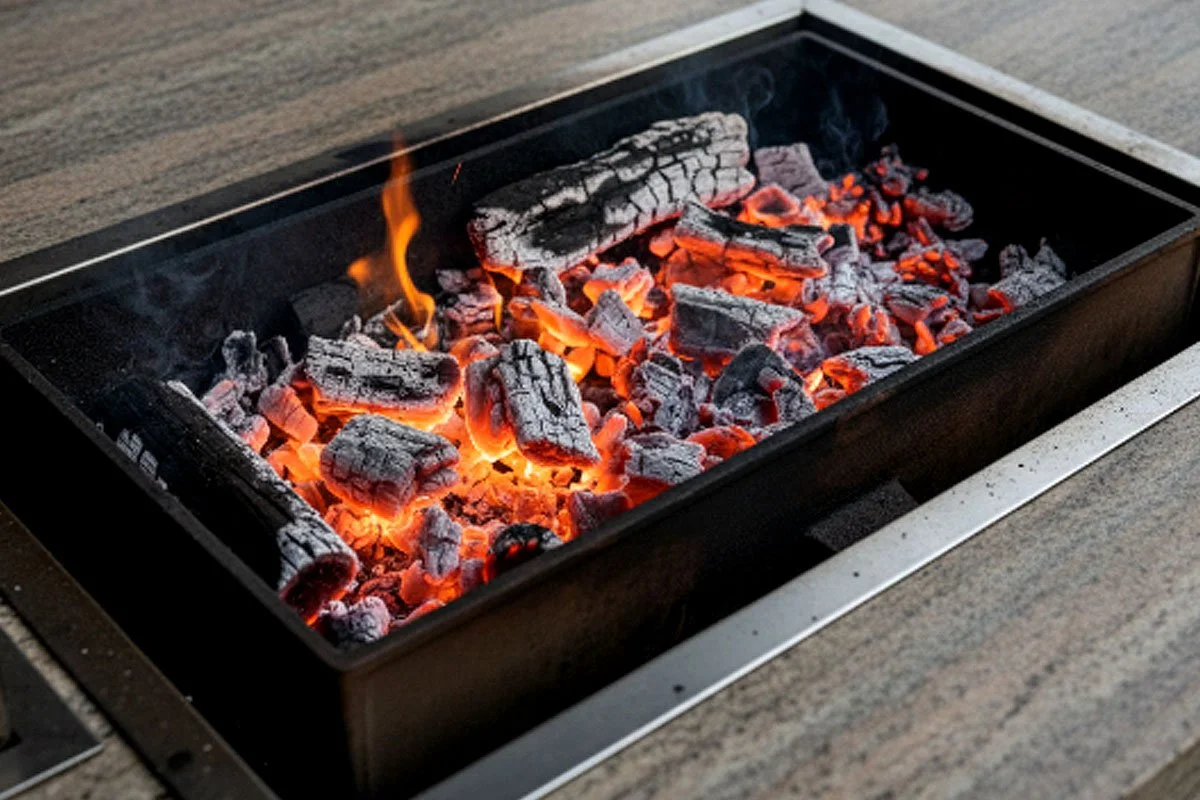
Lump charcoal is hardwood that has been carbonized in a low-oxygen environment. The process removes moisture and volatile compounds, leaving behind mostly carbon — but it remains structurally wood.
It began as oak, or maple, or hickory or sometimes as a hardwood blend.
That origin matters, at least to me.
Each piece is irregular. Density varies. Size varies. Burn rate varies. When you light lump charcoal, you’re lighting real wood that has been transformed — not reconstituted or fabricated.
Lump charcoal tends to light relatively quickly. It burns hot and it reacts fast to oxygen changes. Plus, it leaves less ash than briquettes.
It feels alive because, in many ways, it still behaves like the piece of wood that it was.
What Briquettes are Designed to Do
Charcoal briquettes on the other hand are made from charcoal fines (small leftover particles) that are compressed with binders into uniform shapes.
Depending on the brand, they may include starch binders, mineral additives, or other components that help them maintain structure and produce consistent burn patterns.
The goal with briquettes is to make things easier and more predictable for the cook. Charcoal briquettes offer:
Uniform size
Consistent burn time
Even heat output
Slower reaction to airflow changes
Briquettes are manufactured for stability. That is one of the main design objectives. But using briquettes creates a different type of charcoal cooking environment.
Fuel as an Ingredient
This is a topic that I talk about a lot and it’s also a distinction that a lot of articles skip or miss when they talk about charcoal type (or pellets for that matter – even gas). See my post on the different types of grills here.
Fuel contributes to flavour — not just the smoke from added wood chunks, but through the combustion behaviour itself.
When fat drips onto hot coals, it vaporizes and rises back toward the food. The clarity and intensity of that combustion directly affects the taste of your food. Clean combustion from pure hardwood produces bright, clean flavour. Poor combustion produces harshness and unwanted flavours.
With hardwood lump charcoal, you usually know exactly what kind of hardwood was used (it’s often noted right on the bag, or you can find it on the manufacturer’s website).
Even after carbonization, wood species characteristics influence how the coal behaves — how it ignites, how it radiates heat, how it interacts with rendered fat.
With briquettes, the source material is often mixed and standardized. Remember, the priority is consistent performance, not wood identity.
That doesn’t make briquettes inferior. It just makes them a different beast.
It also underscores that hardwood lump charcoal is much closer to its origin wood, and for cooks like me who care about ingredient transparency and flavour, that matters.
Combustion Quality and Airflow
There’s another practical difference to consider as well: ash production.
Briquettes are designed to burn steadily and predictably, but they also produce more ash. Over long cooks, that ash can actually begin to partially restrict airflow through the coal bed.
Airflow affects oxygen supply. Oxygen supply affects combustion quality. Combustion quality affects flavour.
On a long brisket cook, for example, this can be an issue (especially if you haven’t cooked with briquettes before).
Lump charcoal typically produces less ash, which supports cleaner airflow and more responsive fire control.
Because lump reacts quickly to vent adjustments, it also teaches you something important: how air shapes heat.
That responsiveness can feel less forgiving, but it builds fluency faster and after awhile it just becomes second nature.
The Briquette and Pellet Parallel
There is a useful parallel here that I like to draw as well.
Pellet grills burn compressed wood pellets that are fed mechanically into a fire pot. Like briquettes, pellets are a manufactured fuel designed for consistency and controlled output.
Both briquettes and pellets prioritize standardization.
Lump charcoal prioritizes material integrity.
In other words:
Engineered fuel reduces variability.
Natural fuel requires you to manage variability, but rewards you with its inherent benefits (including the flavour in that first bite).
If your goal is minimal intervention and steady output, engineered fuel systems make sense. There is something to be said for simplicity.
If your goal is to interact directly with combustion (to build coal beds intentionally, to shape heat zones dynamically, to read fire rather than set it, to get the best possible flavour from your fuel), then lump keeps you closer to the process.
Temperature Control: Stability vs Responsiveness
On the scientific end of the scale, we can look at it from a purely technical standpoint:
Lump charcoal
Burns hotter
Adjusts quickly to airflow changes
Creates dynamic heat zones
Requires more active management
Briquettes
Burn more evenly
Maintain steady temperatures longer
React more slowly to vent changes
Offer predictable stability
If you’re cooking low-and-slow for a long period and want steady output, briquettes are a dependable option. It’s why they make good sense for the occasional barbecuer.
If you want to refine your ability to shape and control heat in real time, lump provides faster feedback and will advance your skills to new levels.
Neither is “right” or “best.”
They create different skill environments and have different basic qualities and composition.
Why I Choose Lump
For me, the decision to only cook with hardwood lump charcoal (or split hardwood) comes down to three things:
1. Hardwood Identity
I want to know I’m cooking over real hardwood. Not a reconstituted product. Not a blended composite. Hardwood.
2. Clean Combustion
Less ash. More airflow. Faster transition to clean burn. Clearer flavour.
3. Fire Literacy
Lump demands participation. It responds quickly. If you open a vent too far, you’ll know. If your coal structure is poorly built, you’ll see it. That feedback loop sharpens instinct.
Cooking over lump feels closer to the source material that built live-fire cooking in the first place: wood. If you want to be a fire master, you’ll want to light up hardwood lump. (And you may be interested in the Northern Barbecue curriculum.)
When Briquettes Make Sense
There are practical scenarios where briquettes are a solid choice:
Long, steady cooks where extended burn time matters and you want a forgiving fuel source
Situations where consistent output is more important than responsiveness, but you want to use charcoal and not pellets or gas
High-volume grilling where predictability reduces stress, especially when you don’t grill very often
Charcoal briquettes are engineered for this kind of reliability.
And reliability has value.
The Bigger Question for Lump vs Briquettes
So from my perspective, the real question to ask yourself when you’re trying to decide between lump and briquettes is this:
Do you see fuel as a neutral heat — or as part of the ingredient story?
If all you need is a stable temperature and less fuss, briquettes will give you what you want.
But if you care about hardwood origin, combustion clarity, responsive heat control, the best possible food flavour, and direct interaction with the flame, hardwood lump charcoal aligns more naturally with that approach.
Hardwood lump charcoal keeps you closer to the original wood used when cooking first began. And for cooks who believe core skills matter, that proximity is worth something.
By Mike Belobradic
Founder of the Northern Barbecue™ Method
Visit the Smoke Fire Grill shop for barbecue t-shirts, hoodies and sweatshirts.