
Why Cooking with Oak Wood is the Secret to Perfect Wine and BBQ Pairings
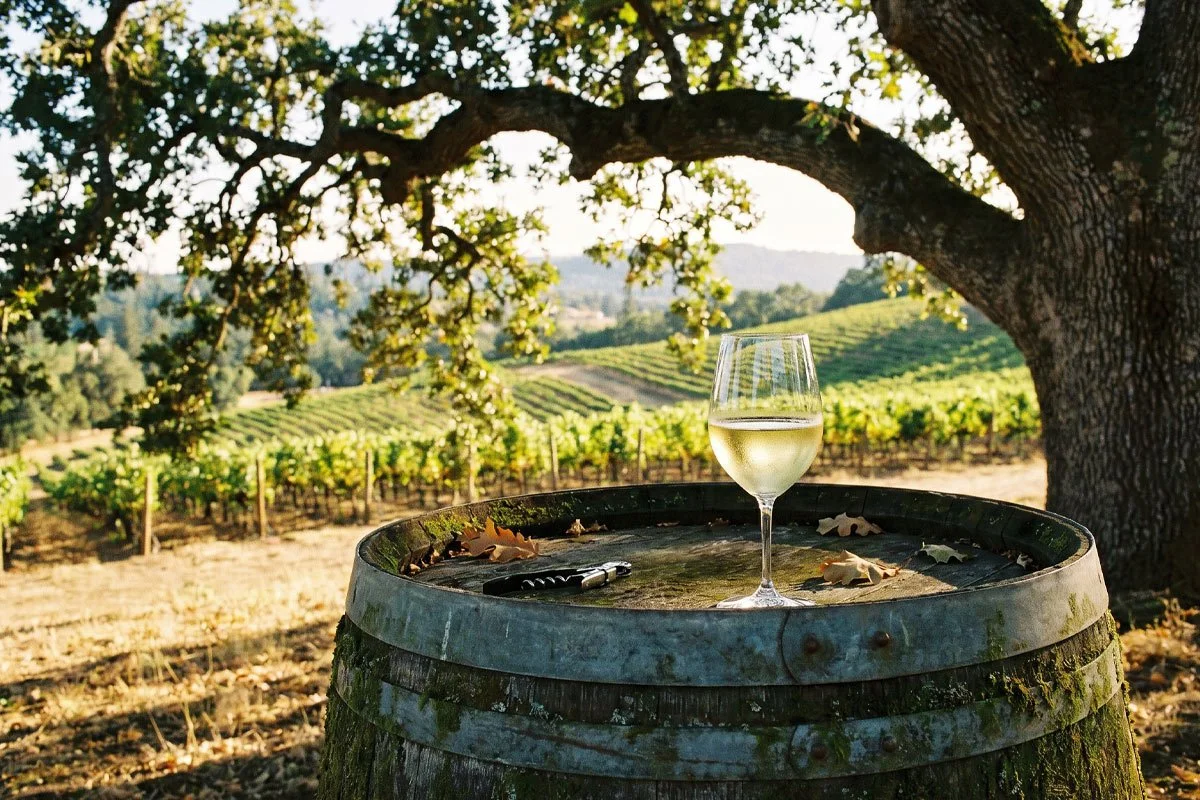
The ultimate wine pairing secret isn’t on your plate or in your glass. It’s in the wood.
When a winemaker describes a Cabernet Sauvignon’s notes of vanilla, warm spice, and toast, they’re actually praising the oak barrel that the wine aged in. When a live-fire cook describes the sweet, rich bark on an oak-smoked brisket, they’re basically throwing praise on the exact same thing.
The wood is identical. The chemistry is identical. The only difference is whether the oak flavour is extracted over years in a cellar or minutes/hours on a live-fire set-up.
This is the hidden harmony of barrel and vine. Once you understand how oak connects the vineyard to the fire, your wine and barbecue pairings will never be the same.
What Happens When Oak Burns (or Toasts)
Oak is made up of several compounds that transform under heat. The most relevant when it comes to fire and wine are lignin, hemicellulose, and cellulose — the structural building blocks of the wood. When heat breaks these down, they release aromatic compounds that we experience as flavour.
The key players in the oak process:
Guaiacol and syringol are the main smoke compounds. They’re the ones responsible for what we recognize as "smoky" flavour on grilled or smoked food. They're phenolic compounds released when lignin breaks down under heat. Every wood produces them, but the ratio and intensity vary by species [link to all hardwoods article]. Oak produces them in a moderate, balanced proportion, which is one reason oak is considered the most versatile cooking wood.
Vanillin is exactly what it sounds like: it’s the compound that gives vanilla its flavour. Oak is naturally rich in vanillin precursors, and when the wood is heated (whether in a fire or a cooperage kiln to make barrels), those precursors convert into vanillin. This is why an oaked Chardonnay smells like vanilla, and why a properly managed oak-smoked piece of pork has a faint sweetness underneath the smoke.
Lactones (oak lactones) are compounds that produce coconut and sweet wood notes. They're particularly prevalent in American white oak (Quercus alba) — the same species widely used for whiskey and bourbon barrels. If you've ever noticed a slightly sweet, almost coconut-like note in an American oak-aged wine or a bourbon, oak lactones are why.
Furfural and related compounds come from the breakdown of hemicellulose and contribute caramel, almond, and bread-like notes — the "toasty" character that winemakers and barrel-makers specifically seek out.
If you’ve ever wondered how wine can have caramel, coconut or vanilla notes (and you thought people were making it up), you may now have a better understanding about how some of these things actually enter the flavour profile.
The Oak Barrel is Just a Slower Fire
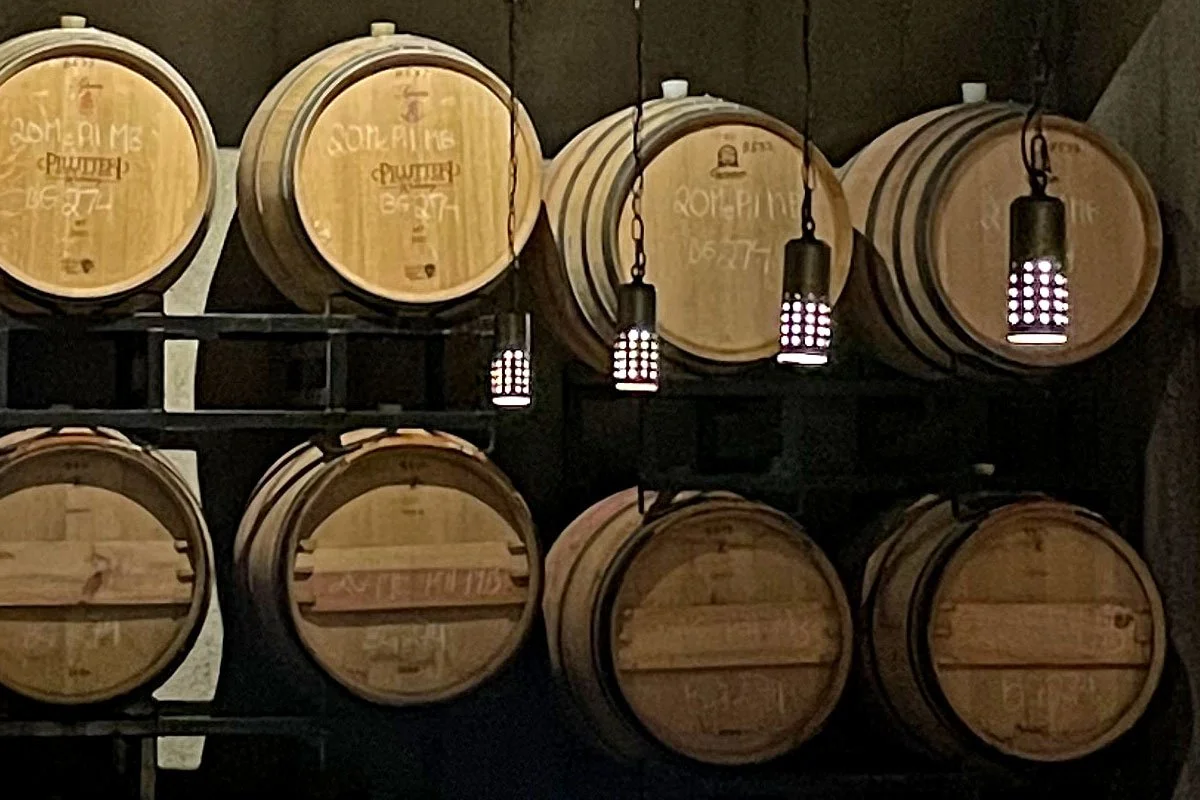
Here's another the key insight if you’re intrigued about non-grape flavours in wine: wine barrel production and live-fire cooking both apply heat to oak to extract the same aromatic compounds. The only real difference is one of degree, duration, and delivery.
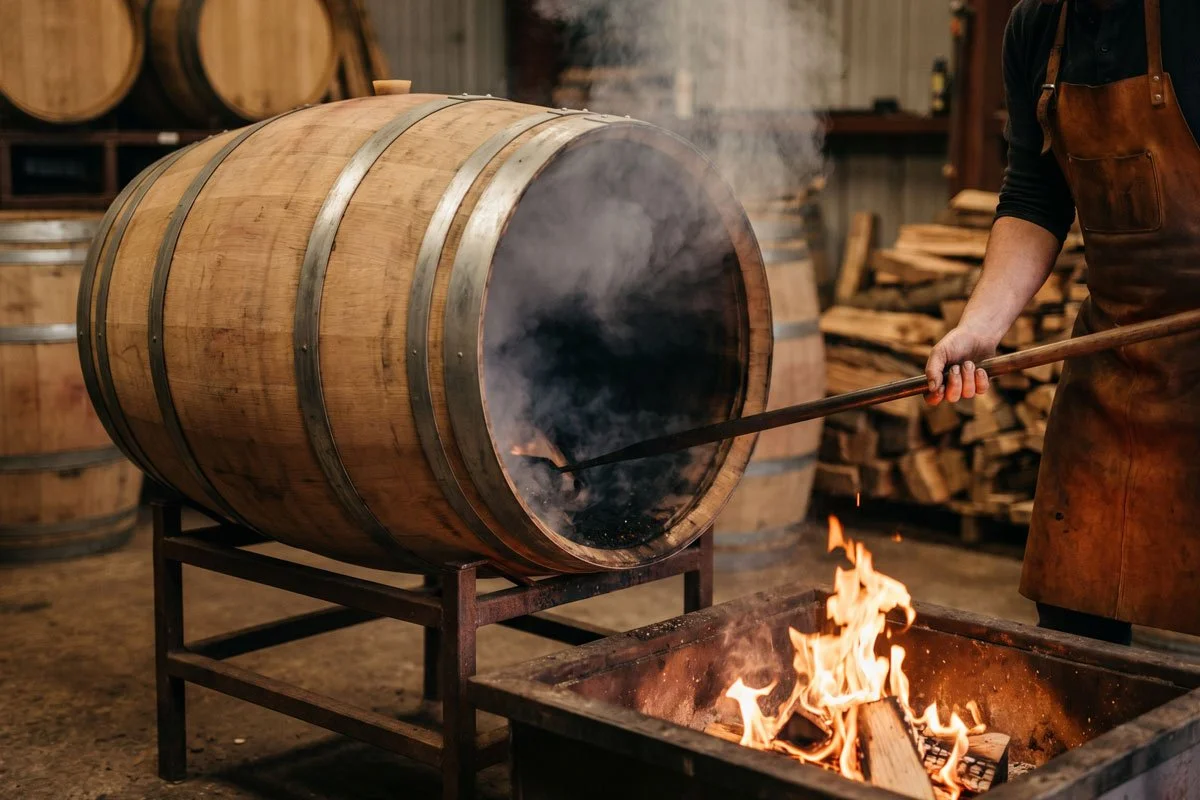
When a cooper makes a wine barrel (or a whisky barrel that may later be used as a wine barrel), one of the critical steps is toasting — holding the inside of the barrel over an open flame to char and caramelize the wood. The level of toasting (light, medium, medium-plus, heavy) directly controls which compounds are activated in the wood, and to what degree. A lightly toasted barrel contributes more of the raw vanillin and oak lactone notes — delicate, sweet, and woody. A heavily toasted barrel pushes deeper into caramel, coffee, and dark spice territory, as the outer layers of the wood begin to char.
Sound familiar? It should. Because when you manage your fire and your hardwood, you're making the same decisions. A lower, slower cook over oak coals is closer to a medium toast — warm, balanced, vanilla-forward. A hotter, more direct oak fire pushes toward heavier toast territory — darker, more char-driven, with more aggressive smoke compounds.
The winemaker controls this through barrel selection. You control it through fire management.
Why Oak is the Most Wine-Friendly Smoking/Grilling Wood
Most smoking woods introduce aromatic compounds that are entirely foreign to wine — the resinous earthiness of mesquite, the intensely fruity esters of cherry, the sharp sweetness of maple. These create contrast with wine, which can be interesting and delicious, but which requires deliberate pairing decisions [link to pairing post].
Oak is different. The compounds oak smoke introduces to food — vanillin, guaiacol, oak lactones, furfural — are the same compounds already present in an oaked wine. The smoke on the food and the oak in the wine are speaking the same language. Rather than creating contrast, they create resonance.
This is why oak-smoked beef or lamb alongside a Cabernet Sauvignon or a Bordeaux-style blend works almost automatically. The wine's oak-derived vanilla and spice notes don't have to bridge a gap to the food — they recognize the same compounds already present on the surface of the meat and harmonize with them.
Matching Toast Level to Wine Style
Once you understand that your wood fire management mimics barrel toasting, you can start using this deliberately when you cook. Here's a practical framework:
Lower, slower oak fire (medium toast equivalent): Produces more vanilla and sweet wood notes, less aggressive smoke. Pairs beautifully with wines aged in medium-toast barrels, such as white Burgundy styles, lightly oaked Chardonnay, or Pinot Noir. The food and wine are operating at the same level of subtlety.
Hotter, more direct oak fire (medium-plus to heavy toast equivalent): This produces more char, more caramel, and more aggressive phenolics. This approach pairs best with wines aged in heavier toast barrels, like a big Cabernet Sauvignon, Malbec, Zinfandel, or full-bodied Syrah. The intensity of the smoke matches the intensity of the wine's oak treatment.
Oak wood chunks on lump charcoal: When you’re smoking meats, using hardwood lump charcoal as the heat base and adding oak chunks for smoke flavour is yet another way to go. You get the clean, high heat of lump charcoal with a controlled layer of oak aromatics on top. This is the most precise method for managing your effective "toast level" at the fire.
A Note on Oak Varieties
We tend to say oak (or maple or hickory), but not all oaks are the same, and the differences matter for both winemakers and live-fire cooks.
French oak (Quercus petraea/robur) This oak has a tighter grain, which means slower extraction in a barrel — more subtle, spice-forward, less coconut-sweet. As a smoking wood, French oak burns cleanly and produces an elegant, moderate smoke. It's the choice when you want refinement rather than punch.
White Oak (Quercus alba) This oak has a wider grain and higher lactone content — meaning more vanilla, more coconut sweetness, and a more immediate impact. As a smoking wood, it's assertive and sweet. American oak is the traditional choice for whiskey barrels and for bold, fruit-forward wine styles. Over the fire, it suits big cuts and robust wines.
Most smoking wood sold as "oak" in North America will be white oak or red oak (Quercus rubra). Red oak burns well but is slightly more tannic and less sweet than white oak. So red oak can be a good choice when you want oak character, but without the sweetness.
Everything About Oak, Wine and Smoke
The next time you open a bottle of oaked wine beside a live-fire cook, you're not just pairing food and wine: you're bringing two applications of the same ingredient — oak — to the same table. The winemaker extracted oak's character slowly, over months or years, through a barrel. You extracted it in minutes, through fire. The aromatic compounds that result are related, and your palate recognizes that relationship even if your mind doesn't.
This is what the Northern Barbecue™ Method means when it treats fuel as a flavour decision. Oak isn't just what you cook over. It's a seasoning — one with a direct, documented relationship to what's in the glass beside your plate.
Read more posts about Smoke Fire Grill and Wine.
By Chef Mike Belobradic, creator of the Northern Barbecue™ Method and WSET Level 1 certified in wine and spirits. Contact me for media inquiries, winery speaking engagements or other inquiries.