
Huli Huli Chicken Recipe
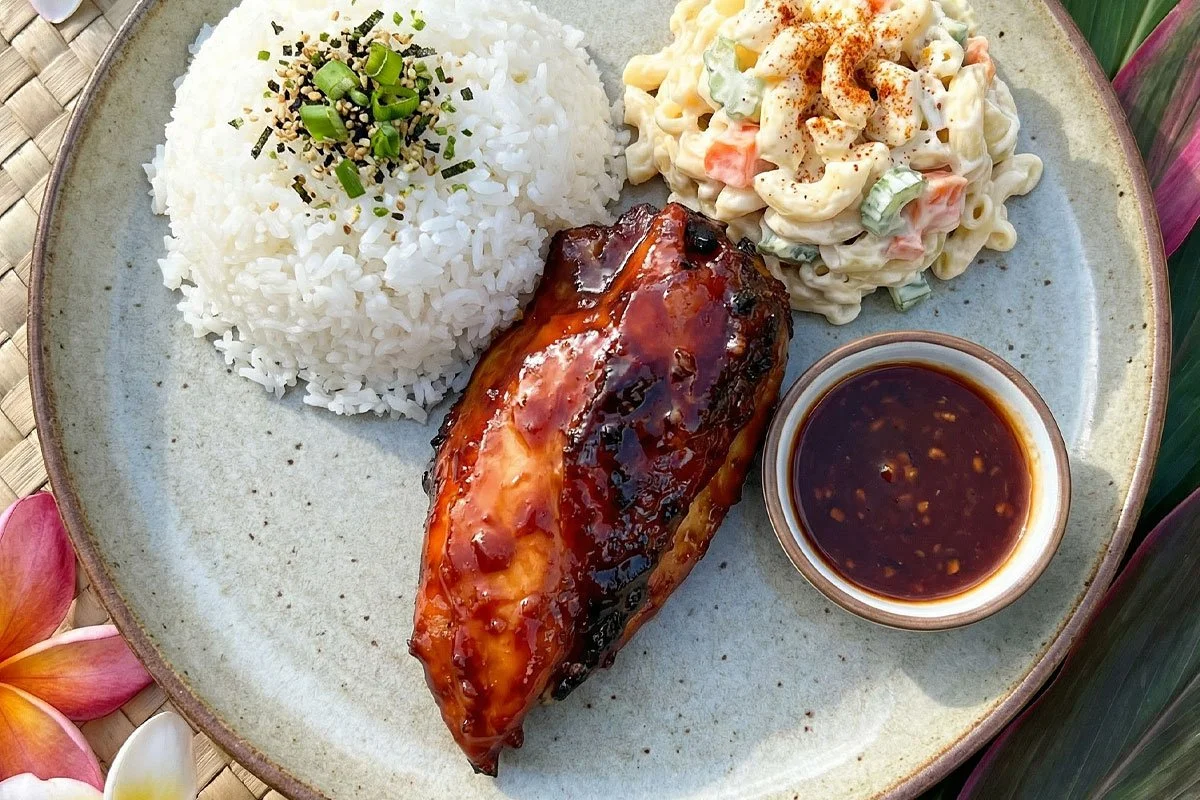
Hawaiian Roadside BBQ at Home by Chef Mike Belobradic
Some of the best food memories come from the simplest places.
The first time I tried Huli Huli Chicken was on vacation on Oahu. I saw a roadside grill setup with hot burning coals and smoke rising, so obviously I stopped to check it out. When I pulled over, I found chicken slowly cooking on a grate over open hardwood flames and charcoal. The chicken was lacquered with a sweet-savory glaze and the sweet smell of smoke drew me in. Then, one bite and I was hooked.
After a bit of negotiation, I managed to get enough of the recipe from this roadside Hawaiian BBQ chef to send me on my way to recreate this authentic Hawaiian Huli Huli Chicken on my home setup.
Back home, recreating that flavor became a bit of an obsession. After a lot of experimentation — and a many chunks of kiawe wood I brought home in my luggage (bagged and sealed for customs) — this version has become my go-to BBQ Huli Huli Chicken recipe. It’s juicy, deeply flavorful and endlessly crowd-pleasing.
If you’ve never made Huli Huli Chicken before, this recipe will show you exactly why it’s a Hawaiian classic. Make sure you say “Huli Huli” with each turn (guests love it).
A Brief History of Huli Huli Chicken
“Huli” means “turn” in Hawaiian, and that’s exactly how this chicken is traditionally cooked — chicken breads (bone-in, skin on) flipped again and again over live fire while being basted with a homemade glaze. The Huli Huli Chicken method was popularized in the 1950s and remains a staple at roadside grills, fundraisers and beachside cookouts across the Hawaiian Islands.
The magic lies in the balance: salty soy sauce, sweet pineapple, tangy vinegar, garlic, ginger and smoke — all working together without overpowering the chicken.
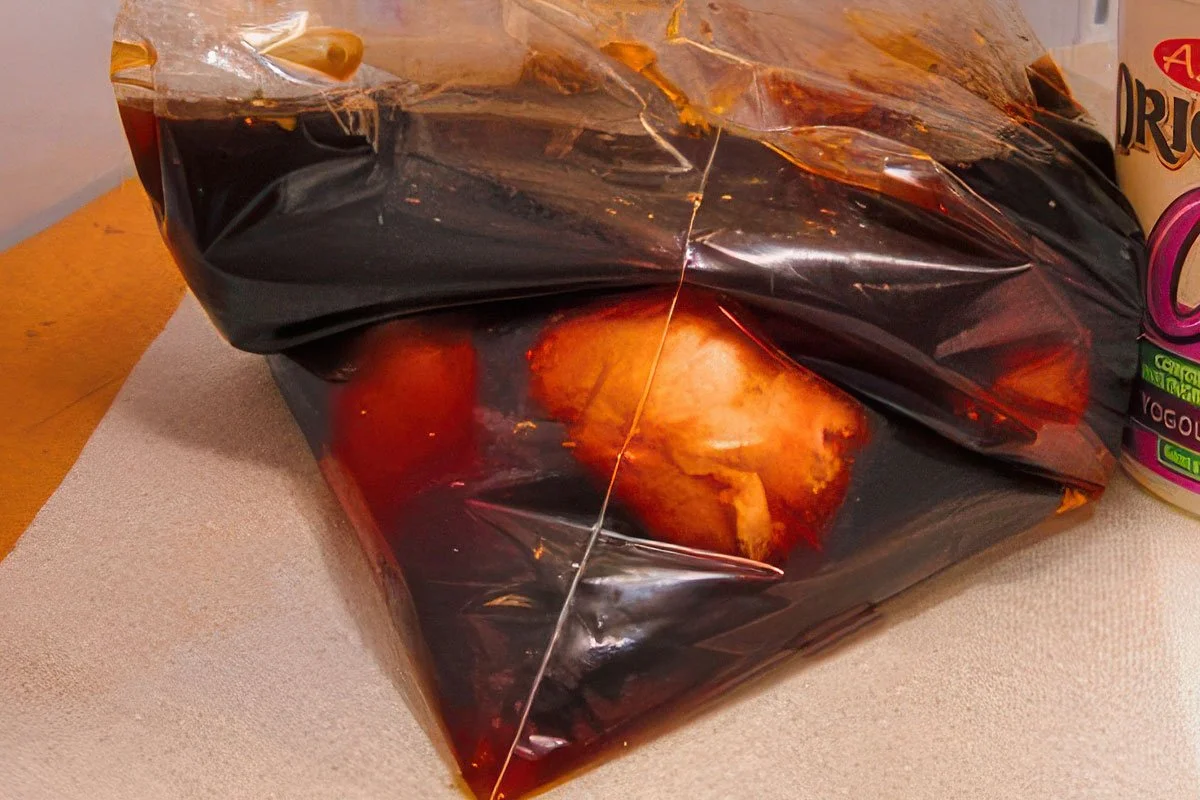
Huli Huli Chicken in the brine.
Huli Huli Chicken Recipe
This recipe is for six bone-in, skin-on chicken breasts. Be sure to use fresh garlic and ginger, it makes a difference.
Brine Ingredients
1 quart (1000 ml) cold water
1 cup soy sauce
1 teaspoon vegetable oil
3 garlic cloves, minced
1 teaspoon freshly grated ginger
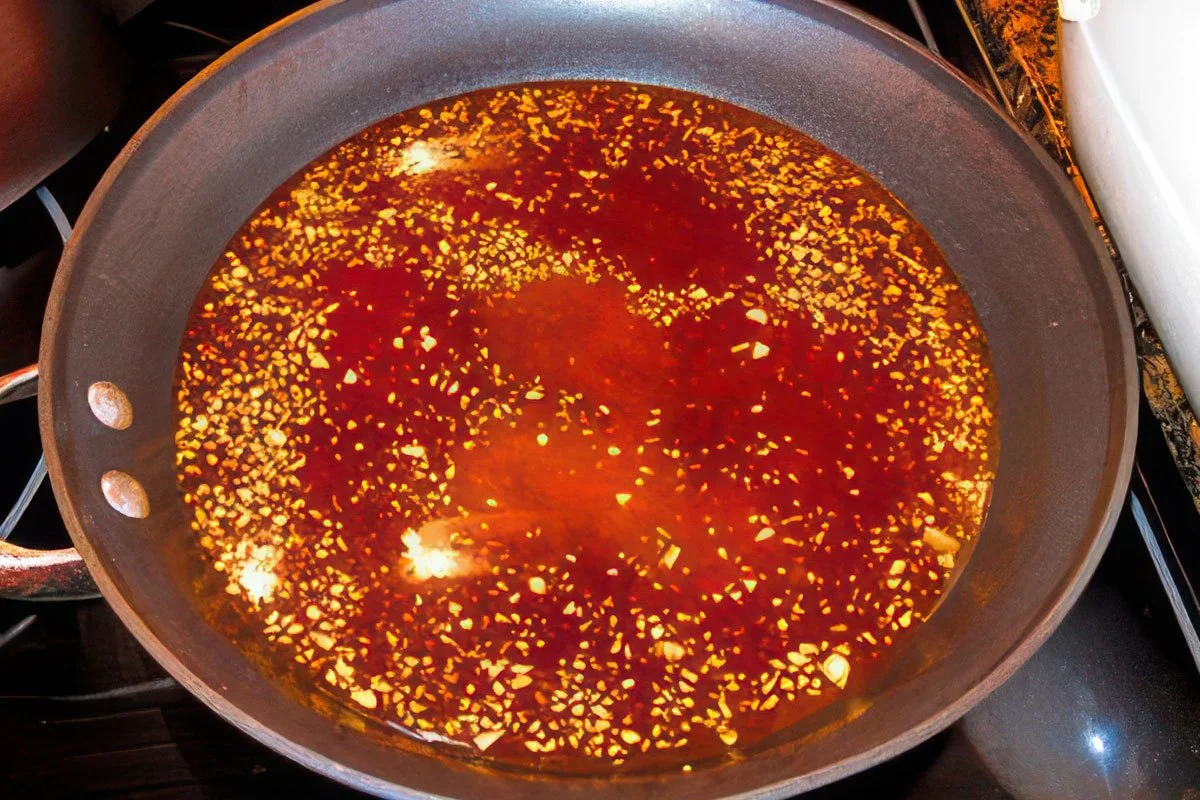
Huli Huli Chicken glaze preparation.
Glaze Ingredients
18 oz pineapple juice
1/4 cup packed light brown sugar
1/4 cup soy sauce
1/4 cup ketchup
1/4 cup rice vinegar
4 garlic cloves, minced
2 tablespoons freshly grated ginger
1/2 teaspoon lemon juice
1 teaspoon Sriracha (optional, for heat)
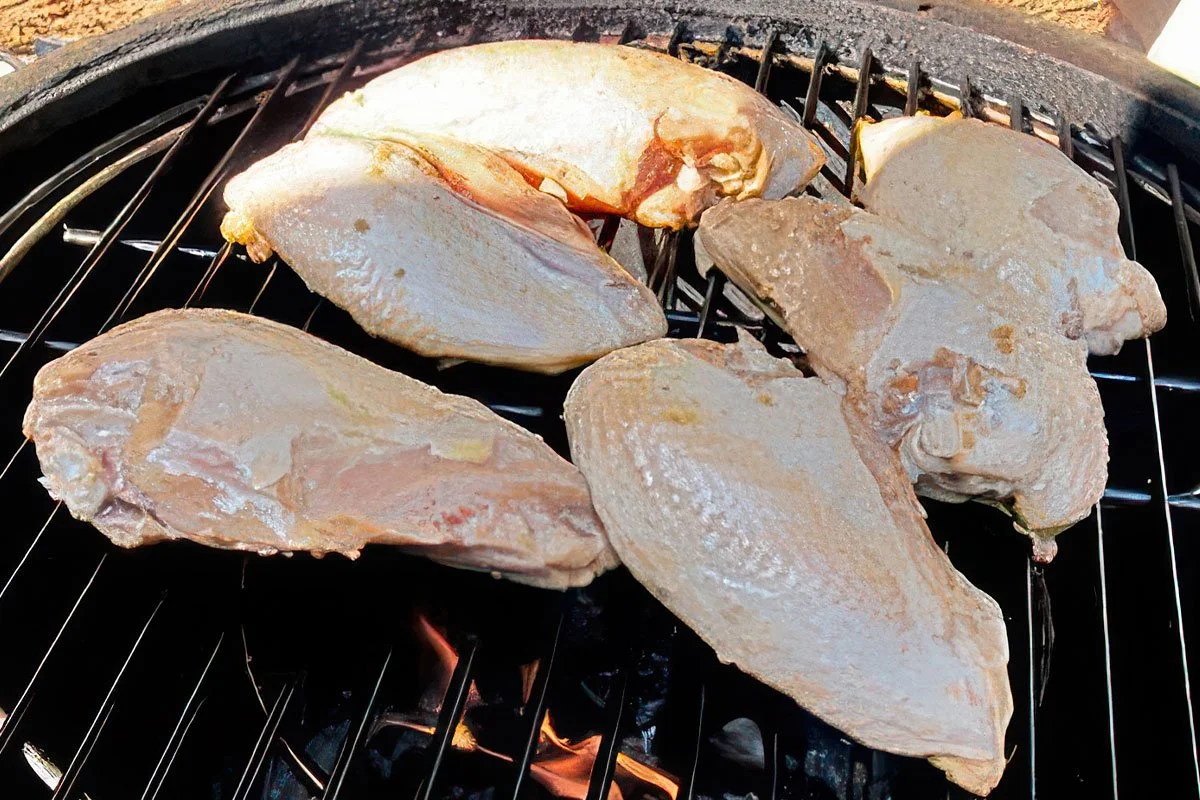
Brined Huli Huli Chicken on the grill.
Huli Huli Chicken Preparation
Prepare the Chicken
Rinse chicken pieces and pat dry with paper towels.Make the Brine
Combine all brine ingredients in a saucepan and gently warm over medium heat until the flavors meld.
Do not boil.
Allow the brine to cool completely.Brine the Chicken
Place chicken in a large zip-top bag or container and pour in the cooled brine, ensuring all pieces are submerged.
Refrigerate for 4 to 12 hours (the night before you cook is ideal).Make the Glaze
Combine all glaze ingredients in a saucepan.
Simmer and reduce until the glaze thickens to a syrupy consistency. Do not go too far (there’s a bit of an art to getting it right, so pay attention while reducing and taste along the way — you want to stop before it gets bitter)
Set aside a small portion for serving and reserve the rest for basting.Preheat the Grill
Preheat your grill or ceramic Komodo cooker (I use my Big Gree Egg for this) to 350°F, and set your grill for direct cooking with a raised grate.
Add kiawe wood chunks or chips (you can substitute a mesquite blend if you don’t have kiawe for smoke, more on this below).Grill the Chicken
Remove chicken from the brine (do not pat dry).
Arrange chicken on the grill, skin side up and start your cook.
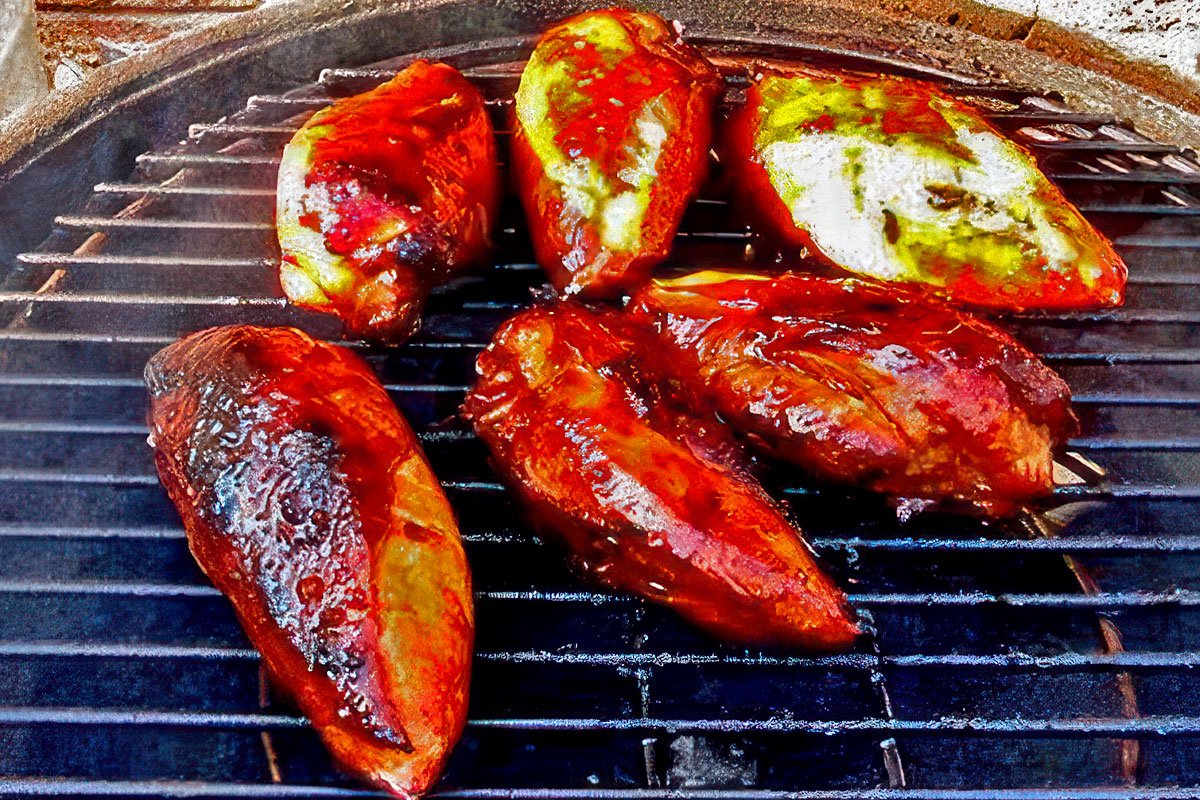
Huli Huli Chicken nearing completion (that is overexposure of the image due to sun on the top right breast).
Turn (flip over) the chicken every 10 minutes — this is the “huli huli” part.
After each turn/flip, baste generously with glaze and, of course, let everyone know with a hearty “huli huli.” Though the magnetic sweet smell will have reached them by then.
Check for Doneness
Chicken is done when an instant-read thermometer inserted into the thickest part reads 165°F (74°C), not touching bone.Serve
Rest briefly, then serve with the reserved glaze on the side.
Choosing Your Woodchips for Huli Huli Chicken
Kiawe vs. Mesquite – What’s the Difference?
While the main component for your fire should be hardwood lump charcoal (unless you live in Hawaii, where you can go fully authentic), you will want to add woodchips or chunks for extra flavor.
Kiawe is the authentic wood and I always have a supply on hand straight from Hawaii. You will often see kiawe described online as simply the Hawaiian word for mesquite — but that is not accurate.
While they are closely related, kiawe and mesquite are not the same species.
Hawaiian Kiawe: Prosopis pallida
Common Mainland Mesquite: Prosopis juliflora, Prosopis glandulosa
All of these woods belong to the Prosopis family, but they are distinct species with different burning characteristics and flavor profiles.
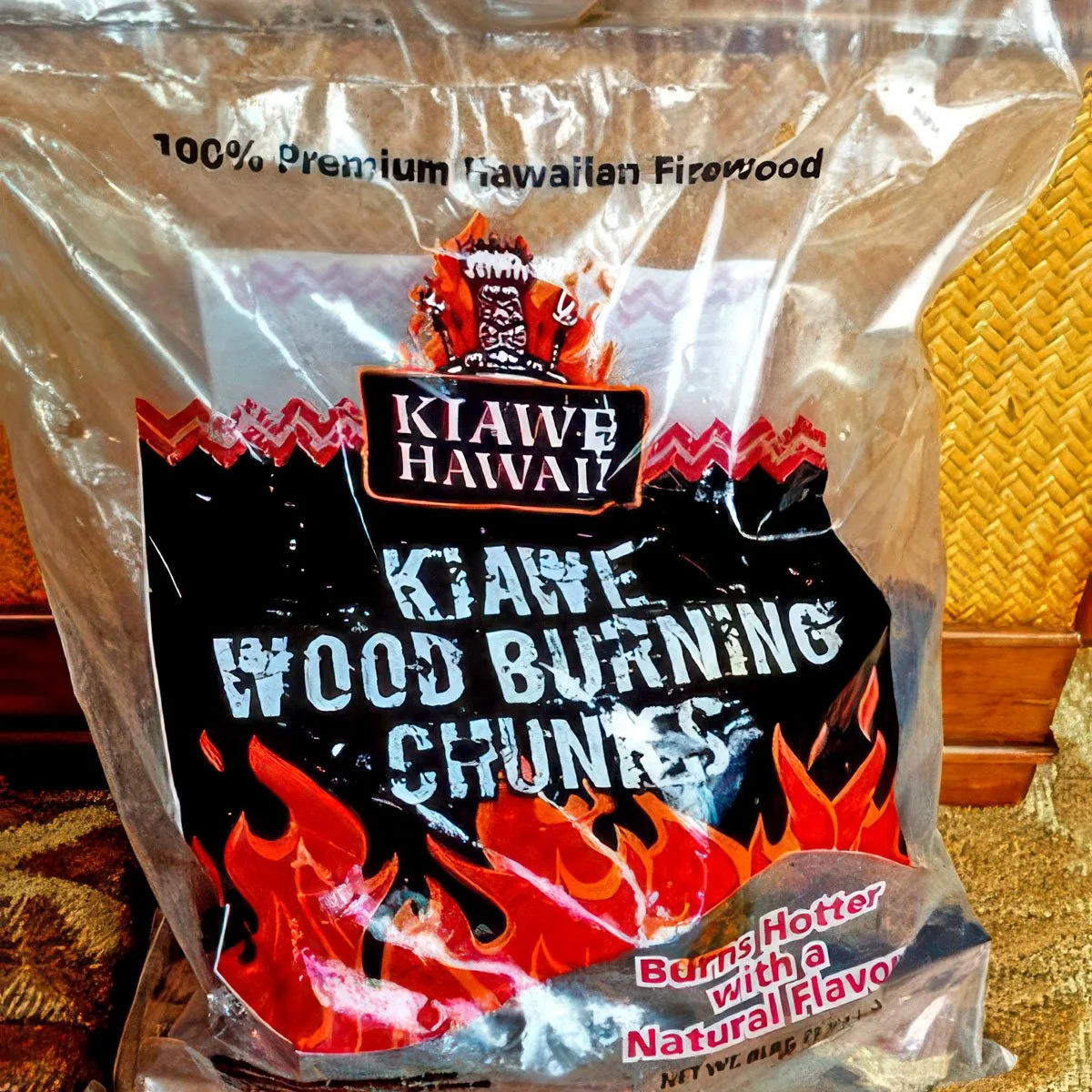
Kiawe wood chunks from Hawaii.
Why I Prefer Kiawe
Kiawe produces a sweeter, smoother smoke than mesquite and is far more forgiving (not as harsh). It shines with poultry and pork, adding depth without bitterness.
Mesquite, while excellent for beef, can easily overpower chicken if overused.
Kiawe Substitutions for Huli Huli Chicken
Kiawe can be hard to find on the mainland, but you can substitute:
A small quantity of mesquite, blended with Apple or pecan wood to mellow the smoke
This combination gets you closer to that authentic island flavor without overpowering the meat.
How to Master Your Own Huli Huli Chicken
This Huli Huli Chicken recipe is everything I love about BBQ: simple ingredients, live fire and flavors rooted in place and tradition. Every time I make it, I’m transported back to those roadside grills on Oahu.
Fire up the grill, keep turning, keep basting and enjoy a little taste of Hawaii at home.
If you can get your hands on kiawe wood, don’t hesitate. It’s worth it.
By Chef Mike Belobradic
For expert commentary on Canadian barbecue and hardwood smoking, contact Chef Mike Belobradic at SmokeFireGrill.ca