
No-Wrap Hanging Spare Ribs in a Drum Smoker (with Smoked Cinnamon Pineapple)
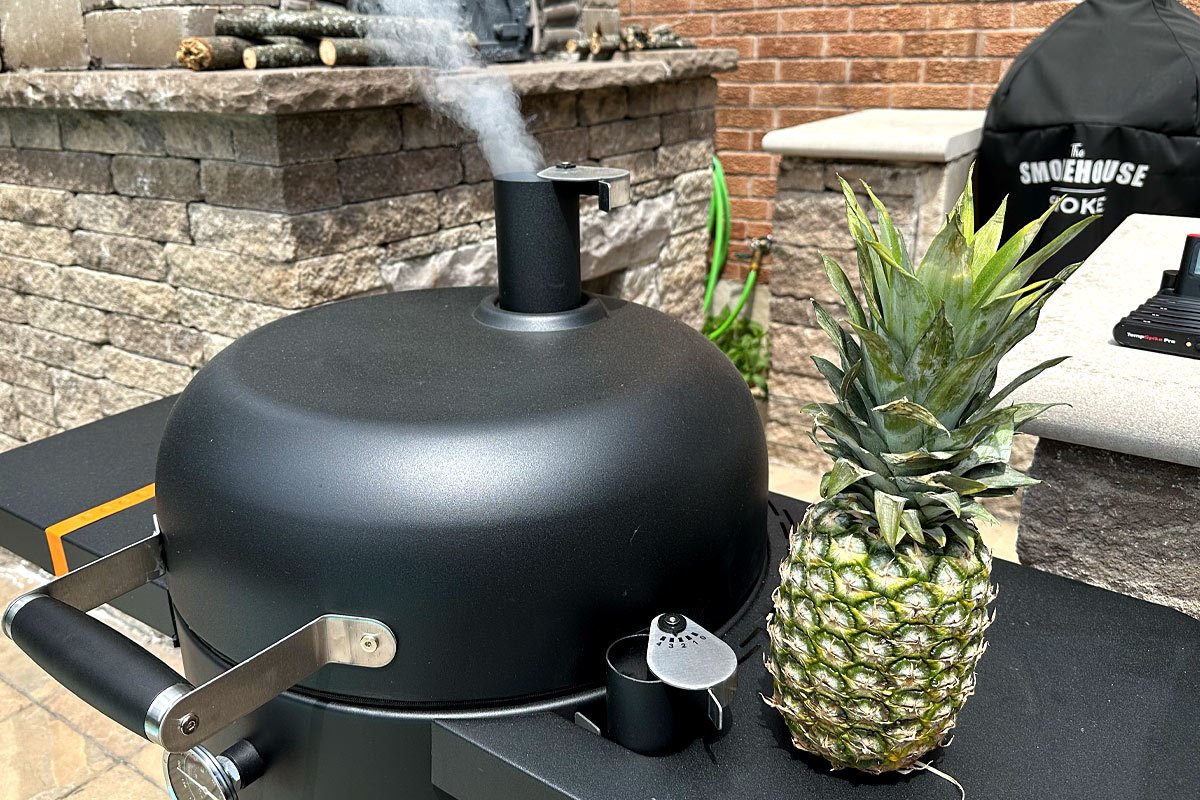
These hanging spare ribs are smoked low and slow in a drum smoker without foil wrapping
How to get great bark, a deep smoke flavour, and the perfect bite
There’s no shortage of rib recipes that call for foil wrapping. The popular 3-2-1 method has worked well for backyard pitmasters for years. It will give you tender ribs, but it’s not the only path to great live-fire barbecue.
For this cook, I let the ribs hang in the smoker from start to finish with no foil, no crutch, and no shortcuts. Just smoke, heat, patience, and time. A cinnamon-brown sugar pineapple hanging next to the ribs adds a sweet, smoky finish to the cook (not to mention a little bit of a show for your guests).
Note: I used the Oklahoma Joe’s Bronco Drum smoker for this cook, which cannot accommodate a full rack of side ribs hanging uncut (the bottom of the racks touched the coals). So I had to cut the rib racks in half in order to get them to fit this smoker.
The reward for skipping the foil wrap on the ribs is better bark, a firmer texture, and ribs that taste more like barbecue and less like braised pork. To complement the savoury ribs, I hung a whole pineapple in the smoker alongside them, coated with brown sugar and cinnamon — which slowly caramelized in the smoke and heat.
The result was everything you’d want in a barbecue: beautifully smoked spare ribs with a clean bite and a sweet, smoky pineapple that paired perfectly with the pork.
Why Cook Ribs Without Wrapping?
Foil wrapping ribs (the Texas crutch) speeds up cooking and helps create very tender ribs (some would argue too tender), but it also softens the bark that many barbecue lovers work so hard to develop.
Yes, there are times when a crutch can make sense, like when you’re short on time (see my recipe for half-time ribs – three-hour spare/side ribs using a crutch).
But when ribs are unwrapped for the entire cook, a few good things happen:
Bark stays firmer and more flavourful.
Smoke flavour continues building throughout the cook.
The exterior develops better colour and texture.
The finished ribs retain more of a traditional barbecue character.
Remember: the goal isn’t fall-off-the-bone ribs. Properly cooked barbecued ribs should still have a slight tug when you bite into them. There’s a reason that foiling ribs is called a “crutch.” At some point, you might want to try walking without the crutches—because there’s always a trade-off with any crutch.
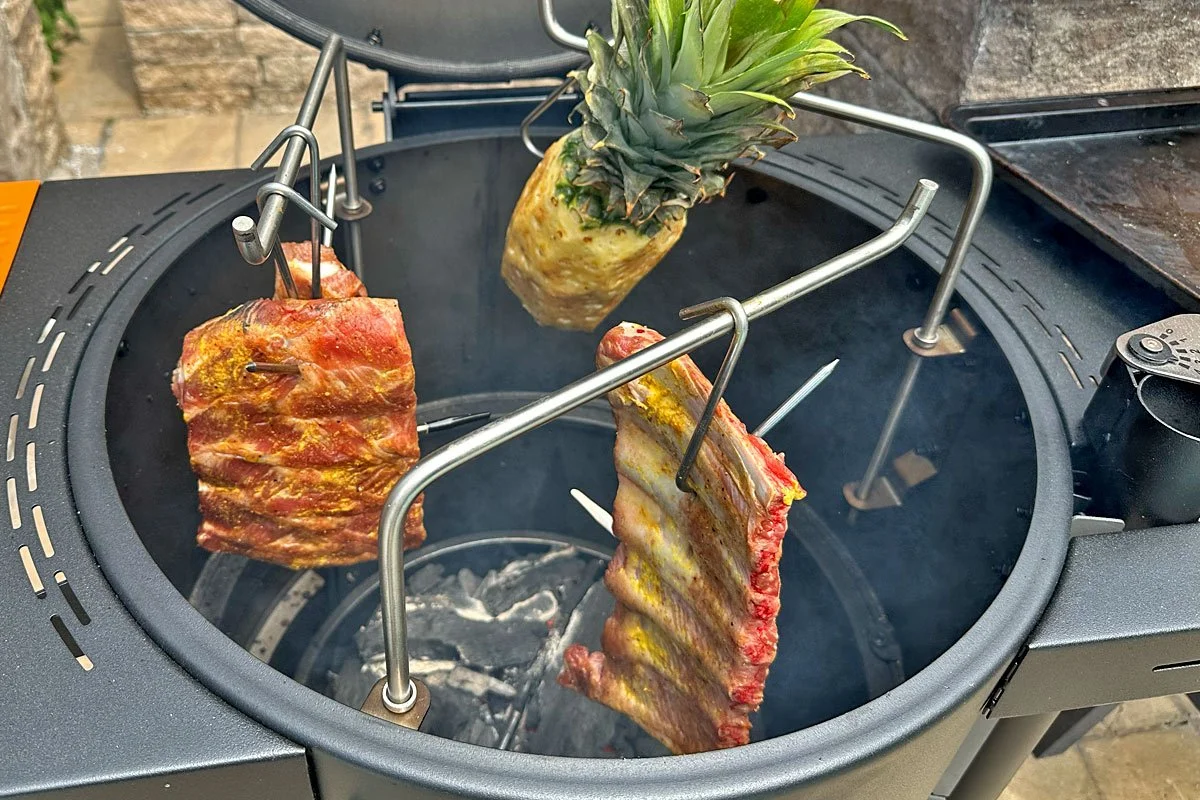
The start of the cook.
No-Wrap Hanging Smoked Ribs: Ingredients
For the Ribs
2 racks pork spare ribs (side ribs)
Yellow mustard (optional binder — I like to use it, you may not)
Your favourite barbecue rub
For the Pineapple
1 whole pineapple
2 tbsp brown sugar (approx., just get it on all surface area)
1 tsp ground cinnamon (approx., sprinkle on all surface area)
For the Spritz
1/2 cup apple cider vinegar
1/2 cup water
For the Finish
Your favourite barbecue sauce
Prepare the Ribs
Remove the membrane from the bone side of the ribs if needed. This step is also optional for those who prefer to leave it on.
Apply a thin layer of mustard (if you like to use a binder) and season generously with your favourite barbecue rub. Let the ribs rest while the smoker comes up to temperature. You can do this step a couple of hours in advance and let the ribs chill in the fridge with the rub.
Prepare the Pineapple
Leave the top and bottom on the pineapple, but remove the skin around the sides. Leaving the top is good for both aesthetics after the cook and it also helps to keep the fruit intact enough to hang securely from a hook.
Apply the brown sugar and cinnamon to all exposed area of the pineapple.
Set aside until ready to hang.
Prepare the Drum Smoker
Prepare your drum smoker for cooking at approximately 250°F to 275°F (120°C to 135°C). Try not to go past 275°F. If you can hold at 250°F that is ideal.
I don’t use a heat shield for this setup, which allows the drippings to hit the coals and add extra flavour. However, I have done cooks this way where the temperature got away from me on the smoker and without a heat shield, there’s no protection for the ribs. So be extra vigilent about what’s happening with your cooker temperature whenever you skip the deflector.
Once the smoker is up to your desired temp, add a few chunks of your preferred smoking wood. Apple, cherry, maple, or pecan all work well with pork and pineapple. I used pecan in the pictured cook.
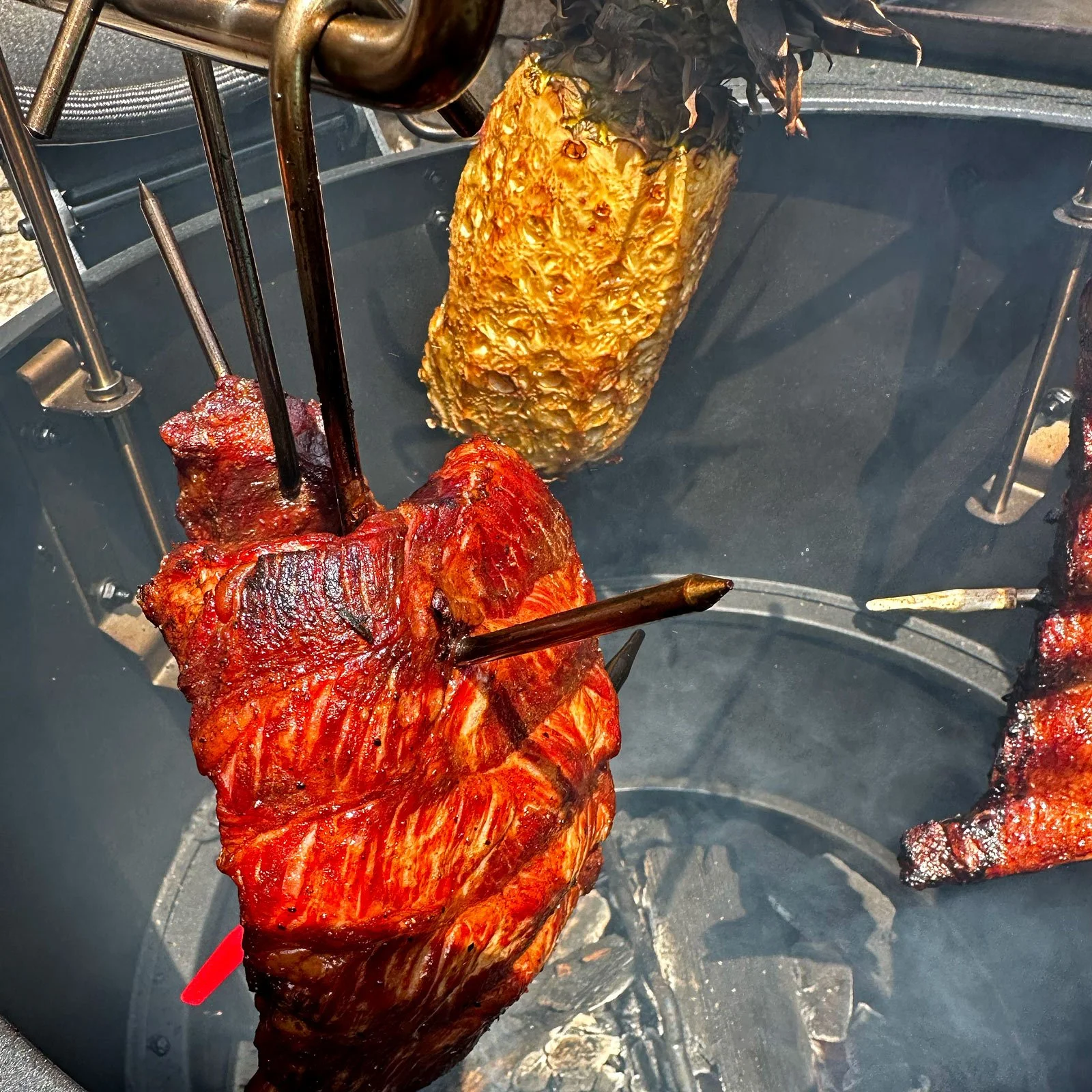
After 90 minutes, it’s time for a spritz.
Hang Everything and Let the Magic Happen
Hang the racks of ribs from the thick end (I place the hooks after the second rib) and place the pineapple on a separate hook.
Close the lid and allow the smoker to begin working.
For the first 90 minutes, don’t open the lid. Let the ribs get some colour and begin building bark. Pay close attention to the cooker temperature to ensure it is stable and close to 250°F.
Apple Cider Vinegar vs. Apple Juice for Ribs
A lot of people use apple juice when spritzing ribs, but for this cook, I went with a 50/50 mixture of apple cider vinegar and water.
Here’s why.
Apple juice has natural sugars that can accelerate darkening and caramelization on the surface of the ribs. But when ribs are hanging over coals, they’re already exposed to good airflow and radiant heat, so additional sugar isn’t needed.
Apple cider vinegar helps keep the surface moist without adding extra sweetness. It also complements the rich pork flavour and balances the sweetness coming from the cinnamon-sugar pineapple hanging nearby.
Starting at the 90-minute mark, lightly spritz the ribs with the apple cider vinegar/water mixture every 30 to 45 minutes for the remainder of the cook.
Cooking Your Hanging Ribs: When Will They Be Done?
Cook the ribs until they reach approximately 195°F to 203°F internally – use a probe in the tender meat between the bones if you want to check.
Depending on the weather, rib thickness, and cooker conditions, the cook should take anywhere from 4 to 5 hours.
Pay attention to tenderness as well and not just temperature alone (when you get closer to the the end).
How to know that the ribs are done:
Meat is pulling back from the bones.
The ribs have a deep mahogany colour.
There’s a well-set bark.
The rack should bend easily when lifted.
A temperature probe should slide into the meat with minimal resistance.
Glaze and Finish
This step is optional (skip if you prefer dry/unsauced ribs). For saucing, lift the ribs from the smoker and lightly brush them with your favourite barbecue sauce about 20 to 30 minutes before the ribs are finished.
This allows the sauce to set without burning and adds a final layer of flavour while still preserving the bark that developed during the cook.
Meanwhile, the pineapple should be taking on a beautiful golden colour with lightly caramelized edges and a subtle hint of smoke. I also like to glaze the pineapple with the barbecue sauce towards the end of the cook.
Leave the pineapple in the smoker for the entire cook, it should come out just fine.
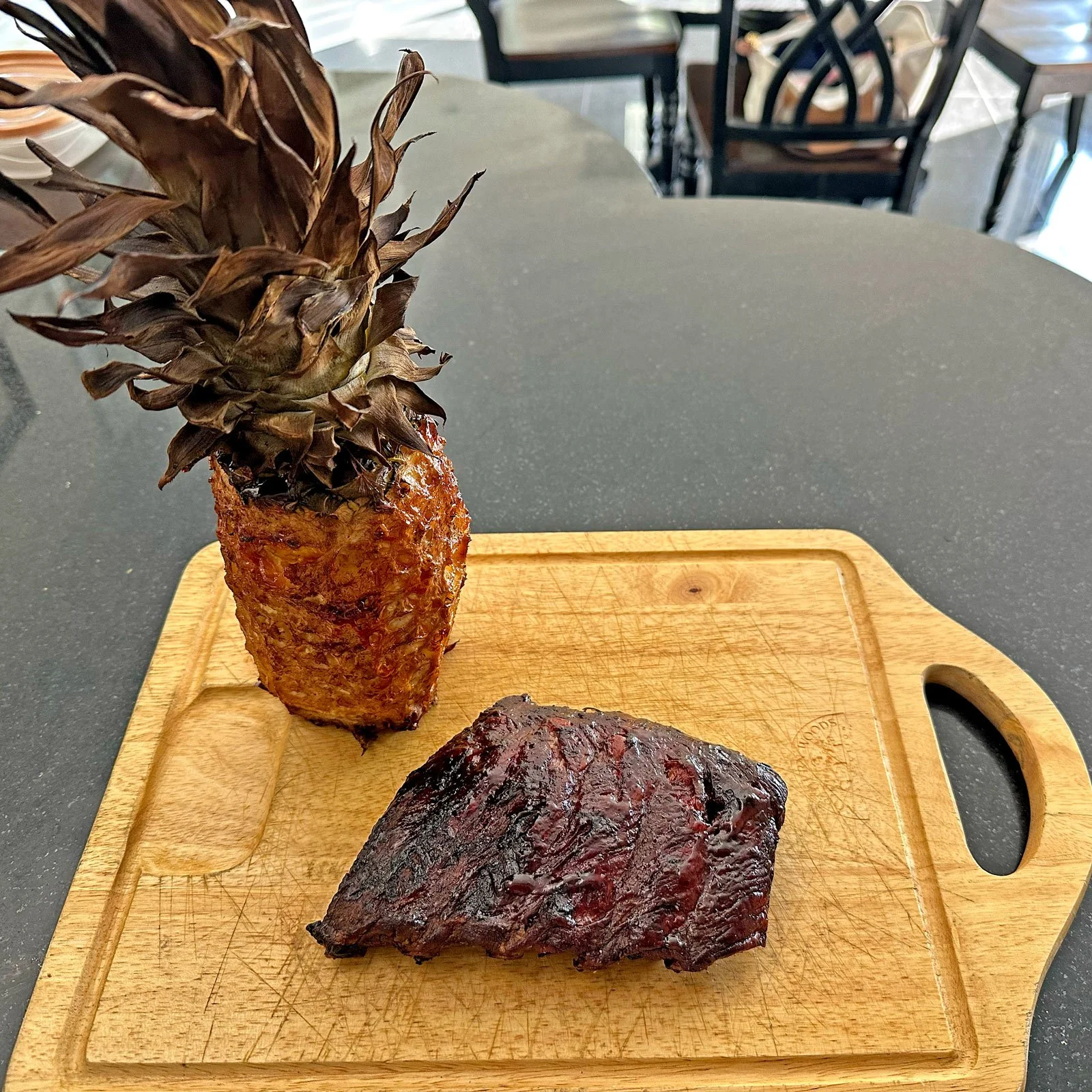
Resting after the cook. The pineapple is warm and juicy when you cut it (ring style).
Rest and Serve
When everything’s done, remove the ribs and pineapple from the smoker and allow them to rest for 10 to 15 minutes.
Slice the ribs between the bones and serve alongside thick slices of the smoked pineapple.
The sweet pineapple balances the savoury pork perfectly, while the no-wrap method delivers a texture and bark that you won’t get with a crutch.
A Different Kind of Smoked Ribs Cook
If you’ve never tried hanging spare ribs without wrapping them, this is a cook worth doing. Even though the quality of the ribs I purchased for this cook was poor, they still turned out pretty tasty (and the pineapple was warm and juicy when sliced).
The combination of steady smoke, good airflow, and your patience makes for some ribs with top-notch bark, rich smoke flavour, and a texture that you and your guests will appreciate. Add a cinnamon and brown sugar pineapple hanging beside them, and you have a meal that feels a little different while staying true to the fundamentals of great barbecue.
Sometimes the best barbecue comes from trusting the fire, the smoke, and the process.
By Mike Belobradic
Founder of Smoke Fire Grill™ and the Northern Barbecue™ Method of Live-Fire Cooking.
Visit the shop for barbecue t-shirts, hoodies and sweatshirts.