
How Long Do Hardwood Coals Stay Hot? Managing Live-Fire Heat on an Open Grill
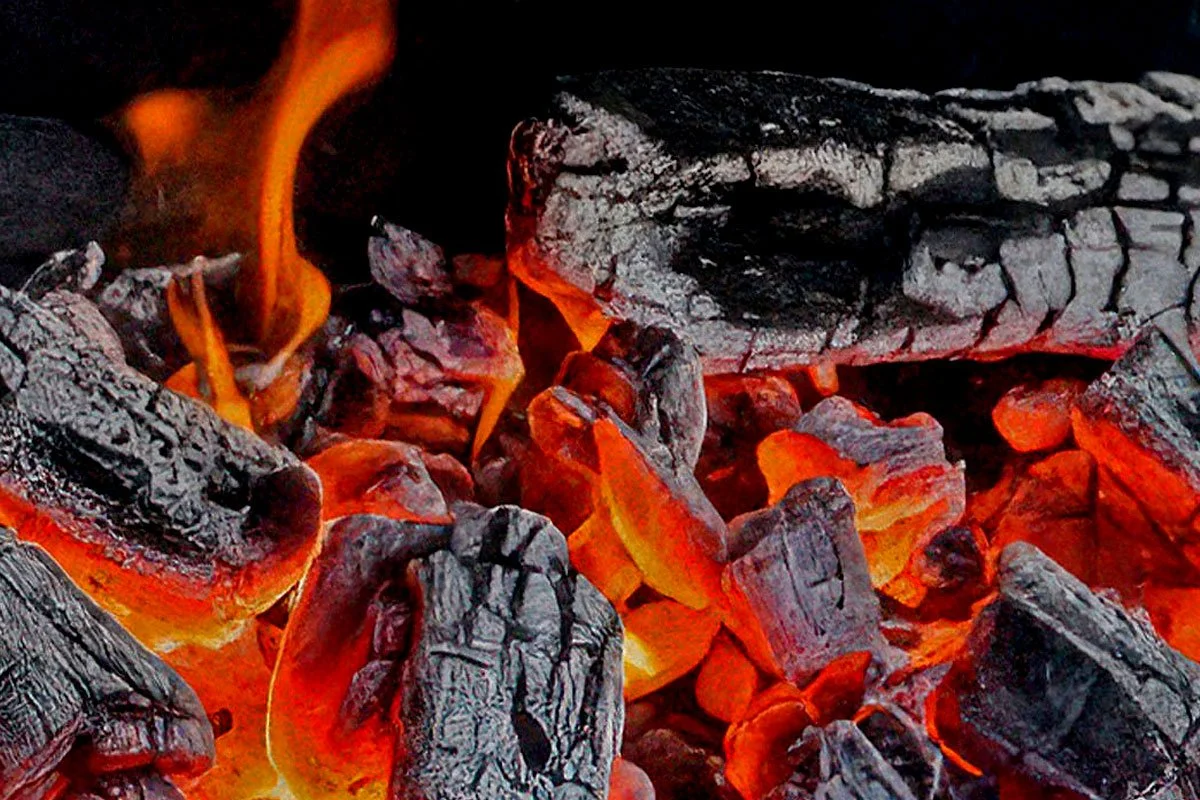
From hardwood logs to lump charcoal, knowing how long coals stay hot (and how to manage them on an open grill) is one of the keys to mastering live-fire cooking.
When you first start cooking over live fire, one of the biggest surprises is how quickly your fuel heat changes.
Unlike a gas or pellet grill where you turn a knob and can basically walk away, hardwood coals are always evolving. They burn down, shift, flare up, cool off and react to airflow constantly — especially in an open grill setup like a kettle grill without the lid, a gaucho grill or Argentine parrilla.
So how long do hardwood coals actually stay hot enough for cooking?
This is an important piece of information you need to know so you don’t start panicking as coals burn down, get ash covered, lose heat and you’re not done yet.
The answer depends on a few things, including the wood species, coal bed depth, airflow, outdoor temperature and whether you’re using hardwood logs or hardwood lump charcoal.
Here’s what you need to know to have better control over your live-fire cooking.
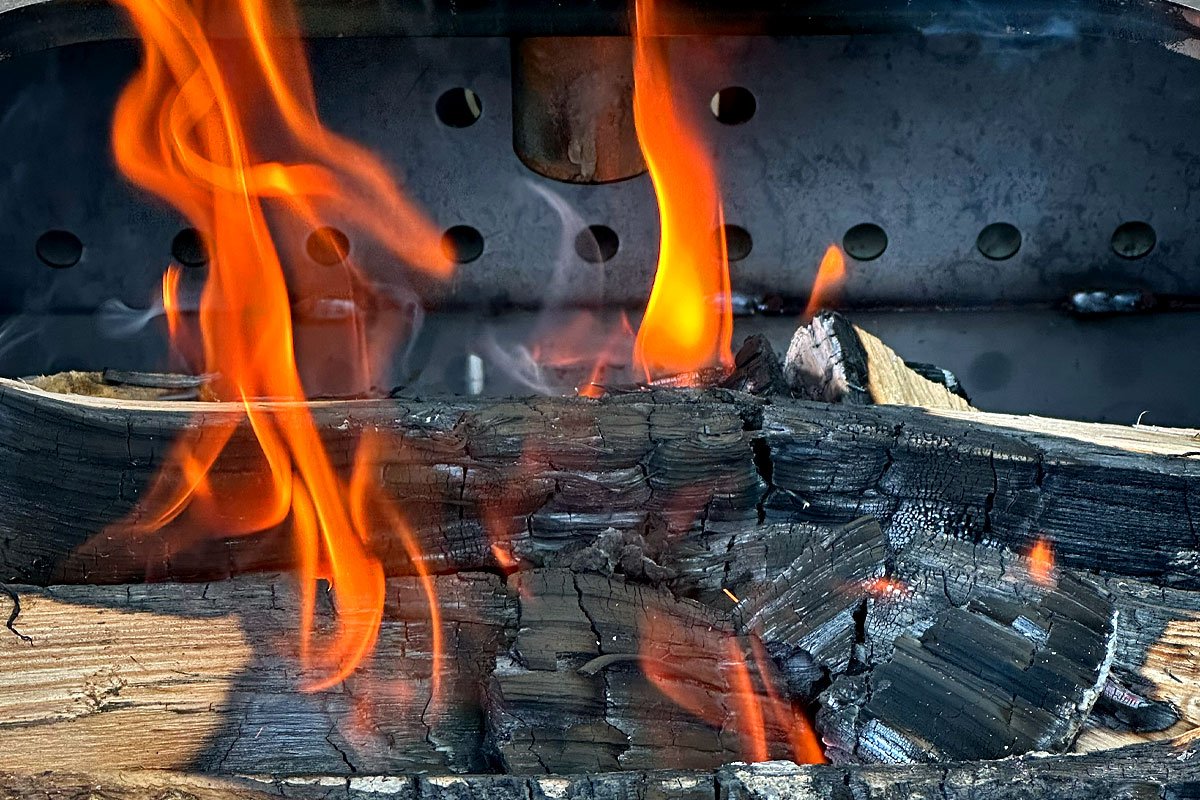
Hardwood coals forming inside a Teppan 29 live fire cooker by Black Earth Grills.
How Long Will Hardwood Coals Stay Hot?
If you’re burning real hardwood logs down to coals, you can expect to have productive usable cooking heat for:
45 minutes to 2+ hours depending on the wood type and coal volume
Dense hardwoods like oak, maple or hickory will last a lot longer than fruitwoods or birch
Softer woods burn faster and produce shorter-lived coals
In a gaucho grill set-up (like the Black Earth Grills, Gaucho 53), the coals are exposed to open air rather than being comfortably insulated inside a ceramic cooker or closed smoker. This means they lose heat a lot faster, but they also respond faster when you add fuel or spread them differently.
Generally speaking, you can look at it like this:
Dense Hardwoods such as:
Oak
Hickory
Maple
Ash
Beech
produce long-lasting coal beds with steady heat. This is why hardwood isn’t just hardwood. Some hardwoods are preferable when longevity of the heat and coal bed is your objective.
A deep coal bed from these woods can provide:
High heat for 45–60 minutes and
Moderate cooking heat for another hour or more
Oak is particularly popular for gaucho-style cooking because it creates stable coals without much sparking or heavy smoke.
Fruit Woods, on the other hand, act differently. Woods like:
Apple
Cherry
Peach
burn faster and create lighter coals. They are great for flavour, but they’re less ideal as the primary heat source in an open-fire grill (unless you’re blending them with denser hardwoods to get the benefit of their flavour profile).
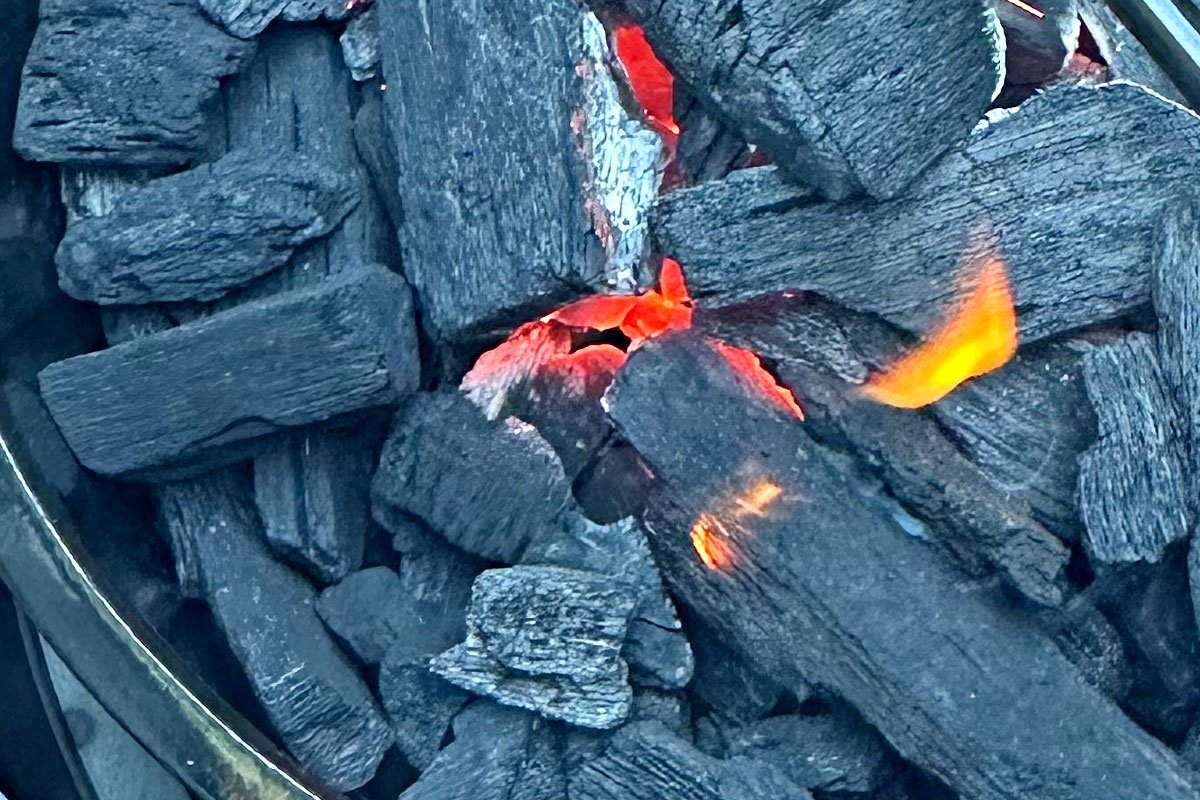
Hardwood lump charcoal coals.
How Long Does Hardwood Lump Charcoal Stay Hot?
If you’re not using split hardwood to make your coals and you’re going with hardwood lump charcoal right out of the bag, things are a little different.
Hardwood lump charcoal behaves differently than split hardwood because it has already been carbonized. Most of the moisture and volatile compounds are gone, allowing it to burn hotter and cleaner.
In an open grill setup (or anything resembling a fire pit):
Lump charcoal can provide strong cooking heat for anywhere from about 45 minutes to 90 minutes
Bigger chunks will last longer than smaller broken pieces (this is where spending more on that premium bag of lump charcoal with bigger chunks can pay off)
Airflow will also affect burn rate
At high temperatures in an open grill, lump charcoal burns faster than a lot of people expect. This is where panic can set in if you’re not prepared or aware. A wide-open firebox with unrestricted airflow can go through lump charcoal pretty quickly. So if you’re planning a long cook (four or five hours) with lump charcoal in something like a gaucho grill, you’ll need to have a few bags of charcoal on hand.
Let’s look at an example: If you’re grilling steaks over high heat (700°F to 900°F range):
Expect to have peak searing temperatures from your lump charcoal for roughly 20–40 minutes
Then a gradual decline will start — unless fresh charcoal is added (don’t smother what’s already burning when you add more — place new pieces carefully)
For longer cooks, you need to continuously manage and replenish the coal bed. That is part of the skill and artform of live-fire cooking.
Why Coals Burn Faster on an Open Grill
An open grill, like a gaucho grill, is designed for live-fire cooking, but its open-air design changes the way fuel behaves.
Unlike kamado cookers or offset smokers with lids that can be closed, in an open grill:
Heat escapes freely
Wind affects combustion (burns faster and hotter)
Oxygen feeds the fire continuously (burns faster and hotter)
Coals burn more aggressively
This is part of what makes gaucho grilling more fun and exciting. You are actively cooking with fire rather than simply cooking beside it or over it.
But it also means coal management really matters.
The Best Way to Manage Coals on a Gaucho Grill, or Any Open Grill
Even for something like a kettle grill without the lid, the secret to successful live-fire grilling isn’t just building a good fire, it’s about maintaining a consistent coal bed throughout the cook.
1. Build a Dedicated Coal Fire
Traditional Argentine and South American grilling often use a side firebox or brasero.
Instead of cooking directly over burning logs:
You burn logs separately
Let them collapse into glowing embers
Slide or shovel the mature coals under the cooking grate
This process continues for the entire cook and gives you cleaner heat and better temperature control. When I’m doing beef ribs on an iron cross, that’s roughly a five-hour cook on a gaucho grill, and maintaining the coals at the target heat level for that long requires a good supply of hardwood and ongoing coal creation.
New sticks of flaming wood create unstable heat and harsher smoke, while mature coals provide consistent radiant energy. That’s why the wood is burned off to the side and the coals are then raked over to the coal bed.
This is active live-fire cooking at its finest.
For hardwood lump charcoal in this situation, you’ll need to have a few charcoal chimneys and plenty of charcoal always waiting to be lit so that you can recharge the coal bed continuously, as required.
2. Use Zones
One of the biggest mistakes beginners make is spreading coals evenly everywhere. That’s not always an efficient approach
Instead, it’s often better to:
Create hot zones for searing
Medium zones for cooking
Cooler zones for resting or slower cooking
On a gaucho grill, moving food is often easier and more effective than constantly adjusting the fire (assuming your cooking on the grate—it’s different for asador style).
3. Maintain Coal Depth
Thin coal beds fade quickly. I see this happen usually when someone’s in a hurry and they don’t have enough time to get a proper coal bed going (this happens in wood-fired brick ovens as well, by the way).
A deeper coal bed holds heat longer and produces a more even level of radiant energy.
If your temperatures are inconsistent, the problem is often insufficient coal volume and not just airflow alone.
4. Add Fuel Before You Need It
It’s very important to know that you shouldn’t wait until the fire is dying before you add more fuel (wood or charcoal).
With live-fire cooking:
Add fresh logs or lump charcoal early
Maintain momentum
Keep reserve coals ready
Experienced gaucho grillers are always thinking 20–30 minutes ahead. That’s the frame of mind a live-fire cook needs to have.
5. Control Airflow Naturally
In an open grill, airflow management becomes physical rather than mechanical.
The factors that affect burn rate include:
Wind direction
Coal spacing
Grill height
Firebox positioning
Raising the cooking grate can moderate heat without changing the coal bed itself. Orienting your grill so that that back of the grill is facing the wind can often help to reduce (though not completely eliminate) the impact of the wind on your cook.
This is one reason adjustable-height gaucho grills are so effective for live-fire cooking. That extra ability to adjust for conditions can have a big impact. However, on really windy days it’s always going to be a challenge.
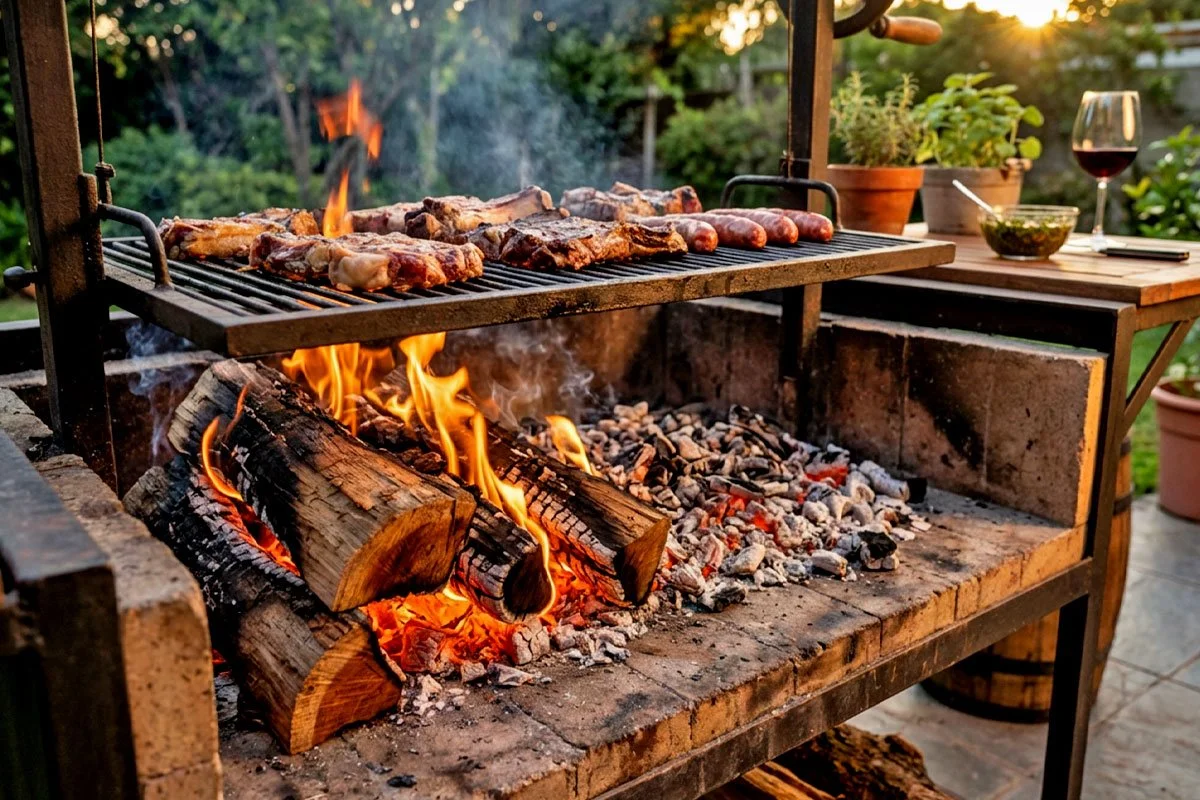
Live-fire cooking requires skill and attention.
Hardwood vs Lump Charcoal for Gaucho Cooking
Both hardwood lump charcoal and split hardwood have their advantages.
Hardwood Logs
Split hardwood logs are best for:
Traditional live-fire flavour
Longer cooking sessions
Authentic Argentine-style grilling
Building large coal beds
Hardwood Lump Charcoal
Big pieces of hardwood lump charcoal are best for:
Faster startup
Cleaner operation
Predictable heat
Smaller grilling sessions
Many live-fire cooks actually combine both of these into one cook. If you want to go with a best-of-both-worlds approach:
Start with lump charcoal for fast ignition
Add hardwood logs for flavour and long-term coal production
This type of hybrid-burn method works really well on open grills.
Consider Your Burn Before You Light Up
If you’re cooking over live fire, learning to manage coals is just as important as learning temperatures, recipes or anything else.
Hardwood coals can stay usable for well over an hour, while hardwood lump charcoal delivers intense heat quickly but often burns faster in open-air grilling environments.
On a gaucho grill or open grill, success comes from a few main things:
Building proper coal beds
Managing airflow
Cooking in zones
Continuously feeding the fire
Once you understand how coals behave, live-fire cooking becomes far more predictable — and far more rewarding.
That is when live-fire cooking stops feeling like guesswork and starts feeling like craft.
By Mike Belobradic
Founder of Smoke Fire Grill™ and creator of the Northern Barbecue™ Method of Live-Fire Cooking Courses.
Visit the shop for barbecue t-shirts, hoodies and sweatshirts.