
Before the Kitchen, There Was Fire
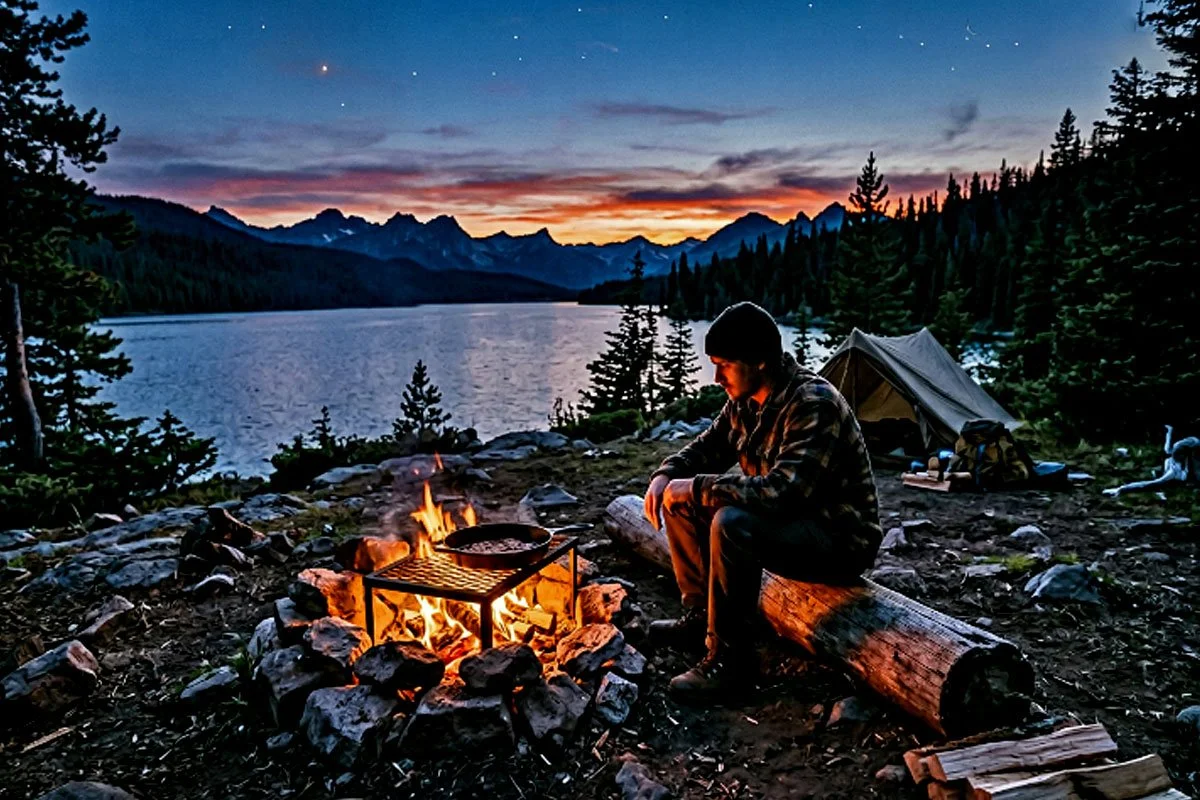
What the first cooking technology still teaches us about heat, skill, and flavour.
In 1981, the movie Quest for Fire showed us a world where survival depended on protecting a single ember. The story wasn’t really about prehistoric tribes — it was about power. About knowledge. About what happens when you control flame and what happens when you lose it.
That premise isn’t ancient history. It’s foundational.
Before there were kitchens, before there were recipes, before there were thermometers and timers, there was combustion. Fire didn’t just cook food, it changed human biology, extended our days, and built the first communities around its glow.
Everything Depends on the Flame
Watching that movie as a young soon-to-be cook, what struck me wasn’t the drama — it was all about the flame, and how everything depended on understanding it.
That fragile state hasn’t gone away, we’ve just managed to hide it behind shiny steel walls, digital displays, and preset temperatures. But when you strip away the hardware and tech, the equation is the same: you need fuel, oxygen and heat, along with the skill and know-how to manage all three.
If you like to cook with fire, it’s kind of fun to think that every modern cooking technique is a refinement of that first breakthrough.
But the resurgence of live-fire cooking isn’t just about aesthetics. At least it shouldn’t be.
It’s about skill and control.
It’s about cooks rediscovering something essential that digital and tech conveniences have tried to replace (but never really will).
If there’s one thing I firmly believe when it comes to cooking, it’s that core skills never go out of style.
A Return to Fundamentals
Cooking tech has been working on delivering more precision and ease for years now. Pellet grills feed themselves. Sous vide machines regulate temperature within fractions of a degree. Fans are set to blow on coals to create airflow. Smart ovens connect to apps and so on.
There’s nothing wrong with all this stuff, but I’ve noticed that something subtle happens when you remove the need to understand the heat itself.
Cooks become separated into two camps: those who know how to use a specific piece of tech and those who know how to manage fire. There’s nothing wrong with that either. They’re just two different pathways.
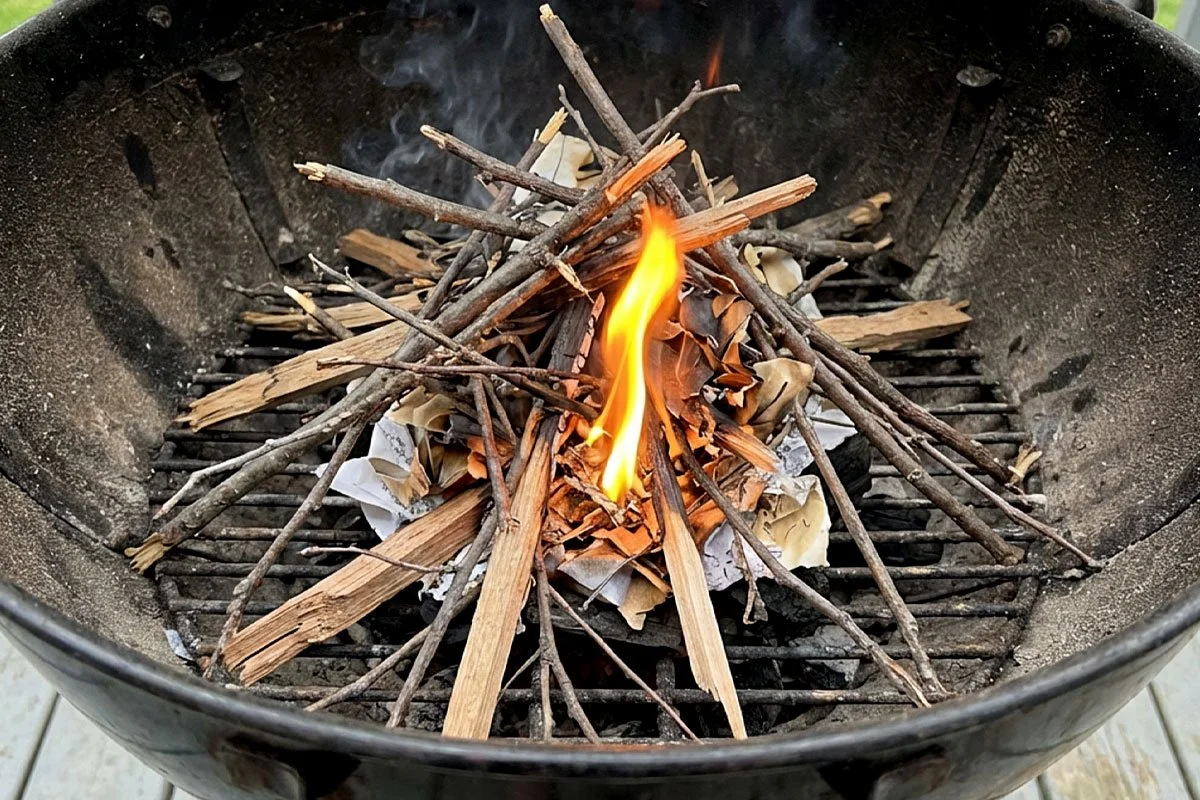
Live-fire cooking makes you engage with a few key and very important fundamentals:
Fire building
Airflow management
Fuel selection
Coal structure
Heat zones
Timing without the aid of digital crutches
When you cook over hardwood charcoal, you’re not turning a dial to 350°F or High, you’re reading flame height. You’re judging coal maturity by colour. You’re adjusting airflow instinctively. You’re learning to recognize when heat is radiant versus convective.
That’s not nostalgia. That’s craftsmanship.
Hardwood charcoal (especially lump charcoal) burns differently than briquettes. It reacts to oxygen changes quickly, it produces dynamic heat patterns and it requires your attention.
And that attention builds fluency.
If reading this has you ready to light up a charcoal chimney, then you probably fall into that group of outdoor cooks who want to actually understand what they do, as much as understanding the equipment they use.
In my work as a live-fire educator and curriculum creator with Northern Barbecue™, I’ve seen this shift firsthand: a lot of people aren’t just looking for recipes anymore (or a dish that makes a cool video to get likes). They’re looking to understand the medium itself.
They want literacy in fire.
Authenticity Still Matters (Maybe Now More than Ever)
Right now we’re living in a culture of food hacks and five-minute videos.
But when you look past all of that, something interesting has happened.
The more automated and optimized that cooking becomes (and grills, in particular), the more a lot of people want to get back to the basics… to authenticity.
You see it in restaurants built around open hearths. I see it in chefs returning to wood-fired techniques. And I see it a lot in backyard cooks investing in kamado grills, Argentine-style parrillas, and Santa Maria setups. These are the folks I often coach to help get them started on the right foot.
Look at the influence of chefs like Francis Mallmann, who built an international reputation cooking whole animals over open flames. Or Aaron Franklin, whose approach to brisket is rooted in patience, fuel management, and repetition. Or Asador Etxebarri (it’s a restaurant, but globally recognized as a fire cookery), where precision over wood embers rivals any Michelin-starred kitchen.
This is the real deal. These are disciplined systems built around fire.
A lot of people are tired of culinary shortcuts. They want flavour that tastes earned. They want technique that feels grounded. They want real connection to the fruits of their labour: to food, to process, to tradition.
Hardwood lump charcoal and fire deliver on that.
Fire Builds Sensory Intelligence
Here’s another important point that I rarely hear discussed, but that I think is really important: live-fire cooking sharpens your senses.
When you cook over hardwood heat, you rely on:
Sound (the sizzle tells you moisture levels)
Smell (smoke character changes as fat hits coals—just ask your dinner guests in the yard)
Sight (coal colour that gives you an idea of your cooking temperature)
Feel (radiant heat on your skin tells you intensity and whether that grill is medium or hot, no knob needed)
You’re not staring at a digital display. You’re calibrating things your own senses. To me, that’s culinary maturity. That’s what it’s all about.
And this is where live-fire cooking separates serious cooks from casual hobbyists. Not because one is “better,” but because one demands presence, patience and awareness.
You can’t multitask fire the way you multitask an air fryer. Fire pretty much demands that it’s a participation sport. There’s no countdown clock or auto-off, so you better be paying attention.
The Psychology of Flame
And it gets even deeper.
As I researched the origins of cooking with fire, I found that humans are neurologically wired to respond to flame. Anthropologists argue that learning to harness and control fire was one of the foundational turning points in human evolution. It extended daylight hours. It built community around light, warmth and food. It changed nutrition and digestion.
Modern neuroscience even shows that watching fire lowers blood pressure and promotes relaxation. It’s no accident that people gather around campfires and backyard grills, or that they put fake fire videos on the big screen in their family rooms.
Live-fire cooking taps into something ancient. It slows us down.
And in a speed-obsessed culture, slowing down feels like a pretty good idea to a lot of us.
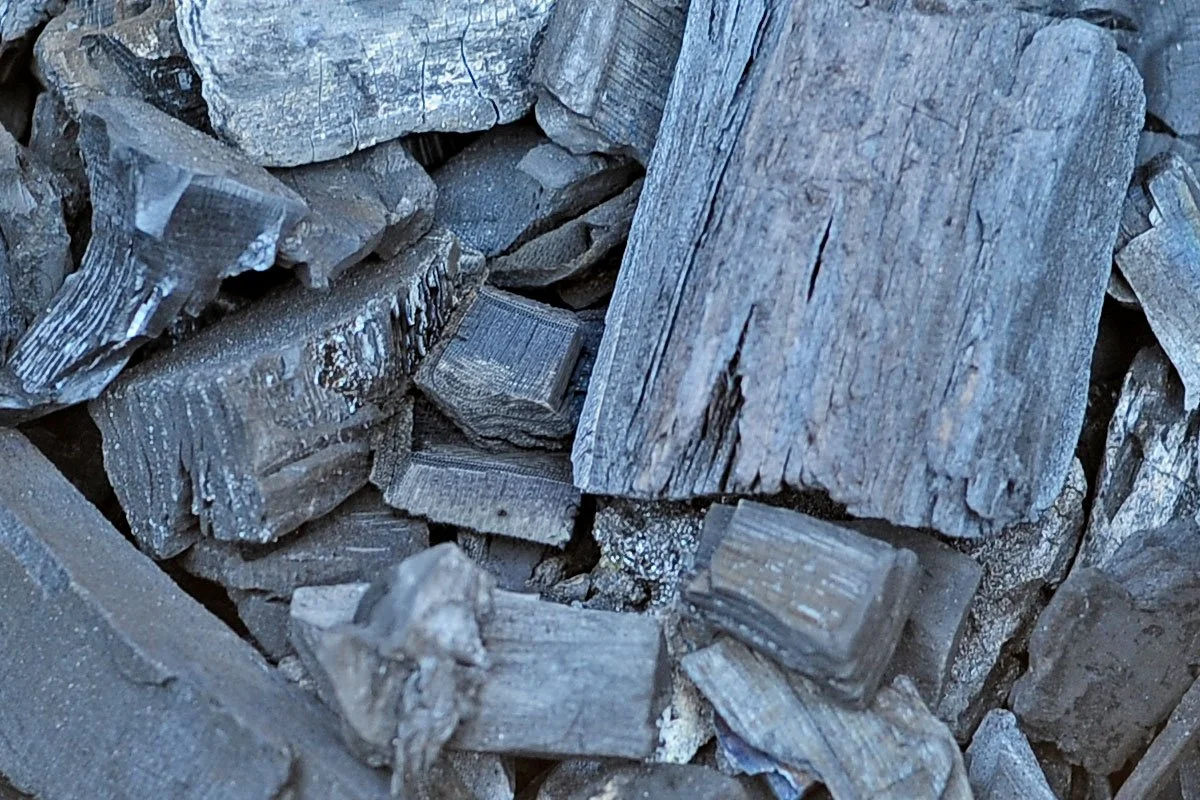
Hardwood Charcoal isn’t Just Fuel — It’s an Ingredient
This is probably one of the most common points that I make. It’s a mistake that a lot of types of grilling treat fuel as nothing more than a heat source to cook the food.
Hardwood charcoal isn’t just heat. It contributes flavour structure and textural elements that a lot of people love.
Different woods create different combustion characteristics. The density of the charcoal affects burn time. Coal size affects airflow. The maturity of the burn affects smoke clarity.
Clean combustion produces thin, almost invisible smoke. Dirty combustion produces acrid flavour.
Learning this distinction changes everything for the better.
This is where thoughtful cooking-with-fire education matters. Because once you understand how combustion works, you stop chasing gadgets and you start building systems.
Systems produce consistency. And consistency frees you to experiment and take your food to places you want it to go.
The Northern Barbecue™ Method: Foundations in Fire is a Perfect Fit for this Moment
When I developed the Northern Barbecue approach, it wasn’t about recipes. It was about growing as a cook and challenging myself with the unknown. Most of all, in hindsight, it was about principles.
It’s a structured way to learn fire:
How to build it
How to control it
How to apply it across global techniques
How to think in heat zones rather than temperatures
But it’s not a technical course where any of those topics are lessons about fire science. It’s also not about “here’s a brisket recipe” and more about “here’s how combustion behaves in this recipe.”
Because once you understand how fire actually works in many different setups and situations, you can cook pretty much anything with some level of confidence.
This is what separates education from instruction.
Instruction tells you what to do.
Education teaches you why it works.
Self-guided (which is how I structure my programs) helps you learn and understand, by your own hands and critical thinking.
And right now, cooks are hungry for the “why” and the “how.”
Why this isn’t a Trend
Grill manufacturers might look at all of this back-to-basics as a trend, because they deal in sales cycles. But trends spike and fade.
Live-fire cooking keeps spiking in popularity because it’s foundational (you could say it’s historic).
We’ve seen waves before:
The backyard barbecue boom of the 1950s
The restaurant hearth revival of the early 2000s
The social media explosion of open-flame cooking in the 2010s
But each time they fade, what remains isn’t hype. It’s skill.
As technology and AI continue to bring us things we haven’t even dreamed of, people will continue experimenting with automation. That’s inevitable. And if that’s how you love to cook, that’s great as well.
But there will always be a counter-movement towards craftsmanship. Towards doing things with your own hands. Towards taking the time and effort required to get a certain result. And towards mastering heat instead of outsourcing it to a plug or propane tank.
Live-fire cooking represents that counter-movement. It’s not anti-technology: It’s pro-competence.
Fire is a Language
If I can boil it down to one simple concept to define this moment, it’s this:
Fire is a language.
And most people were never taught to speak it fluently. But now, it seems, a lot of people want to learn to speak the language of food and fire. I think this is great.
Not because it’s trendy. Not because it looks good on camera. But because mastering fire feels meaningful. Accomplishing something with your own hands and know-how.
It builds confidence. It builds capability. And it builds connections in so many ways.
Live-fire cooking isn’t a trend. It’s a return to what cooking has always been: fuel, heat, patience, and skill (with a little splash of socializing added in for good measure).
And that is one thing that isn’t likely to end.
By Mike Belobradic
Founder of the Northern Barbecue™ Method Live-Fire Cooking Curriculum