
Where Did the Word “Barbecue” Come From?
From Caribbean Fire Racks to Modern Live-Fire Cooking
Ever wonder where the word barbecue came from? People talk about barbecue every day without ever thinking much about where it came from.
But if you actually cook with fire—real fire, not just turning knobs—it’s worth understanding the roots of the word barbecue, because the origin of barbecue says a lot about what it originally meant and what it still means today.
Barbacoa: The Real Origin of Barbecue
The word barbecue traces back to the Taíno people of the Caribbean, on islands like Hispaniola and Jamaica.
They used a term—barabicu—to describe a cooking technique, which Spanish explorers then recorded as barbacoa.
It wasn’t a type of food or a specific recipe, it was a method of cooking over live fire.
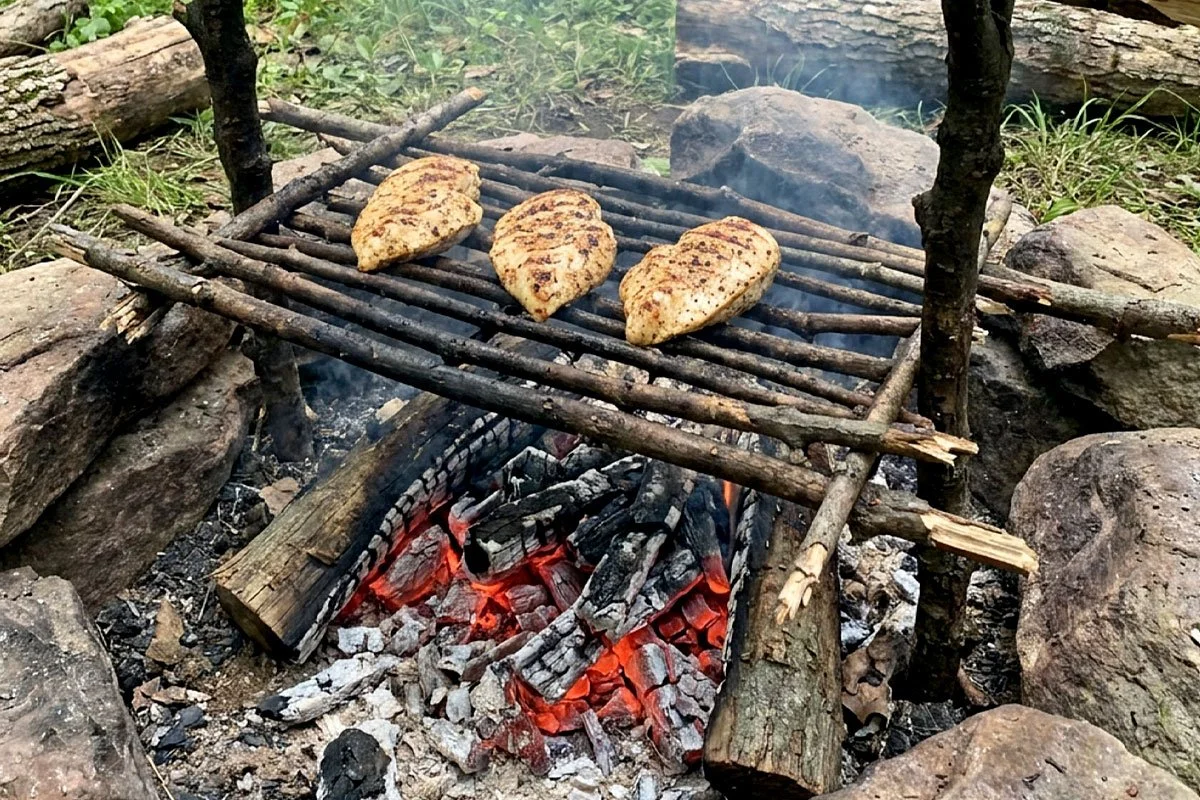
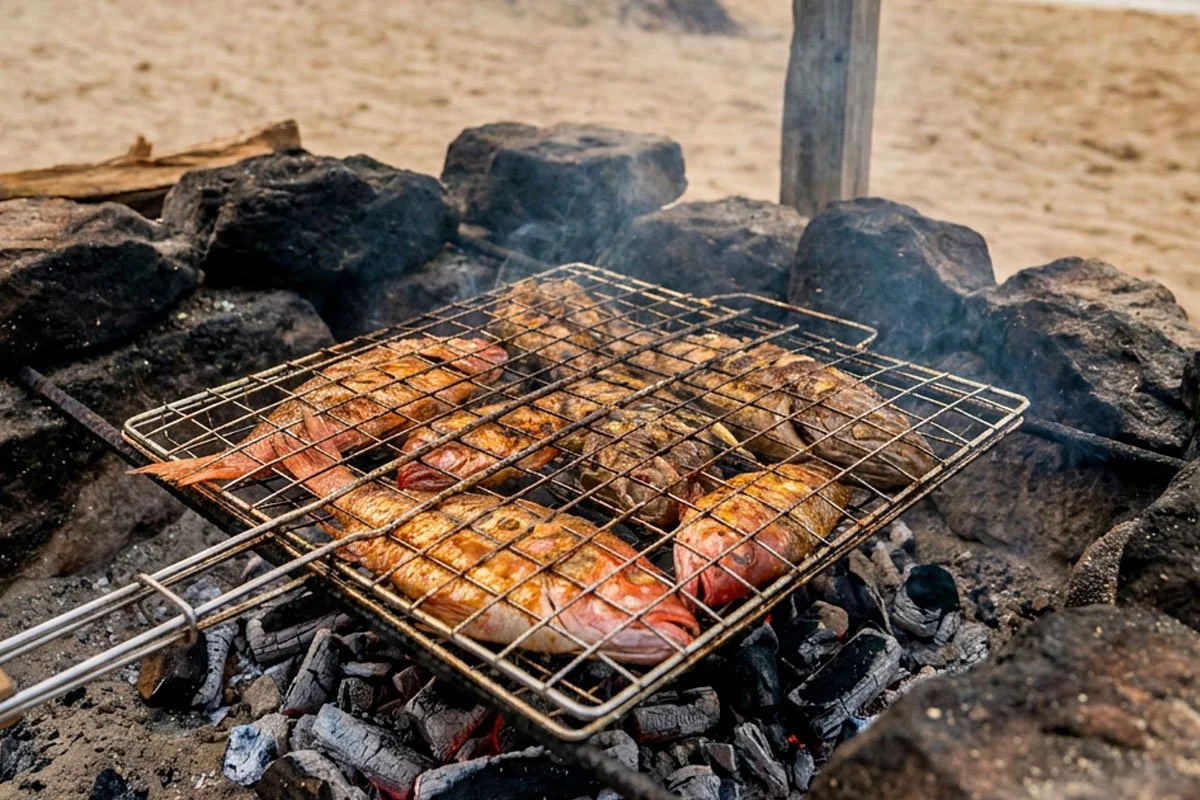
Barbacoa referred to the use of wooden rack built over a wood fire, which was created to slowly cook and smoke meat or fish. Low heat. Controlled exposure. Time doing most of the work. Sound familiar?
By the mid-1600s, the word had made its way into the English language, translated to barbecue. And so the word was born in English. And at that point, it still referred to the technique of cooking—not just the result.
Barbecue vs. Barbeque vs. BBQ
Now, have you ever wondered why there are so many different spellings of barbecue, and if there’s any real difference behind them? All three of the most popular adaptations point to the same idea, but technically they carry different weight depending on how you use them:
Barbecue – the correct, formal spelling, which is closest to the original barbacoa with the letter C.
Barbeque – substituting a Q for the C is a common variant (probably due to the phonetic sound of cue as Q), and it’s a variation that’s popular in branding and restaurant names.
BBQ – short version; informal, quick, and used everywhere (something that texting would have created if it didn’t exist already).
If you’re looking for something that could be called the official or “right” way, then barbecue is the standard dictionary definition and spelling. So for the question of which version is “correct,” it’s arguably barbecue. But all three are used pretty interchangeably in everyday life.
Common Origin Myths for the Word Barbecue
Who doesn’t love a good origin story (even if it’s not true)?
One of the most common myths about where the term barbecue came from is the “Beard-to-Tail” story. It’s a fun one to share if you’re ever in a barbecue conversation around the grill. Having lived in France for awhile, this is one of my favourite alternate barbecue stories.
In this origin story, the word barbecue comes from the French phrase “barbe à queue”—which when translated from French to English means “beard to tail” (in other words, from the head to the tail of an animal—such as a pig or a goat).
It sounds pretty good and it definitely paints a memorable picture (which every good story must do).
But, unfortunately, it isn’t backed by any real linguistic evidence anywhere.
Still, this is a great example of a folk etymology, or a story that sticks because it feels right, not because it actually is.
The actual origin story of the term barbecue is from the Caribbean and barbacoa.
Why “Barbecue” Means Different Things Depending on Where You Are
Another fun thing about barbecue is that it has a few different meanings depending on where you are or who you talk to. Ask 10 people what barbecue means, and you might get several different answers.
Some of the more common differences are:
In the American South, barbecue is very specific: low-and-slow smoked meat, often pork or brisket. In this context, it’s a noun.
In Canada and the Northern U.S., barbecue often means any kind of outdoor cooking or grilling: burgers, hot dogs, chicken or steaks etc. In this context, it’s a verb.
In Australia, it becomes the “barbie,” possibly more about the gathering and social experience than the method.
None of these are wrong, but they are also not the same thing.
What Barbecue Should Mean
Origin story aside, there’s one core point that matters most: barbecue didn’t start as a single temperature range or a strict set of rules.
Barbecue started as a way of cooking with fire using structure, control, and time.
Low and slow became one of the most recognized forms of barbecue, especially in the American South. But it isn’t the only one.
Cooking a steak over open flame, managing a live coal bed, or working a fire in an asado-style setup all come from the same core idea that fire is the tool and control is the skill.
At Smoke Fire Grill™, and through the Northern Barbecue™ Method, barbecue isn’t limited to one technique. It’s all about understanding fire well enough to use it across temperatures, styles, and traditions.
So whatever barbecue means to you, get out there and light it up.
By Mike Belobradic
Founder of Smoke Fire Grill™ and the Northern Barbecue™ Method of Live-Fire Cooking.
Visit the Shop for barbecue t-shirts, hoodies and sweatshirts.