
The Best Pans for a Wood Fired Brick Oven (500°F–1000°F+)
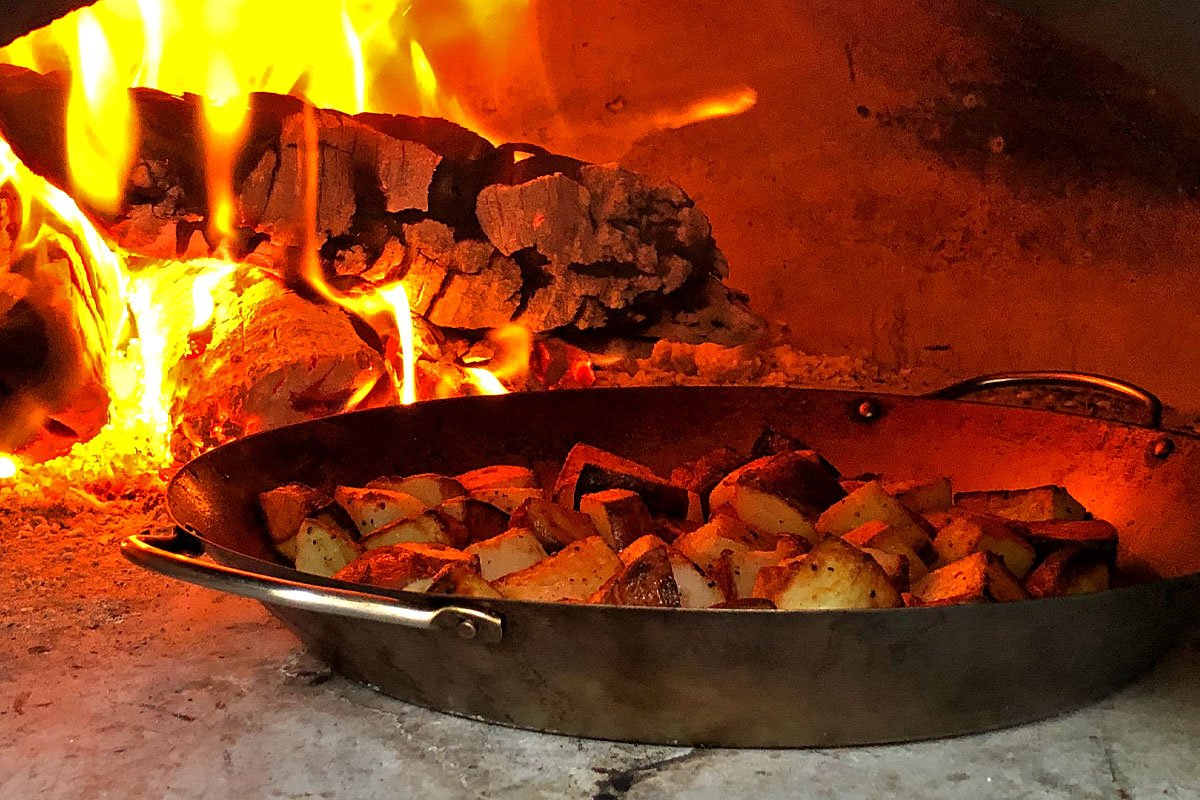
Stainless steel pan.
What is the Best Cookware for a Wood Fired Brick Oven?
The best pans and cookware for a wood-fired brick oven are carbon steel, cast iron, stainless steel, anodized aluminum, and enameled Dutch ovens. These materials withstand temperatures from 500°F to 900°F+, retain heat effectively, and remain stable under live-fire conditions. Non-stick and standard aluminum cookware should be avoided at high temperatures due to coating breakdown and warping.
Why the Right Pan Matters in a Brick Oven
Cooking in a wood-fired brick oven is about far more than pizza. It’s can also be much hotter than just about any other cookers out there.
Live fire produces intense uneven heat, radiant energy from brick walls, and rapid temperature swings that can destroy standard cookware. After years of using and testing all kinds of pans in a real-world, high-heat environment (my live-fire brick oven), I have narrowed down my top picks for cookware that stays safe, stable, and predictable under conditions that easily exceed 800°F (often up to 1200°F in my brick oven). Of course, that doesn’t mean you always want to cook at those temperatures, but you still want a pan that can handle almost any heat level that your oven can reach.
At SmokeFireGrill.ca, my approach to live-fire cooking is rooted in my Northern Barbecue™ appraoch, where technique, material choice, and fire management matter just as much as the recipe itself. That is why the right pans are so important.
Cookware Comparison for Wood Fired Brick Ovens
One point of note: Always check a manufacturer’s recommended max temperature, as they are not all the same and there can be big variations from one pan to the next (even when made of the same material).
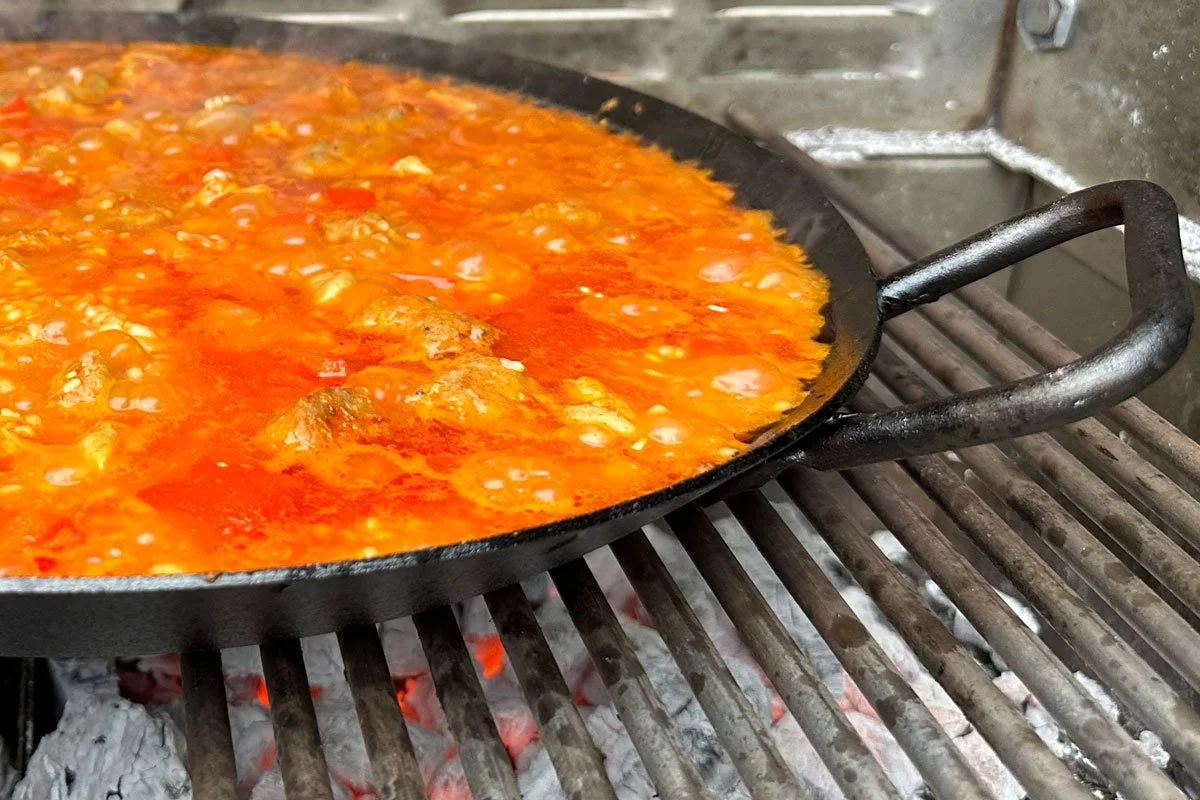
Carbon steel pan.
Carbon Steel
Max Heat: 900°F+
Best Uses: Roasting, searing, baking, vegetables, meats
Advantages: Lightweight, extreme heat safe, easy to clean when seasoned
Limitations: Requires seasoning and basic maintenance
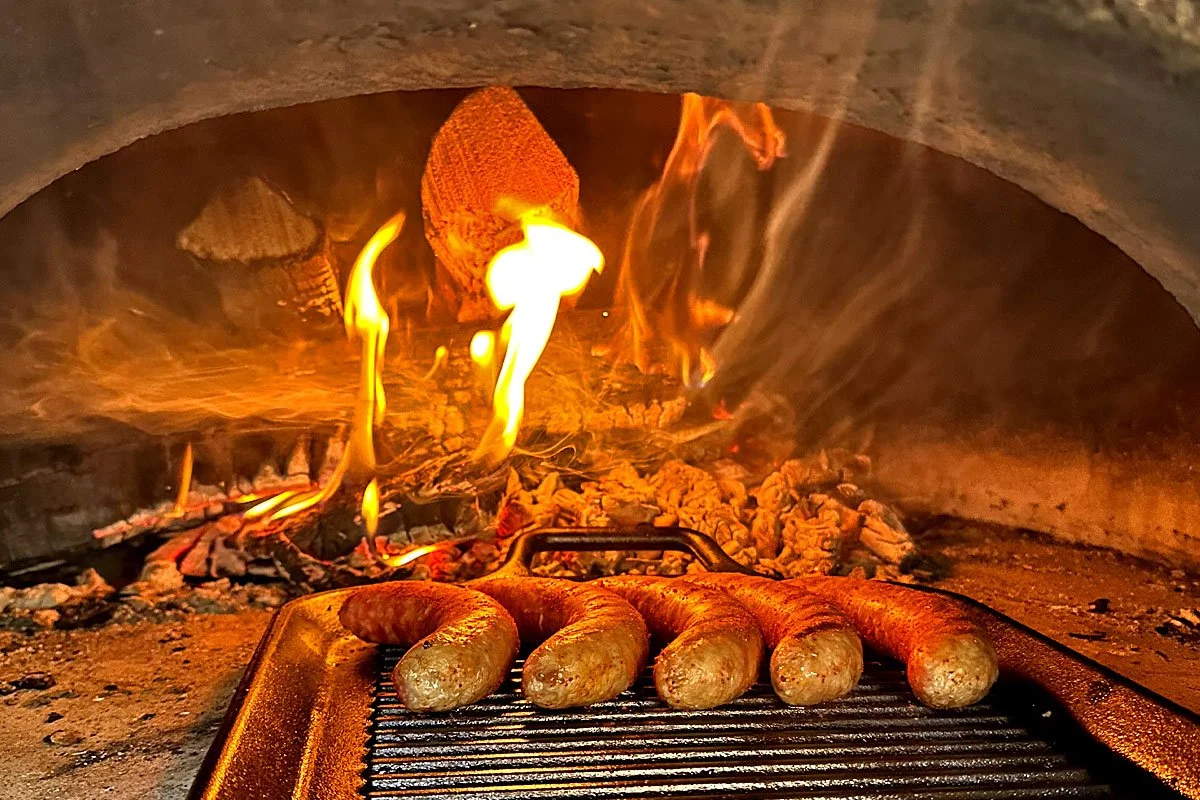
Cast iron pan.
Cast Iron
Max Heat: 900°F+
Best Uses: Stews, bread, braises, hard sears, heavy roasts
Advantages: Unmatched heat retention, highly durable
Limitations: Heavy, maintenance to avoid rusting and slower to adjust temperature
Stainless Steel
Max Heat: 800°F+
Best Uses: Potatoes, roasting, pan cooking
Advantages: Non-reactive, durable, easy to maintain
Limitations: Lower heat retention than iron or steel
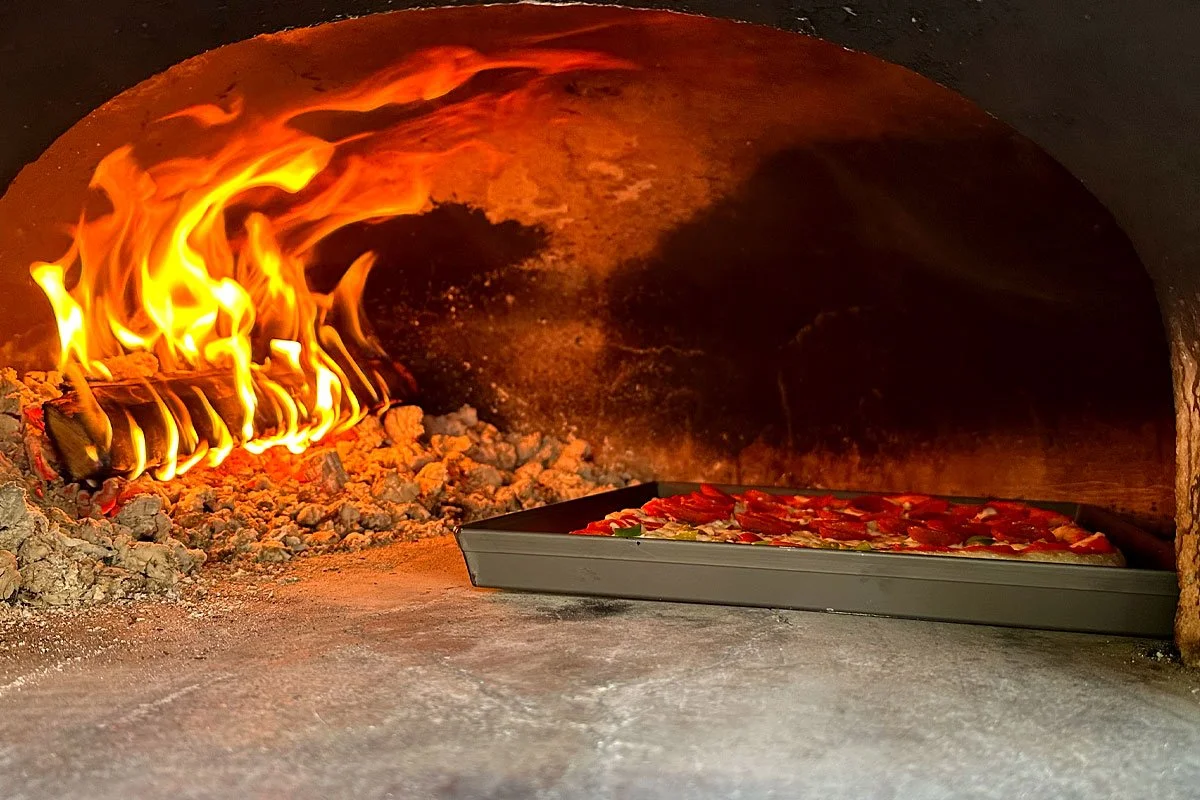
Anodized aluminum pan.
Anodized Aluminum
Max Heat: 700°F –800°F
Best Uses: Pizza pans, baking, lower-heat (relatively speaking) roasting
Advantages: Lightweight, fast heat transfer, durable surface
Limitations: May warp under extreme temperatures at the top end of a brick oven’s range
Non-Stick
Max Heat: Below 500°F
Best Uses: Not recommended for brick ovens
Advantages: Easy cleaning
Limitations: Coatings break down and become unsafe at high heat, handles may not be oven proof
What Is the Best Pan for a Wood Fired Brick Oven?
Carbon steel is my top choice for most brick oven cooking. It delivers the same high-temperature performance as cast iron, but at a fraction of the weight. A well-seasoned carbon steel pan handles direct heat, recovers quickly from temperature swings, and is easier to maneuver inside a live-fire oven.
For heavy stews, bread baking, and long braises, cast iron and Dutch Ovens are unmatched for heat retention and stability.
If you’re cooking pan pizzas in your wood-fired brick oven (Detroit, Chicago etc.), anodized aluminum is a top pick.
Can You Use Non-Stick Pans in a Wood Fired Oven?
No. Non-stick cookware is not designed for temperatures above 500°F to 600°F. In a brick oven environment, coatings can degrade, flake, and contaminate food. For safety and performance, non-stick pans should be avoided entirely in live-fire cooking.
Is Aluminum Safe in a Brick Oven?
Standard aluminum pans conduct heat well, but often warp under the uneven and intense heat of a wood fired oven. They can work for lower-temperature cooking below 500°F, but they are unreliable for high-heat applications inside the oven.
Anodized aluminum, however, performs much better. The hardened aluminum oxide surface increases durability, resists reactivity, and holds its shape more effectively at temperatures approaching 700°F to 800°F. For pizza pans and baking, anodized aluminum remains a practical and affordable option. Lloyd Pans are my top pick for brick oven pan pizza. They are built to last, though they also tend to be at the upper end of the price scale.
Cast Iron for Brick Oven Cooking
Cast iron thrives under extreme heat. It retains thermal energy exceptionally well, making it ideal for bread baking, slow-cooked dishes, and thick cuts of meat (searing etc.).
My preferred brand is Lodge, which produces reliable cast iron cookware that performs consistently in high-temperature environments and is well-priced. Weight is the main drawback of cast iron cookware, which can make maneuvering pans inside a hot oven more demanding. Always use a good pair of oven gloves when handling pans in a brick oven.
Why Carbon Steel is My Top Choice
After years of testing many types of pan materials, carbon steel has become my most-used cookware in the brick oven (for anything other than pan pizza). It combines the durability of cast iron with the agility of lighter metals. Once seasoned, carbon steel develops a natural non-stick surface and cleans easily after high-heat cooks.
My top picks include carbon steel pans from Oxo and Made In, both of which offer strong heat ratings and dependable construction for live-fire cooking. I have yet to try Lodge carbon steel pans, but they seem to be well regarded.
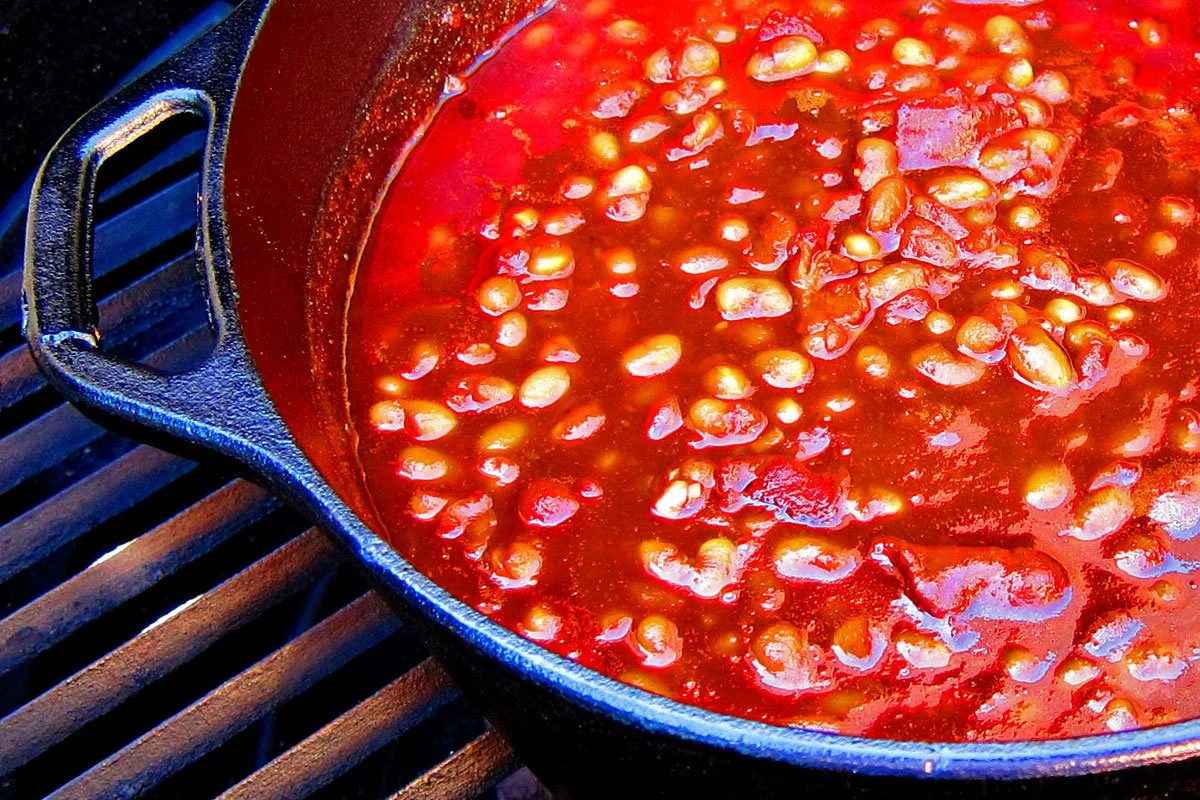
Cast iron Dutch Oven.
Best Dutch Ovens for Wood-Fired Brick Ovens
Dutch ovens are among the most versatile tools for brick oven cooking.
They excel at:
Slow roasts and braises – Heavy lids trap steam and enhance tenderness
Soups and stews – Even heat retention ensures consistent simmering
Bread baking – Enclosed steam creates crisp, professional-quality crusts
Enameled Dutch ovens from Le Creuset and Staub offer easier maintenance, while traditional cast iron camp ovens from Lodge provide excellent durability. I use the Lodge Dutch Oven for brick oven baked beans.
Best Pan for Wood Fired Pizza
For pizza, when making a pan pizza I recommend anodized aluminum (Lloyd Pans are my favourite) or carbon steel pizza pans. These materials transfer heat quickly and maintain structural integrity at temperatures up to 800°F, making them ideal for consistent crust development.
Best Pan for Roasting Meat in a Brick Oven
Carbon steel and cast iron are the best options for roasting meats. Both retain heat evenly, withstand radiant brick temperatures, and recover quickly when oven doors are opened or fuel is adjusted.
Frequently Asked Questions
What temperature does a wood-fired brick oven reach?
Most wood fired brick ovens can reach a temperature well over 1000°F+, depending on fire management, fuel type, and cooking method. At top temperature (for thin crust pizza), a wood-fired brick oven will easily exceed 1000°F, but you can (and should) cook other foods at temperatures well below this as well. It’s all about fire management and getting to know your particular oven.
What cookware lasts the longest in a brick oven?
Cast iron and carbon steel typically last the longest due to their durability, resistance to thermal shock, and ability to handle repeated exposure to extreme heat.
Is stainless steel better than cast iron for brick ovens?
Stainless steel is lighter and easier to maintain, but cast iron offers better heat retention for slow cooking and baking.
Final Thoughts on Pans for a Wood-Fired Brick Oven
The right cookware unlocks the full potential of a wood fired brick oven. Carbon steel offers the best balance of performance and usability, cast ironremains a high-heat classic, and stainless steel fills a reliable supporting role. Anodized aluminum (which I prefer over stainless steel) is an excellent option for baking and pan pizza, cooked below extreme temperatures, while Dutch ovens bring unmatched versatility to slow cooking and bread baking.
With the right pans, your brick oven can go far beyond pizza and become a true live-fire cooking system.
Just starting out with your brick oven? Read more about how to build a fire, and the best woods to use.
By BBQ Chef Mike Belobradic
Founder, SmokeFireGrill.ca and the Northern Barbecue™ Method of live fire cooking
Visit the shop for barbecue t-shirts, hoodies and sweatshirts.