
Clean Smoke vs. Dirty Smoke: Understanding Combustion
The Science of Smoke for Smoked Foods
Smoke is one of the most misunderstood parts of barbecue. It’s pretty ironic, because it’s also a critical element and flavour ingredient that you want.
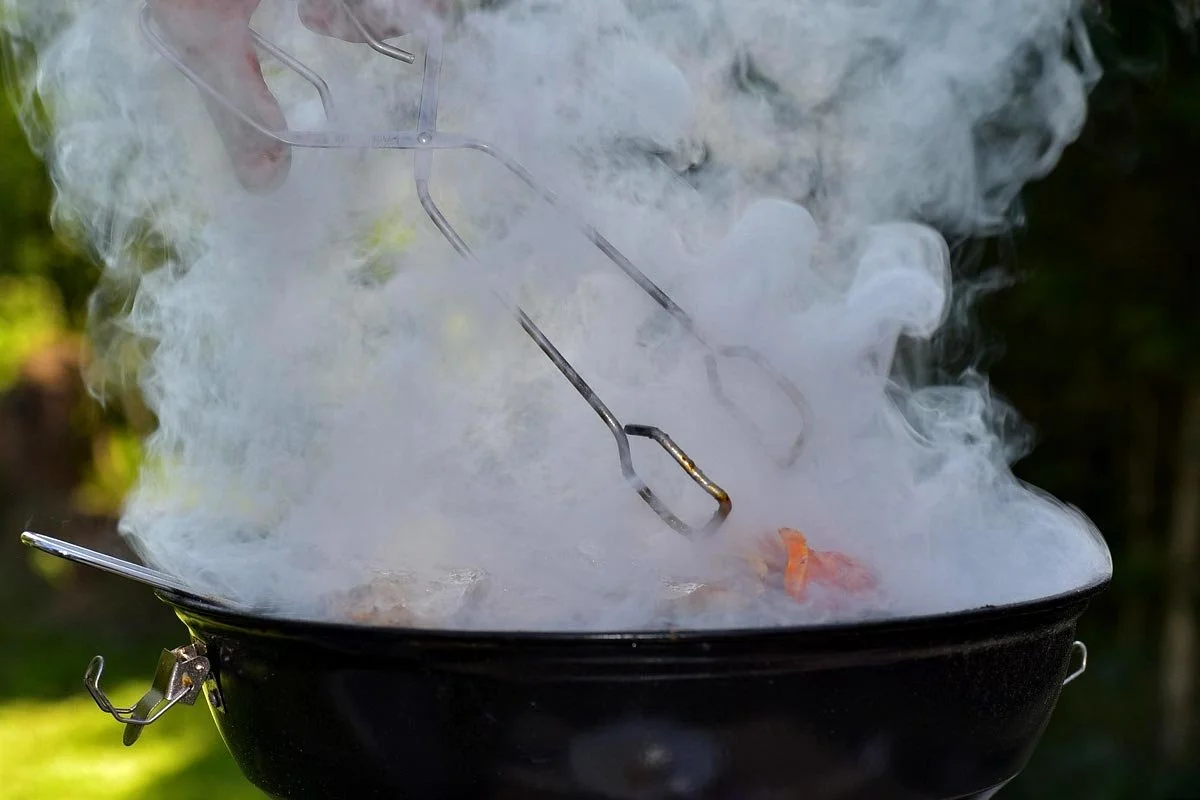
Social media has made a lot of people think that “good BBQ” means thick, billowing white clouds — the kind that look dramatic on camera and rack up views. Admittedly that kind of smoke can smell good.
But in real cooking, that kind of smoke is a problem, not a goal.
Clean smoke is subtle, almost invisible, and flavourful. Dirty smoke. (those white clouds) is harsh, bitter, and overwhelming. It puts on a show for sure (usually at the beginning of your fire) and smells great in the yard, but you don’t want to cook over that.
If you’re new to barbecue, you might get nervous when that billowing smoke suddenly stops and you don’t see anything coming from the top vent. You’ll walk over to see what’s wrong, only to hear and smell your food happily cooking with the good smoke.
Understanding the difference between these two main types of smoke is one of the most important skills in live‑fire cooking.
What is Actually Happening to Wood or Lump Charcoal When it Burns?
Wood goes through three stages when it burns and it’s important to understand these if you want to elevate your live-fire cooking game.
Drying: Moisture evaporates from the wood (or lump charcoal, which can still contain moisture)
Pyrolysis: Wood breaks down into gases
Combustion: Those gases ignite
Number three is important, because clean combustion happens when the gases burn efficiently. Dirty combustion happens when they don’t.
Clean Smoke is a Sign of Efficiency
Clean smoke isn’t showy, but it’s a wonderfully subtle flavour ingredient, the kind you most often want to have. This type of smoke is thin (not big billowy clouds), light blue or nearly invisible (not white or grey), mild in aroma (not filling the yard) and pleasant in flavour (not harsh, bitter or generally overpowering). Going back to my example above, this is what you’ll experience when you run to check if your smoker is still doing its thing. It is and it’s right where you want it to be.
To get this ideal smoke the fire has to have enough oxygen, the fuel has to be dry, and the combustion cycle has to fully complete.
This is the smoke that seasons food without smothering it.
Dirty Smoke is a Sign of Incomplete Combustion
At the other end of the spectrum is what you want to avoid. Dirty smoke is thick and billowy, usually white or grey, and it can be acrid and bitter. You can’t really avoid it at first, but that’s okay. Guests love this phase because it sort of sets the tone for what’s to come. Just don’t cook on it.
Outside of that start-up phase when you first light a fire, this kind of billowy dirty smoke can also happen due to other causes. The causes are usually:
Wood is too wet
Airflow is restricted
The fire is smothered
The fuel load is too big (or too much, smothering what’s burning underneath)
This is the smoke that leaves food tasting sort of like an ashtray. So if it’s happening for too long (or starts happening in the middle of a cook), you need to do something to fix it.
Airflow is the Heart of Combustion
If you want clean smoke, you need the proper airflow.
Fire needs oxygen to burn efficiently, and restricting that oxygen is the fastest way to create dirty smoke.
This is why “choking the fire” to lower temperature is a mistake. You’re not lowering heat — you’re suffocating combustion.
There are a few recipes out there (usually for kamado smokers) that instruct you to close all vents and the smoker lid and let the meat continue to rest. The theory is that you stop the heat from rising and create a second heat zone. But if you’ve ever done this, you may notice that when you open the lid, a big plume of that dirty smoke will hit you right in the face. And that dirty smoke has been shrouding the meat you’ve been carefully tending over the fire.
So don’t do this. That is bad advice.
In a situation like this, I recommend that you do not entirely close the vents. Leaving one or both open (even a small sliver) will help to avoid bathing your food in dirty smoke right before you’re about to pull it from the grill.
In short, whatever the cause of the dirty white smoke, the first thing to try is opening the vents and getting more airflow.
Fuel Quality Matters
Obviously, what you use to cook your food is very important. Dry, seasoned wood burns cleanly. Wet or resinous wood produces thick, dirty smoke.
Charcoal quality matters too. If your hardwood lump charcoal bag has been left out in the rain or in a very moist place, it can also need to burn off some moisture. Cheap briquettes with fillers burn inconsistently and create off‑flavours.
Smoke Should Be a Seasoning, Not a Blanket
Think of it this way: the goal isn’t to smoke food more. It’s to smoke food better.
Clean smoke enhances flavour. Dirty smoke overwhelms it.
The Myth of the Smoke Hack
Every few weeks, a new “smoke hack” goes viral — tossing herbs on coals, adding sugar to wood, soaking wood chips in beer, using pellets in strange ways.
You have to be careful with these things and not just blindly accept them as a wise thing to do. Some of them are genuinely sound and usually based on a well-known cooking principle (with the influencer adding the element of show).
But the other half are something that may look great or cool in a short video, but that don’t hold up in real cooking. My advice—if you want to try new things (and you should always be open to trying new things), is to do it for yourself with a test cook and not for the first time when you have a group of guests awaiting their food.
Smoke isn’t a trick. It’s a controlled process.
When you understand combustion, you stop chasing hacks and start producing consistent, clean, flavourful results.
Want to know more about smoke? Read my Complete Guide to Smoke in Hardwood Barbecue.
By Chef Mike Belobradic
Looking for a structured way to improve your live-fire cooking skills? Consider the Northern Barbecue™ Method.