
How to Pair Wine with Charcoal Grilled and Smoked Foods
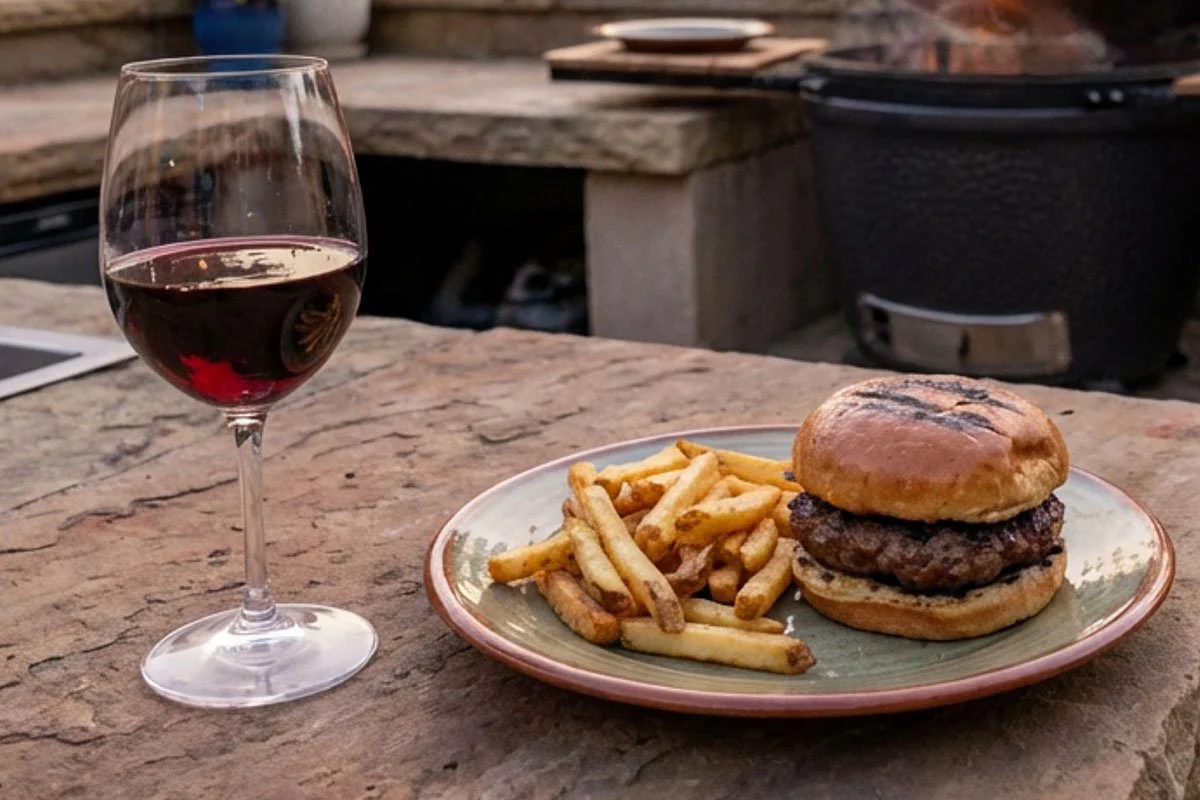
A Chef’s Guide to Perfect Wine Pairing with Live-Fire Cooking
Pairing the right wine with your charcoal grilled foods isn’t just about the protein, it’s also about the fuel source. This post will help you pick the perfect wine for any food cooked over hardwood heat (lump charcoal or wood) on a grill, smoker or a wood-fired brick oven.
To put it all in perspective, the first thing to know is that charcoal or wood isn’t neutral heat—it’s an ingredient you are adding to your food (and it’s different than gas grilling or electric pellet grills—you can read more about wine for those rigs in this wine pairing post).
When you cook over hardwood lump charcoal, a fire pit, or a brick oven, you’re layering smoke, savoury depth, subtle bitterness, and amplified umami onto whatever you grill. That’s important because those changes directly affect how wine behaves on your palate. So it’s not as simple as red wine with steak and white wine with fish.
This guide is built for real‑world use and will answer the question: “I’m grilling ___ over charcoal—what wine should I pair?”
I’m not recommending specific brands and there’s no snobbery here. Just a look at structure, grape varieties, and flavour logic you can use.
How Charcoal Changes Food Flavour (and Why it Matters for Wine)
Charcoal (and firewood) adds four key elements to the food you’re cooking:
Smoke aromatics that deepen savoury notes
Phenolic bitterness from char and combustion
Heightened umami from the fat-and-fire interaction
A softening effect on tannin where smoke integrates perfectly
This means charcoal‑grilled foods can handle wines with more structure, more earth, more grip, and more savoury complexity than the same foods cooked over gas or pellets.
To boil it down to one simple concept: remember that charcoal rewards structure. That’s the core principle.
What Wine to Pair With the Most Common Charcoal‑Grilled Foods
Here’s an overview of some of the most common charcoal-grilled foods and how to make your wine-pairing decision. The brackets are examples only.
Steak (Ribeye, Striploin, Sirloin)
Charcoal effect: smoke and fat, meaning softened tannin, deeper umami.
Best wine styles: structured reds, earthy or savoury profiles, medium to full body.
Grapes: Cabernet Sauvignon, Syrah/Shiraz, Malbec, Tempranillo, Sangiovese, Mourvèdre, Bordeaux blends.
Why: tannin binds with fat; smoke smooths the edges; earthy notes echo charcoal’s savoury character.
Chicken (Whole, Thighs, Spatchcocked)
Charcoal effect: smoke clings to skin; seasoning intensifies (even with skinless chicken — the absorption qualities of raw chicken and char-grilling hold true here as well).
Best wine styles: textured whites; medium reds with soft tannin.
Grapes: Chardonnay (moderate oak), Viognier, Chenin Blanc, Pinot Noir, Gamay, Grenache, Pinot Grigio.
Why: these options have enough weight to stand up to smoke without harsh tannin fighting charred skin.
Fish (Salmon, Trout, Swordfish, White Fish)
Charcoal effect: more char bitterness; deeper caramelization.
Best wine styles: whites with body; aromatic whites; very light reds.
Grapes: Chardonnay (unoaked or lightly oaked), Grüner Veltliner, Viognier, Pinot Gris, Pinot Grigio, Rosé, light Pinot Noir.
Why: texture supports smoke; low tannin protects delicate proteins.
Burgers (Beef, Bison, Blended)
Charcoal effect: fat and smoke equal big flavour.
Best wine styles: bold, juicy reds with ripe tannin.
Grapes: Zinfandel, Syrah, Cabernet Franc, Malbec, GSM blends.
Why: burgers are great because they can take both fruit and structure; smoke rounds tannin, fat amplifies richness.
Sausages (Bratwurst, Italian, Chorizo)
Charcoal effect: smoke integrates with spice and fat.
Best wine styles: savoury reds; structured whites for spicy sausage.
Grapes: Syrah, Tempranillo, Sangiovese, Zweigelt, Riesling (dry or off‑dry), Gewürztraminer.
Why: the spice and smoke combination needs a little complexity, not just simple fruit.
Ribs (Pork or Beef)
Charcoal effect: smoke depth plus sweet glaze and rendered fat are all in effect here.
Best wine styles: moderate‑tannin reds with acidity.
Grapes: Zinfandel, Barbera, Grenache, Syrah, Lambrusco (dry), Cabernet Franc.
Why: acidity cuts sweetness; savoury notes match smoke; tannin handles fat.
Brisket (Charcoal‑Smoked or Live‑Fire Roasted)
Charcoal effect: deep smoke, bark bitterness, intense umami.
Best wine styles: full‑bodied reds with firm structure.
Grapes: Syrah/Shiraz, Cabernet Sauvignon, Petite Sirah, Mourvèdre, Rioja Reserva styles.
Why: brisket is one of the few dishes that can handle big tannin; the smoke and fat make it smooth.
Pork (Chops, Tenderloin, Shoulder)
Charcoal effect: smoke deepens flavour; glazes intensify; lean cuts need acidity.
Best wine styles: medium reds; weighty whites.
Grapes: Pinot Noir, Grenache, Barbera, Chenin Blanc, Chardonnay, dry Riesling.
Why: smoke broadens pairing options here—white or red can both work, depending on the cut and seasoning.
Pizza (Brick Oven or Charcoal‑Fired)
Charcoal/brick-oven effect: high heat, charred crust, tomato acidity.
Best wine styles: high‑acid reds or whites; moderate tannin; herbal or mineral profiles.
Grapes: Sangiovese, Barbera, Nebbiolo (younger), Montepulciano, Vermentino, Fiano.
Why: tomato sauces call for acidity; char demands savoury notes; cheese means freshness.
Seafood (Lobster, Shrimp, Calamari, Shellfish)
Charcoal effect: Seafood absorbs smoke quickly. Charcoal adds a light phenolic edge, deeper sweetness from caramelization, and a subtle bitterness from char. Shellfish also brings natural salinity and sweetness that interact with acidity in wine.
Best wine styles: whites with texture and freshness, aromatic whites with moderate weight, sparkling wines with good acidity, very light reds only when the seafood is heavily charred or spiced
Grapes: Chardonnay (unoaked or lightly oaked), Chenin Blanc, Albariño, Grüner Veltliner, Vermentino, Fiano, dry Riesling, traditional‑method sparkling wine, very light Pinot Noir for charred preparations.
Why: You need acidity to balance sweetness, enough body to stand up to smoke, and aromatics that complement—not compete with—the oceanic character.
The Perfect Wine Pairings for Backyard Barbecue
These are pairings that I have come up with over the years, putting my barbecue experience together with my wine background. There are several options in every category, so hopefully you can find something you’d like to try for your next hardwood charcoal or live-fire backyard cookout.
Read more posts from the Northern Barbecue™ fire and wine series.
By Mike Belobradic
Live-Fire Barbecue Chef with WSET Wine designation.