
Tools vs. Gadgets in Live-Fire Barbecue: Why Less Really Is More
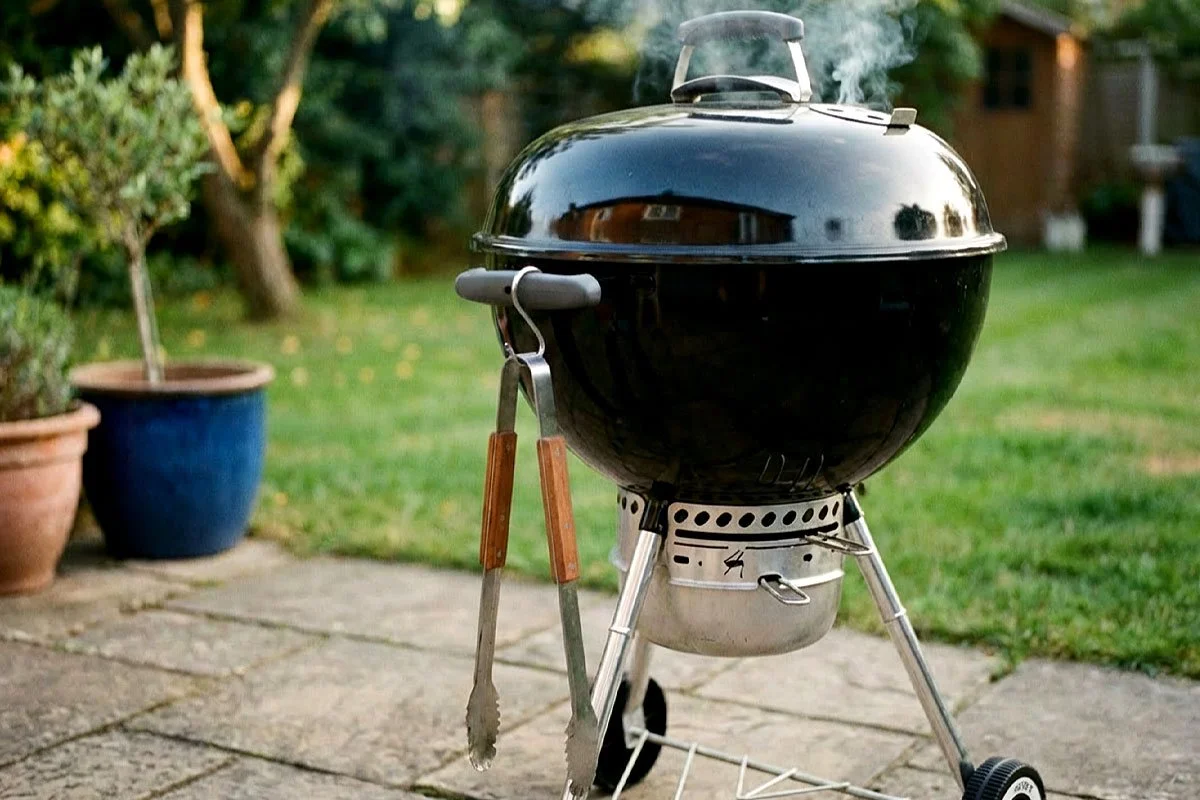
No single gadget or tool is going to make you a better barbecue chef or pitmaster
There are a couple of things that really stuck with me in culinary school: one is that the dollar store is your friend when it comes to spatulas and things like that, and the second is that gadgets and gizmos are the enemy of an efficient kitchen.
We learned that a good chef’s knife, for example, is your true Swiss Army knife in the kitchen. If you know how to use the tools of the trade, it’s amazing how much you can do and how efficiently you can do it. Not that drawer full of gizmos, not the late-night TV miracle slicer—just that one, well-balanced, razor-sharp blade that can do almost everything if you know how to use it.
Your live-fire barbecue set-up is no different.
In a world where your social feeds are full of shiny accessories, glowing LEDs, and “game-changing” gadgets of one type or another, it’s easy to get lulled into thinking that you’re one purchase away from being a better barbecue chef. But that simply isn’t true. The right tools help you cook better. Gadgets mostly help you scroll more, spend more money and focus less on the core tasks at hand.
Tools vs. gadgets in barbecue
What is a good barbecue “tool”?
A good barbecue tool is something that:
Solves a real problem: It has a clear, necessary purpose in your workflow.
Integrates seamlessly: It doesn’t slow you down; it becomes an extension of your hands.
Supports skills, doesn’t aim to replace them: a good tool amplifies what you know how to do.
In live-fire barbecue, good tools are things like:
A solid, sharp knife
Sturdy tongs with good grip
A reliable instant-read thermometer (or set of probes)
A good brush or scraper for your grates
Heat-resistant gloves you trust
A well-made cutting board
A quality fire poker or coal rake
These are your “chef knife” equivalents at the grill—core, versatile, and essential.
What is a barbecue gadget?
A gadget is something that:
Looks exciting at first: You saw it in a reel, it looked cool, and you thought, “I need that.”
Adds complexity: It has a learning curve, extra parts, breakable tech, relies on a digital connection, or a setup that interrupts your flow.
Solves a problem you don’t really have: Or worse, it creates new ones—like clutter, confusion, or distraction.
Gadgets in barbecue might be:
Hyper-specific tools that only do one oddly narrow thing
Over-engineered “multi-tools” that do five things (badly)
Novelty items that look great in videos, but never leave the drawer after a week or two
Digital items that require watching videos, reading manuals or relying on their (often cheap) tech to deliver on their promise
None of these things are part of the foundation of good cooking.
How gadgets clutter your cook
One of the first things you learn in a professional kitchen is that clutter is the enemy of speed, safety, and consistency. Every extra object on your work station is one more thing to work around, trip over, or knock to the floor.
Live-fire cooking raises the stakes even more:
Clutter slows your reactions: When you’re managing live flames, hot grates, and time-sensitive food, you don’t have seconds to spare hunting for that “special” tool.
Extra gear steals your focus: Instead of reading the fire, feeling the heat, and watching your food, you’re fiddling with a tool or trying to remember how something works.
Complexity increases risk: The more moving parts, the more chances for something to fail at the worst possible moment.
Gadgets usually promise ease, but in practice they can interrupt the natural rhythm of your flow. And rhythm is everything in live-fire.
When people ask me about gadget X or Y that they saw online, I usually tell them that if you don’t inherently know how to use it without watching how-to videos, it’s probably not going to bring you efficiency or make you better at the grill. You don’t need instructions to use tongs.
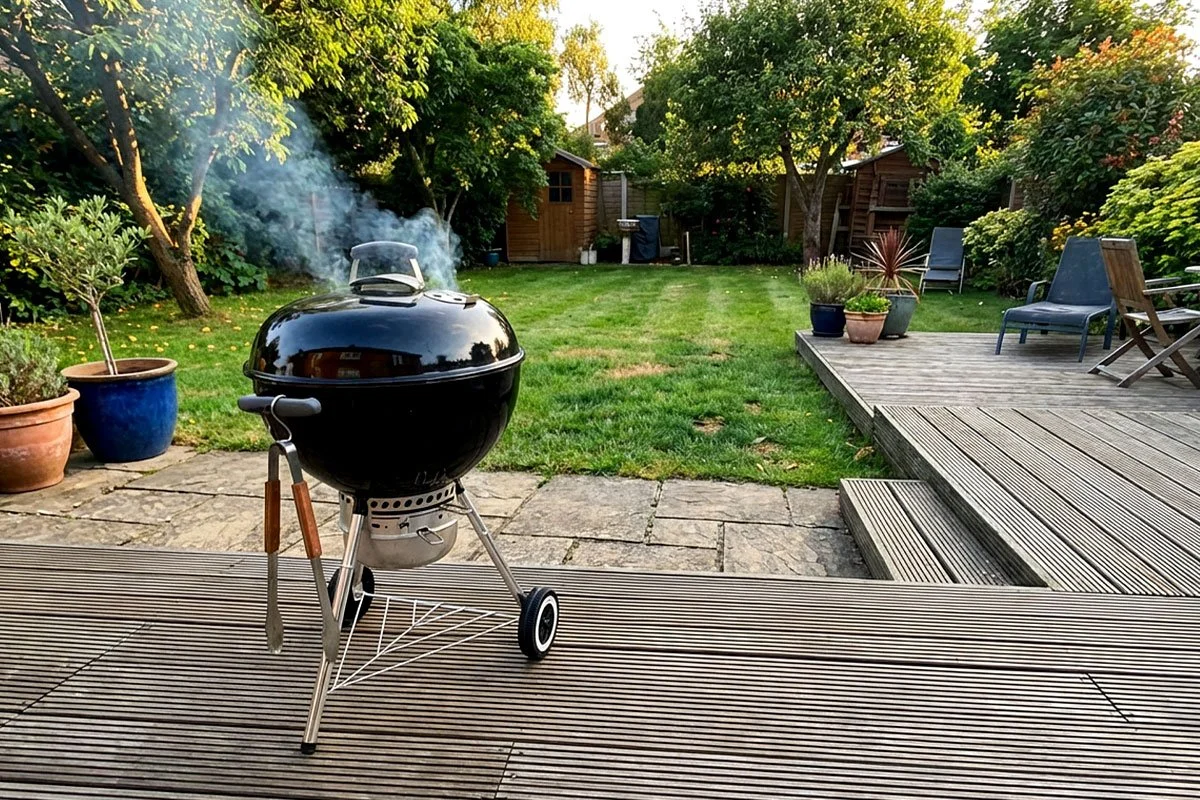
The power of the right barbecue tools
I’m generalizing a lot, but you get the idea (and you may even have some gadgets coming to mind that are sitting in a drawer somewhere right now).
When you choose tools thoughtfully, they do something important: they disappear.
By that I mean that they fade into the background of your awareness as you work. You stop thinking about them and start thinking about the food, the fire, and the timing.
The right tools:
Make you faster: You know exactly how they feel, how they respond, and where they live in your setup.
Make you work safer: Good gloves, solid tongs, and a stable cutting board aren’t “nice-to-haves,” they’re non-negotiable.
Make you more consistent: Reliable tools give you repeatable results, which is the backbone of skill.
Skill plus the right tools is what creates efficiency and flow in your cooking space. That is the feeling when everything is working, you’re in control of the fire, and the cook just works.
Social media, shiny objects, and the illusion of progress
Scroll long enough and you’ll start to feel like you’re behind if you don’t have the latest gadget. Someone’s unboxing a new thermometer, someone else is demoing a “must-have” grill rack, and suddenly your perfectly capable setup feels outdated.
When you’re seeing all of this, try to remember that:
A new gadget feels like progress, even when it isn’t.
Buying something is easier than building a skill.
Skill is quiet. It doesn’t ship in a box. It doesn’t arrive next day. It’s built over time, through repetition, attention, and a lot of “almost” moments.
“Gadgets can be fun, and they can even be useful sometimes—but they’re not a shortcut to mastery.”
Gadgets can be fun, and they can even be useful sometimes—but they’re not a shortcut to mastery. If anything, they can delay it by pulling your focus away from the fundamentals.
Less is More: the Professional Mindset from Culinary School
In any serious kitchen, if you watch for long enough you’ll notice something: the more experienced the cook, the fewer the things they keep at their station.
They don’t need 20 tools. They only need the right five.
That mindset translates directly to live-fire barbecue:
Fewer, better tools: Invest in quality over quantity. One great reliable thermometer beats three cheap ones.
Know your tools deeply: Understand how they behave in heat, in grease, in time-sensitive moments.
Build systems, not piles: Everything has a place, a purpose, and a reason to be there.
When your setup is lean and intentional, you move with confidence. You’re not improvising around clutter—you’re executing a plan.
So… are gadgets always bad?
Of course not. I like a good gadget as much as the next person. I mean, sometimes you just want a toy. That’s human.
As far as I’m concerned it’s okay to:
Buy something because it looks fun
Try a new gizmo on a low-stakes cook
Enjoy the novelty of a clever design
But the key is to be aware of how you frame it in your cooking process.
If you treat gadgets as entertainment, experiments, or occasional add-ons, they’re harmless—and sometimes even inspiring.
But if you start believing that the next gadget is the missing piece between you and great barbecue, that’s where it becomes a problem.
Gadgets should orbit your craft, not define it.
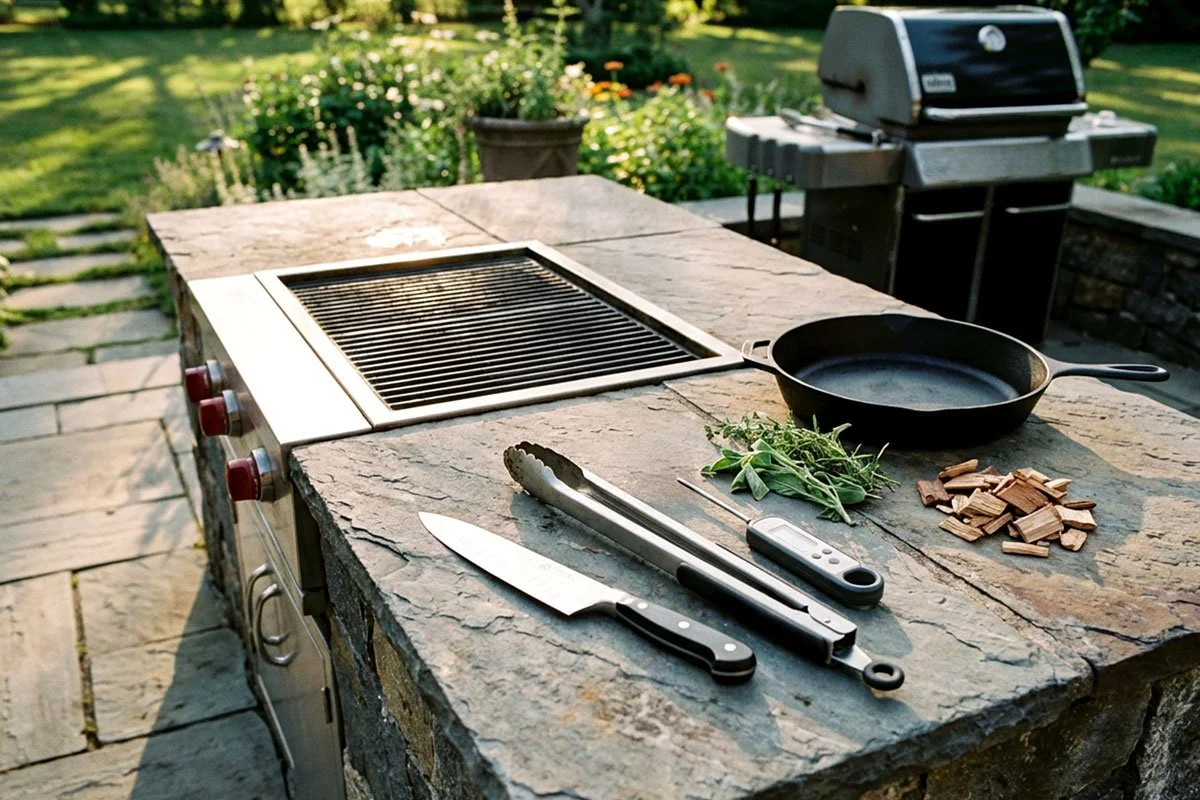
Tools, skills, and the long game
If you’re serious about live-fire cooking—about really understanding heat, time, smoke, and texture—then your best investment isn’t in the next shiny thing. Focus on:
Learning fire management
Understanding doneness by temperature (and even feel, when you reach that level)
Mastering a small set of core tools
Refining your setup so it works with you, not against you
Because in the long run, skill with a simple setup will beat inexperience with a complex one every time. A cook who knows their tools will outpace someone still figuring out how their gadget works. A clean, intentional workspace will always outperform a cluttered, distracted one.
The Barbecue Gadgets Takeaway
If we bring it back to my culinary school lesson that your chef’s knife is your Swiss Army knife, in live-fire barbecue, your “knife” is your core kit—those are the tools you reach for every single time.
So try to keep the following points in mind the next time your curiosity is tweaked by a social media barbecue gadget ad:
Be ruthless about what earns a place in your setup.
Be curious about gadgets, but honest about what they’re really for.
Be committed to skill first, and toys second.
Learn the skills. Master the tools. Save the gadgets for the days you’re just playing around.
That’s how you move from “collector of cool stuff” to true craftsperson at the fire.
By Mike Belobradic
Founder of the Northern Barbecue™ Method of live-fire cooking skills development