
Is Barbecue Only Low and Slow?
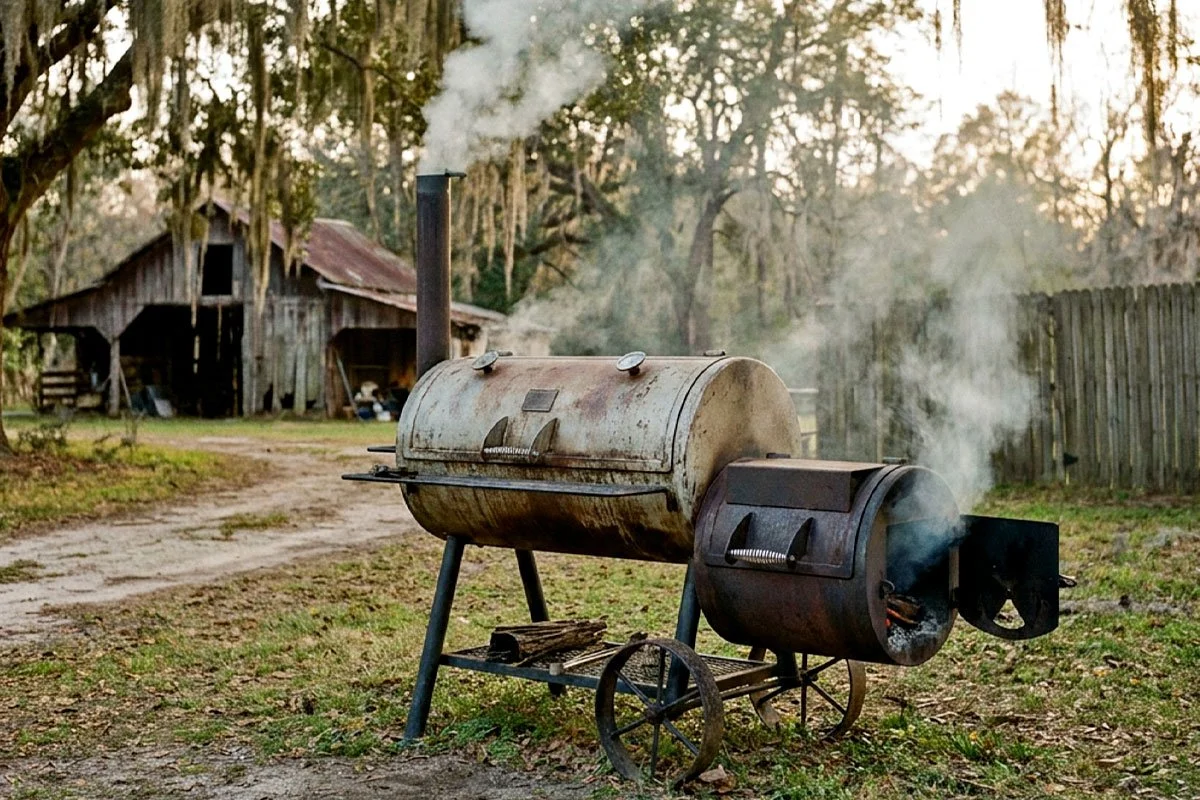
Why that Definition of Barbecue is Too Narrow
Try a little experiment. Ask 10 people what barbecue is, and you’ll probably hear a lot them say: Low and slow (especially if you’re in the southern U.S.), or at least answers that lean towards low and slow.
Brisket. Pulled pork. Ribs. Hours of smoke, low temperatures, patience, all of that.
And that is barbecue. But it’s not the whole barbecue story.
Where “Low and Slow” Comes From
In the American South, barbecue evolved into something very specific: cooking tougher cuts of meat over low heat for long periods of time.
The approach works. It produces incredible results. And it has shaped how a lot of people define barbecue today.
But historically, barbecue didn’t start as cooking within a strict temperature range.
It started as a method of cooking over fire. The origin story of barbecue traces back to barbacoa, a raised wooden structure used by the Taíno people to cook food slowly over coals. Read my full post on the origin of the word barbecue.
The origin story tells us that barbecue has always been about live-fire management, not just long cooking times.
The Problem with a Narrow or Regional Definition
If barbecue only means “low and slow,” then a lot of live-fire cooking gets pushed outside the category:
Cooking steaks over open flame
Managing a coal bed for direct heat
High-heat searing followed by controlled finishing
Global traditions built entirely around live fire
That is where the definition starts to break down. Because those techniques rely on the same core skill: controlling fire. That’s why barbecue in Canada and the Northern U.S. means something entirely different than it does in the South.
But when you consider the core uniting principles between the South and the North, it starts to make sense as a live-fire cooking story.
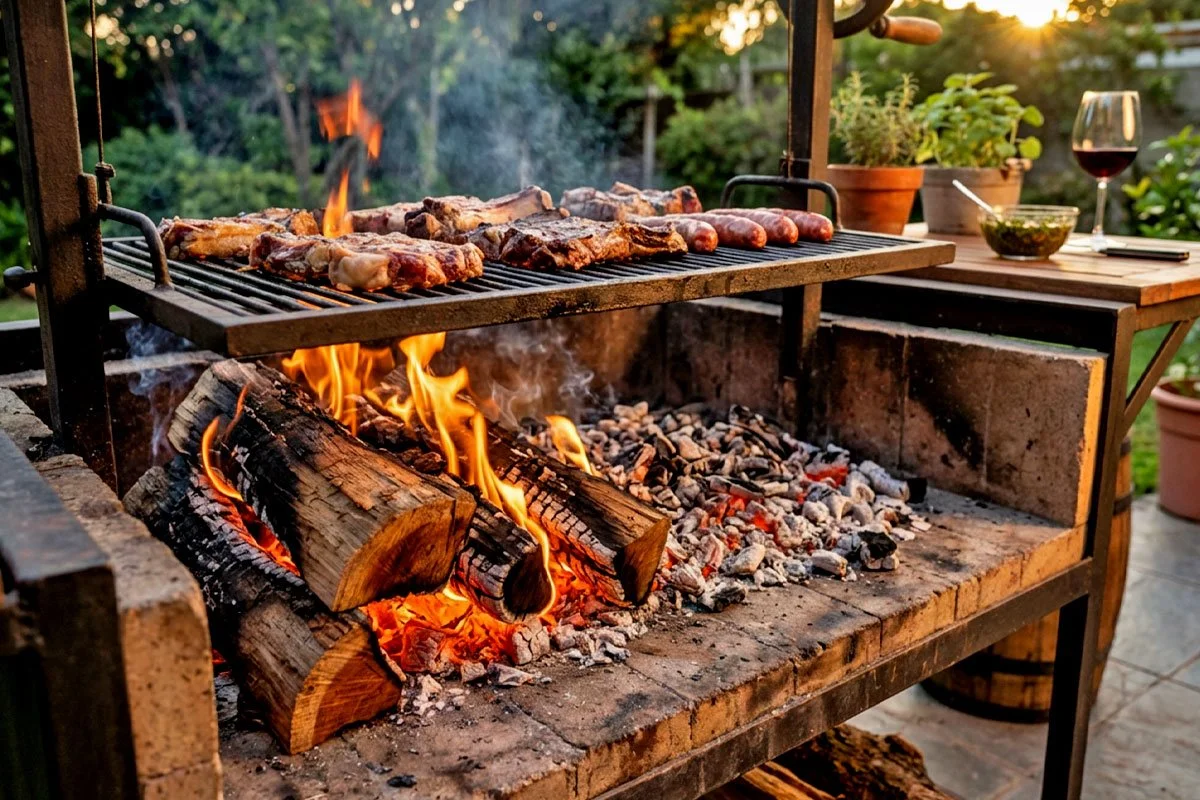
Barbecue Around the World
Things get even bigger when you step outside of North America, and the definition expands quickly.
In South America, Asado is built around wood fire, embers, and a range of cooking distances and temperatures and times. Some cuts are slow-cooked, while others are cooked hot and fast.
In parts of the Caribbean, the roots of barbacoa still show up in how food is cooked over fire.
Even across North America, there is overlap between what people call grilling and what others would still consider barbecue (or is it barbeque or bbq? You get the idea).
The common thread isn’t temperature: it’s fire.
What Defines Barbecue?
I find that a more useful way to think about this is that barbecue is cooking with fire where heat, fuel, and time are intentionally managed.
That definition and approach to live-fire cooking includes:
Low and slow smoking
Medium heat roasting over coals
High heat direct-fire cooking
Different techniques. Same foundation. Same core origin source: fire.
Where Does Grilling Fit In?
Grilling is where I find that some people tend to push back.
“Isn’t that just grilling?” I hear it quite a bit.
Sometimes, yes. But not always.
Grilling is often defined as high, direct heat and speedy cooks. Barbecue, on the other hand (in a much broader sense) is defined by how you manage the fire—whether that takes minutes or hours.
The line between the two is not as clean as most people think.
And in practice, a lot of real-world cooking moves back and forth between both styles.
I would argue that it takes the same type of skill and finesse to nail a medium rare steak over 900°F heat in mere minutes as it does to get a perfect brisket at 225°F for hours. Both of those opposite ends of the spectrum rely on managing your fire to deliver the outcome you want. Now that’s cooking with fire.
What This Means for How You Cook
If you only think of barbecue as low and slow, you limit how you use fire.
If you understand barbecue as fire control, everything opens up under the same universal tent:
You cook better steaks
You manage heat more effectively
You adapt to different cuts and conditions
You stop relying on one “correct” method
At Smoke Fire Grill™, and through the Northern Barbecue™ Method, that is the goal. Not to lock barbecue into a single style or region, but to understand it well enough to use it across all of them.
The Better Way to Think About Barbecue
After years of cooking with live-fire around the globe, I look at it this way. To say that low and slow is the only definition of barbecue is an incomplete answer.
Barbecue isn’t defined by temperature alone, and it’s not defined by time alone. It is defined by your approach to cooking over live-fire heat: how you build it, control it, and cook over it. That’s how I see barbecue from a global cooking perspective.
Once you understand that, the question becomes: am I using my fire properly?
And if you want to answer that question, a good place to start is my Complete Guide to Smoke in Hardwood Barbecue.
By Chef Mike Belobradic
Founder of Smoke Fire Grill™ and the Northern Barbecue™ Method of live-fire cooking courses.
Visit the Smoke Fire Grill shop for barbecue t-shirts, hoodies and sweatshirts.