
The Best Red Wines for Your Summer Barbecue
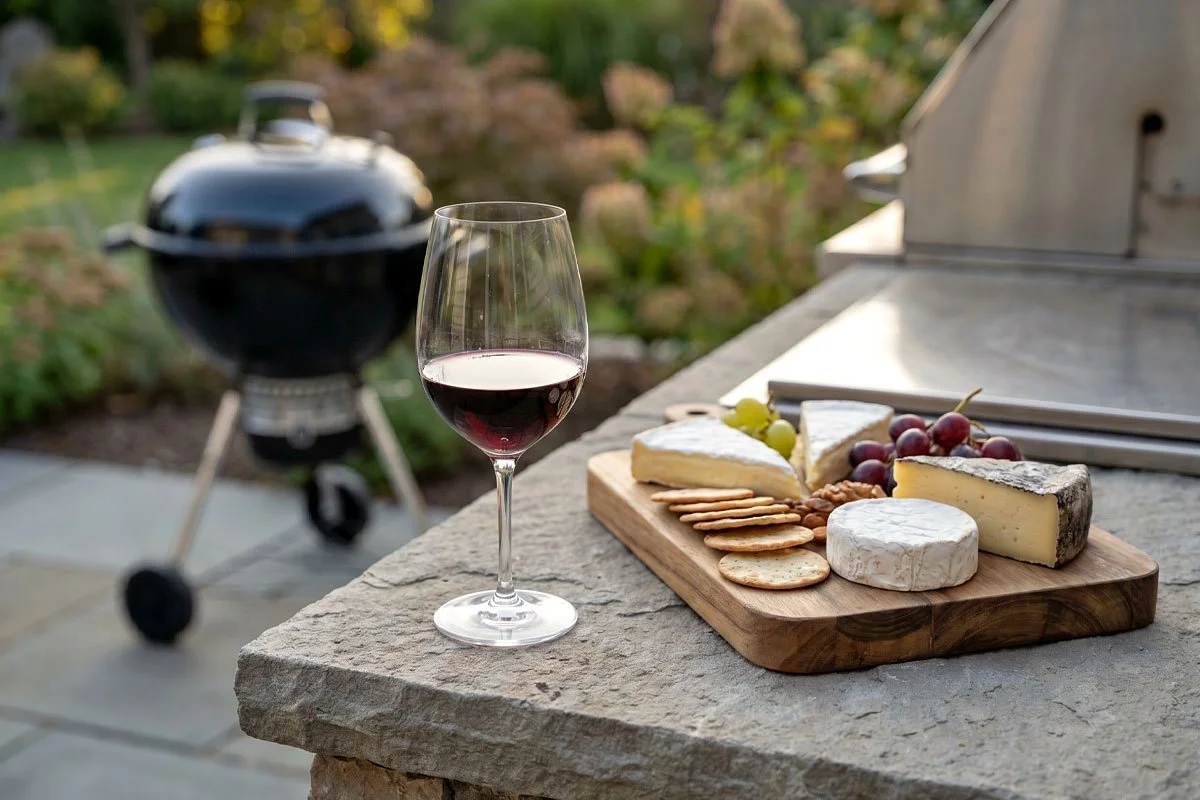
Red Wine and Live Fire: One of the Great Natural Pairings
Red wine and good barbecue feels ready-made. Fat, char, smoke, and protein are natural foils for tannin and dark fruit — the building blocks of most red wines.
But "red wine with barbecue" isn’t a single pairing. It's more like a matrix to explore and understand. The protein matters. The cut of meat matters. The fuel matters. The wood matters. A big, tannic Cabernet Sauvignon that's perfect with a hickory-smoked brisket can completely overwhelm a delicate applewood-smoked chicken breast. So getting it right is important.
Getting it right means starting with the protein on the grill and working outward from there. It also means understanding that live fire and hardwood lump charcoal give you more flavour variables to work with (and to match) than gas or pellets.
So let's discuss how to pick the perfect red for your next barbecue.
Rosé — The Underdog that Belongs at Every Barbecue
Best with: Grilled chicken, sausages, burgers, pork tenderloin, lighter seafood
Before we get into reds, let's make the case for rosé — because it's the most versatile wine at a summer barbecue and I find that it’s often underestimated. A dry, serious rosé (not the thin, vaguely pink kind) has the acidity of a white, the red fruit character of a light red, and the weight to hold up to smoke and char without being flattened by it.
For grilled chicken — particularly when cooked over lump charcoal with moderate smoke — a dry Provençal-style rosé or a Niagara rosé made from Cabernet Franc is close to an ideal pairing. The wine's strawberry and dried herb notes complement the smokiness of the skin, and the acidity cuts through the fat cleanly. It's a combination that works whether the fire under the chicken is hardwood charcoal, live-fire hardwood, or gas.
For sausages and burgers at a casual summer gathering, rosé is genuinely the crowd-pleasing choice. It is flexible enough to handle a range of toppings and condiments that would challenge more specific reds, and cold enough (served properly chilled) to feel refreshing in summer heat.
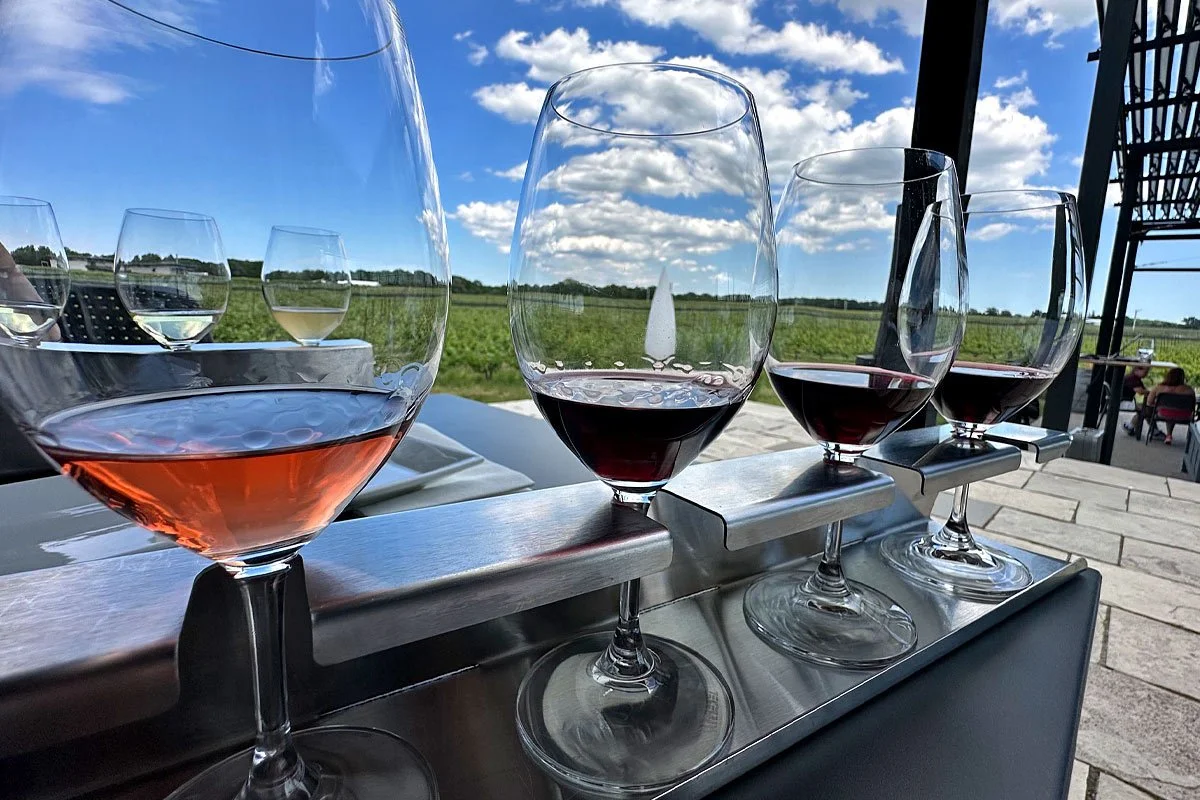
If you’re shopping in the Niagara wine region, you’ll quickly find that Cabernet Franc rosé is a Niagara strength. This grape's natural herbaceous quality softens beautifully into a rosé format, and the result is one of the more distinctive and food-friendly styles in the region. Also look for Pinot Noir rosé from producers on the cooler Bench appellations of the region.
A Note About the Fuel Being Used: Rosé is the most fuel-flexible wine on this list. It works across gas, pellets, and charcoal. Over live fire with significant wood smoke, choose a rosé with a bit more body and colour, because the pale, delicate styles can be overwhelmed.
Pinot Noir — Elegance that Earns its Place at the Grill
Best with: Grilled chicken, cherry or applewood smoked dishes, cedar plank salmon (over gas), pork tenderloin, lighter sausages
Pinot Noir is the red for people who think red wine doesn't work with delicate or lighter grilled food. Spoiler alert: it does, and extremely well when the pairing is right. Pinot Noir’s hallmarks are red fruit (cherry, raspberry, strawberry), silky texture, moderate tannin, and earthy complexity, all of which bridge food and smoke with ease.
For grilled chicken (notably chicken over lump charcoal with cherry or applewood smoke) Pinot Noir is close to the definitive pairing. The wine's red fruit notes mirror the character of fruitwood smoke, and the light tannin structure doesn't compete with the delicate meat. This is one of those combinations where both the food and the wine taste better together than they do alone.
For pork tenderloin over live fire, Pinot Noir is a natural. Pork's mild sweetness and lean texture suit the wine's elegance, and a wood like cherry or pecan in the fire creates a bridge between the two.
Cedar plank salmon over gas (a wood plank on a wood fire can overwhelm the fish) is another strong Pinot Noir moment — the cedar's aromatic character and the salmon's richness are just enough to hold up to the wine's light structure.
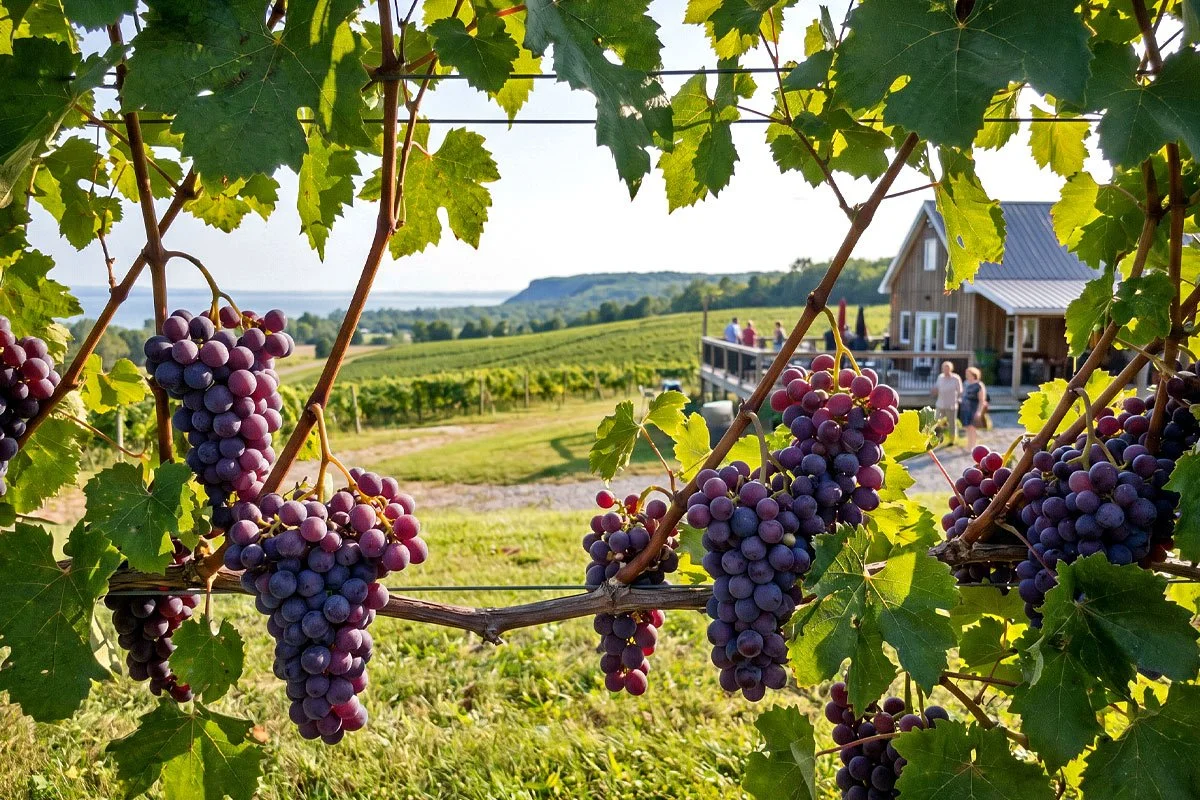
Niagara Pinot Noir is one of the region's most interesting categories — particularly from the cooler Beamsville Bench and Twenty Mile Bench sub-appellations, where the grape's natural acidity and red fruit character are preserved rather than pushed into overripe territory. This is world-class Pinot Noir terrain, and the wines prove it.
A Note About the Fuel Being Used: Over live hardwood fire or lump charcoal, keep smoke light when pairing with Pinot Noir (opt for fruitwood like cherry or apple rather than hickory or oak). Over gas, you have more flexibility because there's no smoke variable to manage.
Gamay — A Secret Weapon at the Grill
Best with: Grilled chicken, sausages, burgers, pork tenderloin, cherry or applewood smoked dishes
Gamay — the grape of Beaujolais — deserves more attention at the summer barbecue. This is a grape that thrives in cool climates, and Niagara (along with the Prince Edward County region) has become one of the more compelling Gamay regions outside of France. At the grill, it delivers: bright acidity, crunchy red fruit, low tannin, and enough character to stand up to smoke without demanding the protein match its weight.
Gamay is particularly good with sausages, because the combination of fruit, acidity, and low tannin handles the fat and snap of a grilled sausage in a way that heavier reds can't. A mixed grill of well-made sausages over lump charcoal, alongside a slightly chilled Gamay, is one of the more underrated summer pairings, in my opinion.
For burgers at a backyard gathering — especially if they're running the gamut from beef to chicken to plant-based — Gamay is flexible enough to handle the variation without anyone feeling like it’s the wrong choice.
Niagara Gamay is a genuine strength. Look for examples from the Bench appellations that preserve the grape's natural acidity and freshness. Broken Stone Winery in the Prince Edward County wine region also makes a very good Gamay worth seeking out. Serve these wines slightly chilled (around 13°C or 55°F) at a summer barbecue for best results.
A Note About the Fuel Being Used: Gamay's freshness suits moderate smoke environments. Over live fire hardwood heat, keep the wood mild (cherry, apple, pecan). Over gas or pellets, Gamay is a reliable, easy-drinking choice for casual summer gatherings.
Cabernet Franc — The Grape that Was Made for the Grill
Best with: Burgers, sausages, grilled chicken (bone-in), pork tenderloin, moderate smoke dishes
If there is one red grape that defines Niagara's potential — and one red that is particularly well-suited to a full Northern Barbecue™ style spread — it is Cabernet Franc. This is Niagara's signature red variety (and one of my personal favourites), and in the right hands it produces wines of genuine complexity. Here you’ll find red and dark fruit, a characteristic bell pepper and herb note, medium tannin, and a savoury finish that is almost purpose-built for grilled food.
That herbaceous quality — sometimes described as green pepper, sometimes as dried herbs or tobacco — is the key to why Cabernet Franc works so well at the grill. The char and smoke from live fire complement and round out that herbal note in a way that makes the wine taste more complete. It's one of those pairings where the cooking method actively improves the wine experience. And isn’t that what Fire and Wine is all about?
For burgers over lump charcoal or live fire — particularly if they’re well-seasoned beef burgers with minimal toppings — Cabernet Franc is truly a standout. The wine's structure handles the fat, the tannin grips the protein, and the herbal note bridges the char. For sausages, particularly pork-based varieties with herbs or garlic, it's equally well-matched.
Niagara Cabernet Franc is arguably the region's most distinctive contribution to the world of wine. Look for examples from producers across the Niagara Escarpment and Niagara-on-the-Lake. The range of styles is impressive, from lighter, more Loire-like expressions to fuller, more structured versions that suit heavier grilled food.
A Note About the Fuel Being Used: Cabernet Franc's herbal quality interacts interestingly with oak smoke — they both share a faint spice and wood character that harmonizes well. Over gas or pellets, the wine's own character does the work.
Merlot — The Approachable Red That Handles Summer Heat
Best with: Burgers, steaks (lighter cuts), sausages, pork tenderloin, pecan or oak smoked dishes
Merlot often gets underestimated in serious wine circles, but at a summer barbecue it's a workhorse that earns its place. Softer tannins than Cabernet Sauvignon, plummy fruit, and a round, easy-drinking character make it one of the most crowd-friendly reds for outdoor entertaining. It doesn't challenge the food — it accommodates it. If you want to serve a red to a less wine savvy crowd, it can be a good choice.
For burgers and sausages, Merlot is a reliable pick. For a leaner steak cut (flank, flat iron, skirt) grilled over high direct heat, Merlot's soft tannin complements the lean meat without overpowering it. And with pecan or oak-smoked pork, the wine's plum and dark cherry fruit will bridge the sweet, gentle smoke character cleanly.
Niagara Merlot may be less celebrated than its Cabernet Franc offerings, but there are some good ones to discover. Look for for the ones with genuine depth rather than the simple, fruit-forward styles.
A Note About the Fuel Being Used: Merlot is versatile across fuel types. Over live fire or lump charcoal with oak or pecan smoke, it performs at its best. Over gas or pellets, it's an easy, dependable choice for a crowd.
Cabernet Sauvignon — When the Food Earns It
Best with: Steaks (ribeye, strip, bone-in), hickory or oak smoked beef, burgers with all the toppings
Cabernet Sauvignon is the red wine most people picture at a barbecue, and it earns that association when the protein and the fuel can stand up to it. But it's also the wine most commonly mismatched at a summer grill. Its tannin is assertive, its structure is high, and if the food on the grill isn't big enough to match it, the wine wins at the food's expense.
So what’s the right context for Cabernet Sauvignon?
A thick ribeye or strip steak, cooked over live hardwood or lump charcoal with oak or hickory smoke is a good starting point. Here, Cabernet Sauvignon is in its element. The tannin grips the protein and fat, the wine's dark fruit and oak character meshes with the smoke compounds on the meat, and both the food and wine feel like they were made for each other (because they were).
For burgers loaded with cheese, caramelized onions, and all the toppings, Cabernet Sauvignon also works — the toppings add enough richness and umami to match the wine's weight.
Niagara wine region Cabernet Sauvignon tends toward a cooler-climate style — meaning there’s less fruit-bomb, and more structure and minerality. This is actually ideal for live-fire pairing, where you want the wine's backbone rather than sweetness doing the work.
A Note About the Fuel Being Used: Cabernet Sauvignon is most at home over live fire and lump charcoal with stronger wood smoke (like hickory or oak). Over gas or pellets, reduce the wine's weight slightly — a Niagara Cab rather than a Napa Cab, for example — so the wine and the food stay in balance.
A Word on Red Blends — Structure, Range, and Why they Can Work
The grape-by-grape breakdown above gives you the building blocks. But some of the most interesting and food-versatile reds at a summer barbecue aren't single-variety wines — they're blends.
Well-crafted blended wines are where the winemaker has already done the work of balancing structure, fruit, tannin, and acidity across multiple varieties. At a live-fire spread with multiple proteins and smoke profiles, that kind of built-in balance gives a well-made red blend a range that most single-variety wines can't match.
In Niagara, two red blends that are reliable choices at any barbecue are the Trius Red and the Stratus Red. Both are Bordeaux-influenced blends built primarily around Cabernet Franc, Cabernet Sauvignon, and Merlot — the same varieties discussed above — but integrated in a way that makes the whole greater than the sum of its parts. The Trius Red leans approachable and fruit-forward with genuine structure; the Stratus Red is more precise and layered, and rewards a more considered pairing. Either is at home beside a live-fire mixed grill — burgers, sausages, steak, and everything in between. If you're opening one bottle for a table of people eating across multiple proteins, a red blend can be a very good choice.
Quick Reference: Red Wines and Barbecue
This is the companion piece to The Best White Wines for Your Summer Barbecue. Together they cover the full fire and wine spectrum for summer grilling — from a Niagara sparkling on ice, to a full-bodied Cabernet Sauvignon beside a live-fire steak. Explore the complete Smoke Fire Grill™ & Wine series at SmokeFireGrill.ca.
By Chef Mike Belobradic, creator of the Northern Barbecue™ Method and WSET Level 1 certified in wine and spirits. Based in Oakville, Ontario. Contact me for media outreach, speaking inquiries, or Niagara winery event participation.