
7 Ways to Cook with Wine on the Grill and Smoker
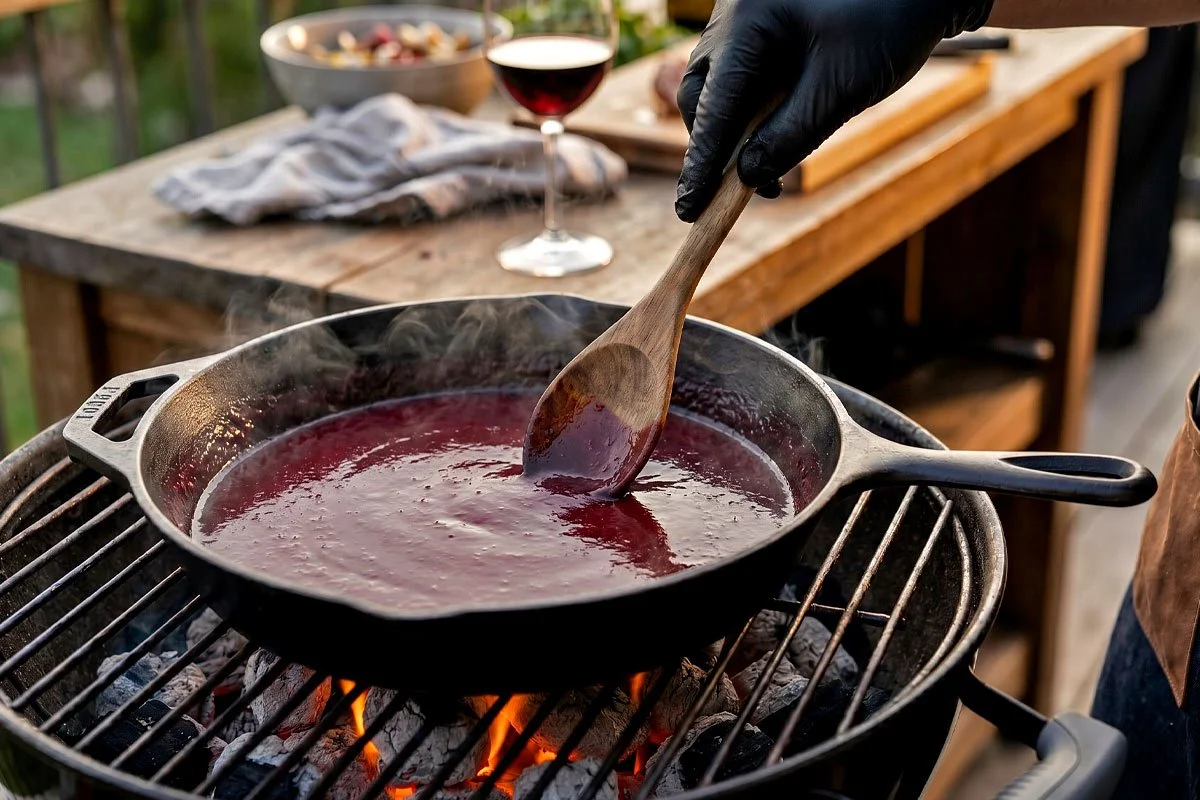
Wine isn’t just for pairing with barbecue. From marinades and brines to spritzes, braises, sauces, and glazes, here are seven ways to put wine to work on the grill and smoker
Most of my conversations about wine and barbecue focus on what’s in the glass. Thoughtfully pairing wine with brisket, ribs, steak, and smoked chicken can elevate a meal (especially when you consider your fuel source), but there is another side to the story.
Wine can be a valuable cooking ingredient in its own right.
Whether you cook over charcoal, wood, pellets, gas or an open fire, wine can add acidity, complexity, fruit character, and unique depth to a wide range of barbecue dishes. From helping to build bark on smoked meats, to creating restaurant-quality pan sauces beside the grill, wine deserves a place in your outdoor cooking approach.
Seven Practical Ways to Work with Wine and Barbecue
Here are seven very practical ways you can put wine to work in your live-fire and barbecue cooking.
But First: What Kind of Wine Should You Use?
Before we start, it’s important to remember that one rule applies: always cook with wine that you would be willing to drink. That doesn’t mean it has to be your best or most expensive bottle, but it does mean avoiding heavily processed cooking wines, or any wine that you wouldn’t actually drink on its own. Quality ingredients always matter and that holds true for wine as well.
1. Use Wine in Marinades
Best Wines: Cabernet Franc, Pinot Noir, Merlot, Riesling
Works Well With: Beef, lamb, pork, chicken
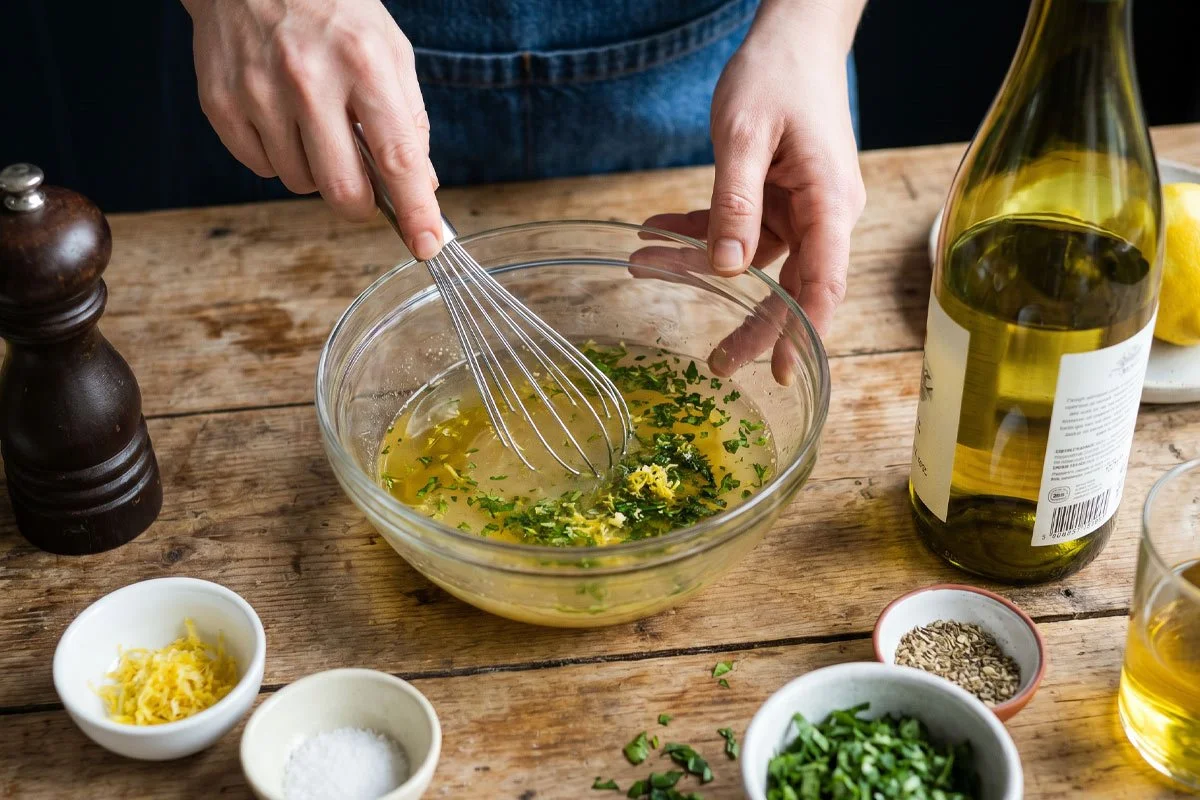
Wine contributes acidity, fruit character, and aromatic compounds in marinades that can help enhance flavour, while also helping to gently tenderize meat.
Wine has been used in marinades for centuries, and for good reason. The natural acidity of wine helps break down some surface proteins while allowing herbs, spices, and aromatics to penetrate more effectively.
For beef and lamb, reach for a medium-bodied red, such as Cabernet Franc or Pinot Noir. For poultry and pork, a dry Riesling or Chardonnay can work perfectly.
2. Add Wine to Brines
Best Wines: Riesling, Chardonnay, Sauvignon Blanc
Works Well With: Turkey, chicken, pork loin
Wine is an excellent way to elevate your brines. Wine adds subtle fruit, acidity, and aromatics while complementing the moisture-retaining benefits of a traditional brine.
Wine can be used by replacing a portion of the water in a brine (consider 10% to 20% as a starting point), adding another layer of flavour without overwhelming the meat.
A dry Riesling works particularly well in turkey brines, while Chardonnay can add richness to pork and chicken. When combined with the salt, herbs, citrus, and aromatics in your brine, wine helps to create a more nuanced flavour profile before the meat ever reaches the grill.
Note that the effect is often subtle, but that is exactly the point. Great barbecue is usually built through layers of flavour, rather than a single dominant ingredient overpowering everything else.
3. Spritz During Long Smokes
Best Wines: Gamay, Pinot Noir, light Merlot
Works Well With: Brisket, beef ribs, pork shoulder, pork ribs
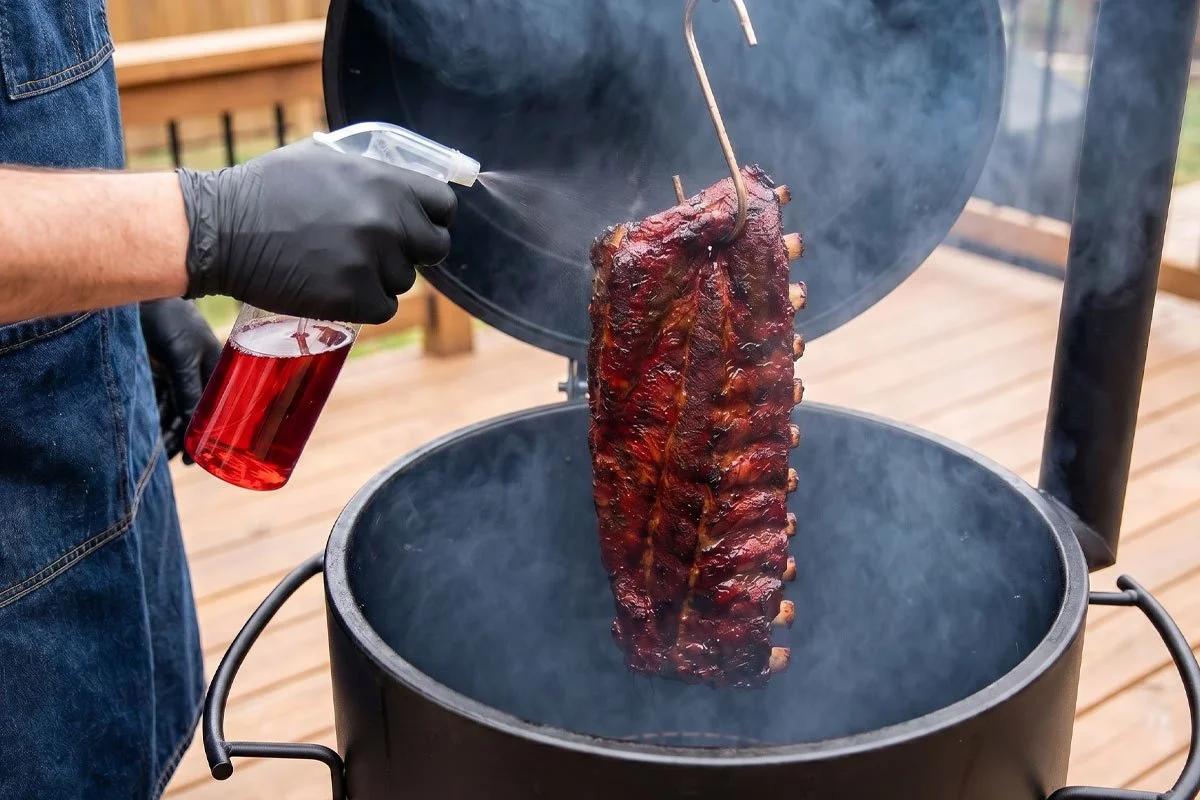
I love using wine as part of a spritz. Wine contributes moisture, acidity, and flavour while helping to develop a rich bark. When coupled with an herb wrap slapped onto the meat before or after the spritz, it’s an excellent way to layer flavour.
A lot of cooks will default to using water, apple juice, apple cider vinegar, or a combination of all three as a spritz during long cooks. Wine offers another option to really level up your game.
A fruit-forward red wine mixed with a small amount of vinegar can complement smoked beef particularly well. For pork, a lighter-bodied red or even a dry rosé can provide balance without becoming overly sweet. I like a good wine spritz when cooking asador and using an iron cross on the gaucho grill.
Also remember that no matter what you’ve read elsewhere, don’t have to spray every thirty minutes as a rule. Once bark development begins, an occasional spritz can help manage surface moisture while adding another layer of complexity to the finished product. So pay attention to what’s happening during your cook and go from there.
4. Build Better Mop Sauces
Best Wines: Pinot Noir, Merlot, Zinfandel
Works Well With: Beef ribs, brisket, pork shoulder
If you like to mop your ribs, brisket or anything else, then wine can contribute acidity and complexity as part of the mop, while also helping to carry spices and seasonings across the surface of the meat.
Mop sauces have long been part of barbecue tradition, particularly in regions where a whole hog and other large cuts are cooked over live coals.
Adding wine to a mop sauce introduces a level of depth that water or vinegar alone can’t provide. Combined with stock, herbs, spices, and a touch of fat, wine can really help to create a balanced mop that complements smoke rather than competing with it.
For beef, consider a red wine-based mop. For pork, experiment with lighter reds or even dry rosé.
5. Deglaze Cast Iron for Grill-Side Pan Sauces
Best Wines: Cabernet Franc, Syrah, Pinot Noir
Works Well With: Steaks, pork chops, lamb chops
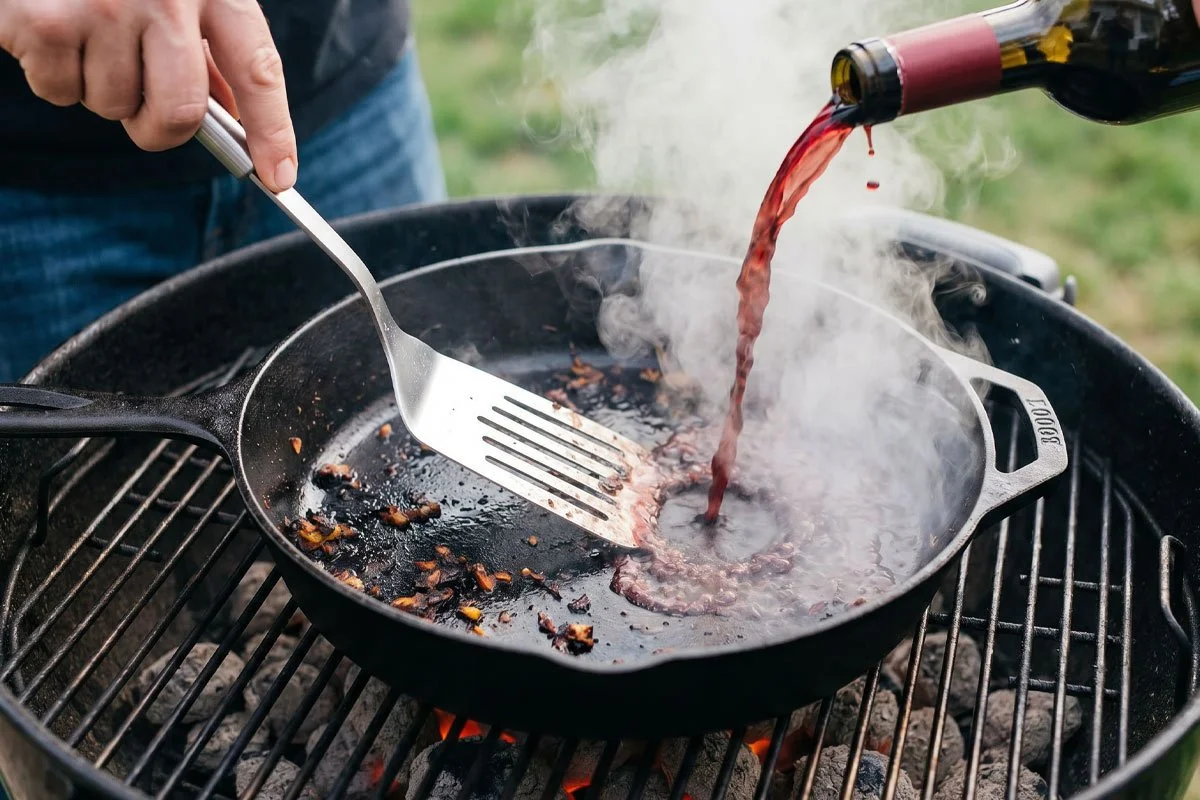
If you’re someone who likes to break out the cast iron pans over hardwood heat or in a wood-fired brick oven, wine for deglazing is a must try. It helps to lift caramelized bits from the pan and transform them into a flavour-packed sauce.
One of the simplest ways to elevate a grilled steak is to keep a cast iron skillet beside the fire.
After searing steaks or chops, add shallots, garlic, or herbs to the hot skillet. Then deglaze with a splash of wine. As the wine reduces, it captures all the concentrated flavours left behind in the pan.
Finish with butter and fresh herbs, and you have a steakhouse-quality sauce made entirely outdoors.
It is one of the easiest techniques on this list, and one of the most rewarding.
6. Braise Tough Cuts After Smoking
Best Wines: Cabernet Sauvignon, Syrah, Merlot
Works Well With: Beef cheeks, short ribs, chuck roast, lamb shanks
Wine really shines in this application. It adds richness and complexity while helping to tenderize collagen-rich cuts during the final stages of cooking.
Some of the most memorable barbecue dishes are finished in a braising liquid after several hours in the smoke.
Short ribs are a perfect example (this is one I use often). After developing colour and smoke flavour, the short ribs can be transferred to a covered pan with wine, stock, herbs, and aromatics.
As the collagen breaks down, the wine concentrates and integrates with the rendered fat and meat juices.
The result is a deeply flavourful dish that combines the best qualities of barbecue and classic braising. This is one to experiment with until your find the perfect formula for your desired outcome.
7. Reduce Wine into Glazes
Best Wines: Port, Riesling, Icewine, Cabernet Franc
Works Well With: Pork, poultry, ham, grilled fruit
A wine reduction is a classic cooking technique and it works equally well over hardwood coals or in the smoker. A wine reduction concentrates flavour while creating a glossy finish that enhances presentation and taste.
Wine reductions can truly add an elegant finishing touch to live-fire cooking — something that’s a little unexpected.
A Port reduction, on the other hand, can complement smoked pork ribs. A Riesling reduction works very well with grilled chicken or pork tenderloin. Even a small amount of Icewine reduced into a syrup can transform grilled peaches, apricots, or smoked ham.
The key to all of this is patience – and knowing when to stop (don’t over reduce). Allow the wine to reduce slowly until the flavours become concentrated and balanced.
A little goes a long way.
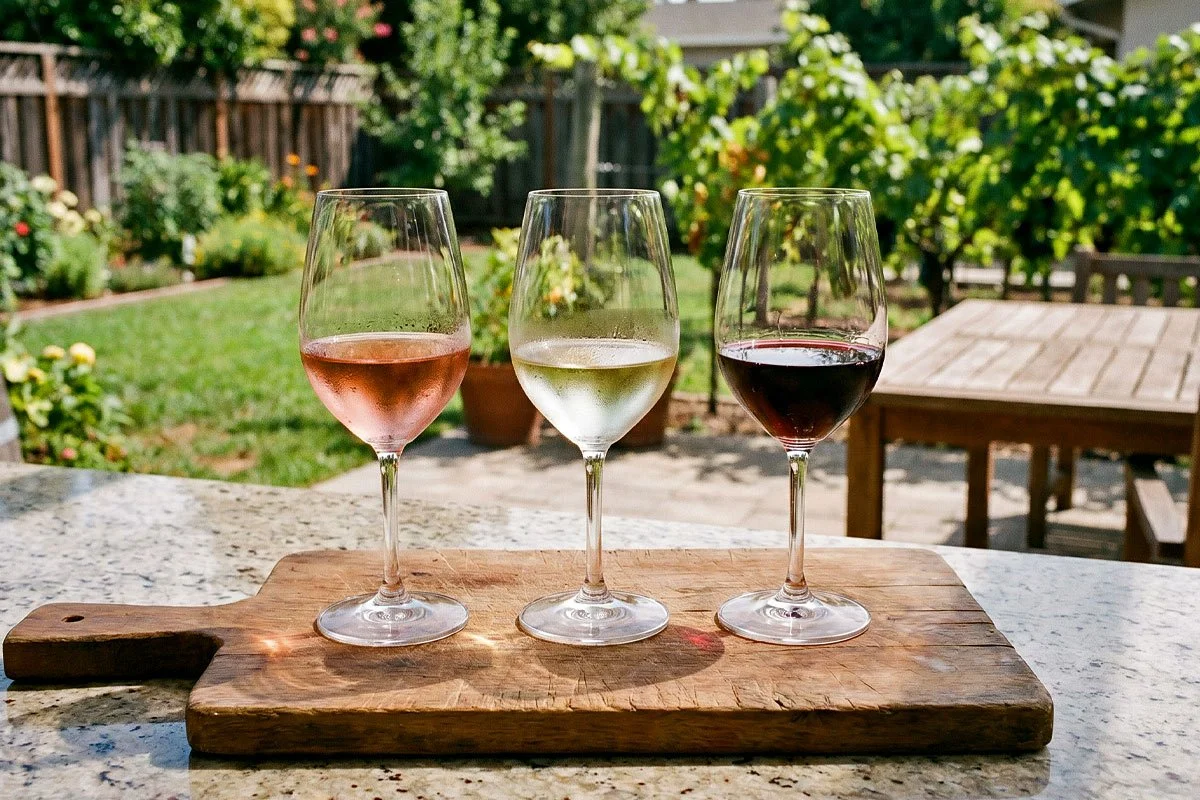
Cooking with Wine Outdoors
Wine and barbecue are often discussed as companions at the table (and they do make great friends), but wine can also play an important role during the cook itself.
From marinades and brines to braises, glazes, and sauces, wine offers countless opportunities to add flavour and complexity to live-fire cooking.
The next time you open a bottle while tending the fire, consider setting a little aside for the food as well.
You may discover that some of the best wine and barbecue pairings happen long before the meal reaches the table.
By Mike Belobradic
Founder of Smoke Fire Grill™ and the SFG Wine series, which covers everything to do with wine and live-fire barbecue. WSET designated in wine.