
What is the Maillard Reaction? (And Why it Makes Food Taste Better)
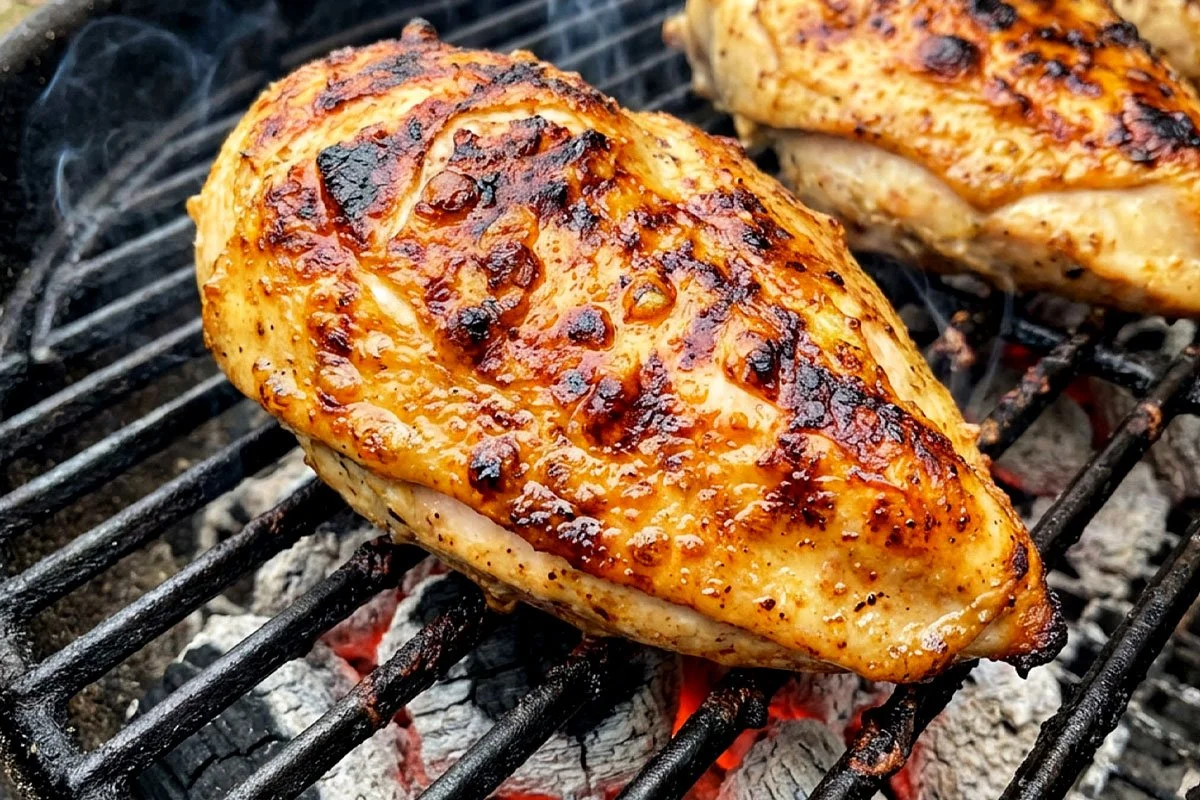
It’s not a flavour you add—it’s what happens when heat, time, and food collide.
The Maillard reaction is one of the most important principles in cooking, yet it’s also one of the most misunderstood.
A lot of people treat it like a flavour you can “add,” or a thing that you can activate with a hot pan. Some people think caramelization is the same thing (it’s not). The Maillard reaction is a process—a chain reaction between amino acids (proteins) and natural sugars that creates hundreds of new flavour compounds. (Caramelization doesn’t involve proteins.)
This Maillard reaction is responsible for deep browning on grilled meats, the nutty sweetness of roasted vegetables, and the rich crust on bread. When you’re grilling or cooking over hardwood heat, understanding this reaction is one of the fastest ways to elevate your live‑fire cooking.
The Maillard Reaction Explained: Why Your Food Tastes Better When It Browns
The Maillard reaction happens when heat transforms proteins and sugars into new flavours, aromas, and colours. It’s the foundation of searing, roasting, and grilling.
The key insight to remember is this:
The Maillard reaction is not a single moment—it’s a chain reaction. And like any chain reaction, you can influence it.
This is why principles-based cooking matters. When you understand the underlying process, you can apply it across any grill, oven, or fire setup.
What the Maillard Reaction Is Not
Clearing up common misconceptions is always a good way to help you get past some common mistakes. Here are a few things that people sometimes think is the Maillard reaction, but they’re not:
Not caramelization — caramelization is sugar-only; Maillard is sugar + protein.
Not burning — burnt food is carbonized; Maillard is controlled browning.
Not a flavour — it’s a process that creates flavours.
Not only something that happens in dry heat – moisture does inhibit the process, but it can still happen in moist long cooks, like simmering.
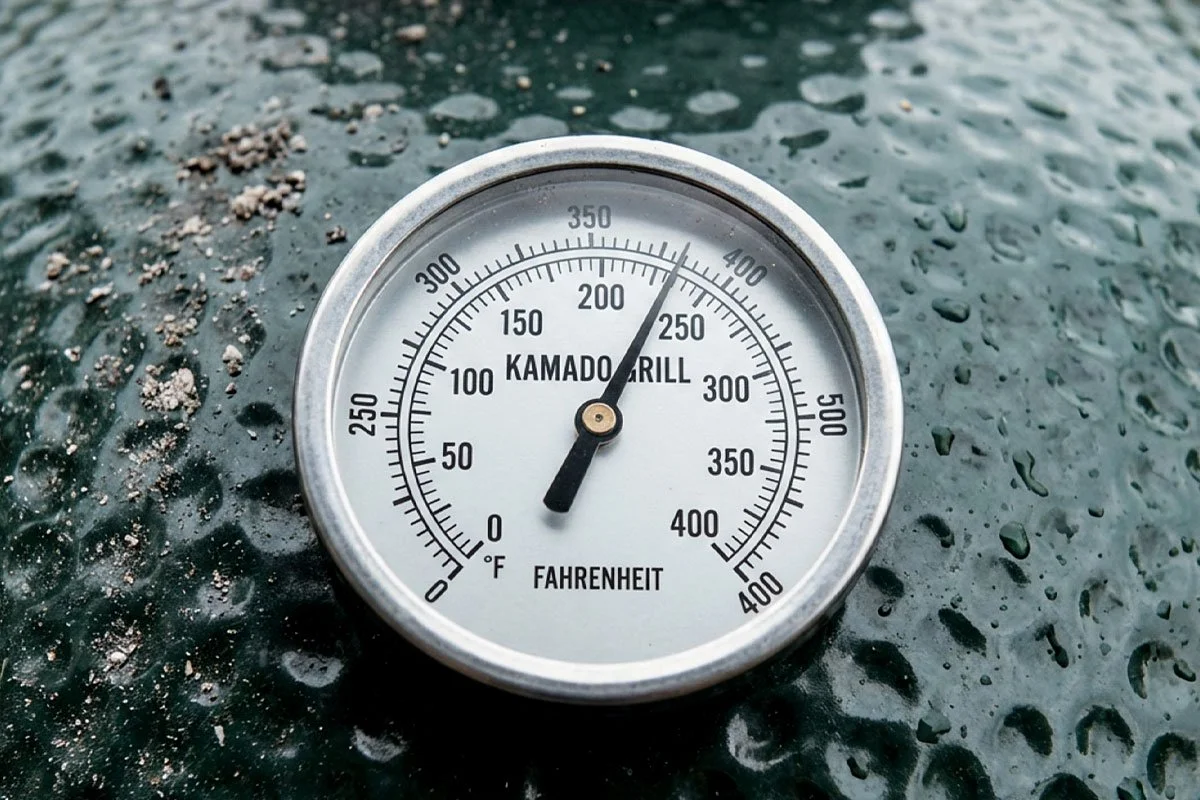
Why 350°F Became the Universal Baking Temperature
There’s a reason so many recipes say “bake at 350°F.” And if you press BAKE on an oven, the temperature will be 350°F. It’s not tradition—it’s chemistry.
The Maillard reaction begins meaningfully around 300°F (150°C), give or take. But ovens fluctuate, moisture evaporates at different rates, and food surfaces vary. Over time, cooks discovered that 350°F (177°C) is the most reliable temperature to:
push food past the evaporation point
trigger the Maillard reaction consistently
brown the exterior without burning
cook the interior evenly
This is why 350°F became the “default” bake setting in Western cooking.
What 350°F actually does
At this temperature, you get a good balance of:
Evaporation — moisture leaves the surface quickly
Browning — the Maillard reaction activates and accelerates
Interior cooking — heat penetrates without scorching
It’s the culinary equivalent of a universal zone—high enough for browning, gentle enough for even cooking.
Why this matters for grilling and live fire
Live-fire cooking doesn’t give you a dial or a knob that says High or Low heat (that’s what vents are for), but the principle still applies. Instead of chasing a number or a dial setting, you chase conditions:
A zone where moisture evaporates
A zone where browning begins
A zone where browning accelerates
A zone where burning takes over
It’s fun to get a little technical here (if you’re into cooking science at least). I wrote a post about charring vs burning, and this is where the Maillard reaction comes into play. If you think of it as a continuum, the Maillard reaction gives way to charring, which is effectively the next phase. After that, you’re into the land of burning (you don’t want to visit that land). The difference between char and burn can happen quickly, so it takes some skill and awareness to navigate that perfect tasty char.
This is why sensory training is a core part of Northern Barbecue™—your senses tell you more than any thermometer.
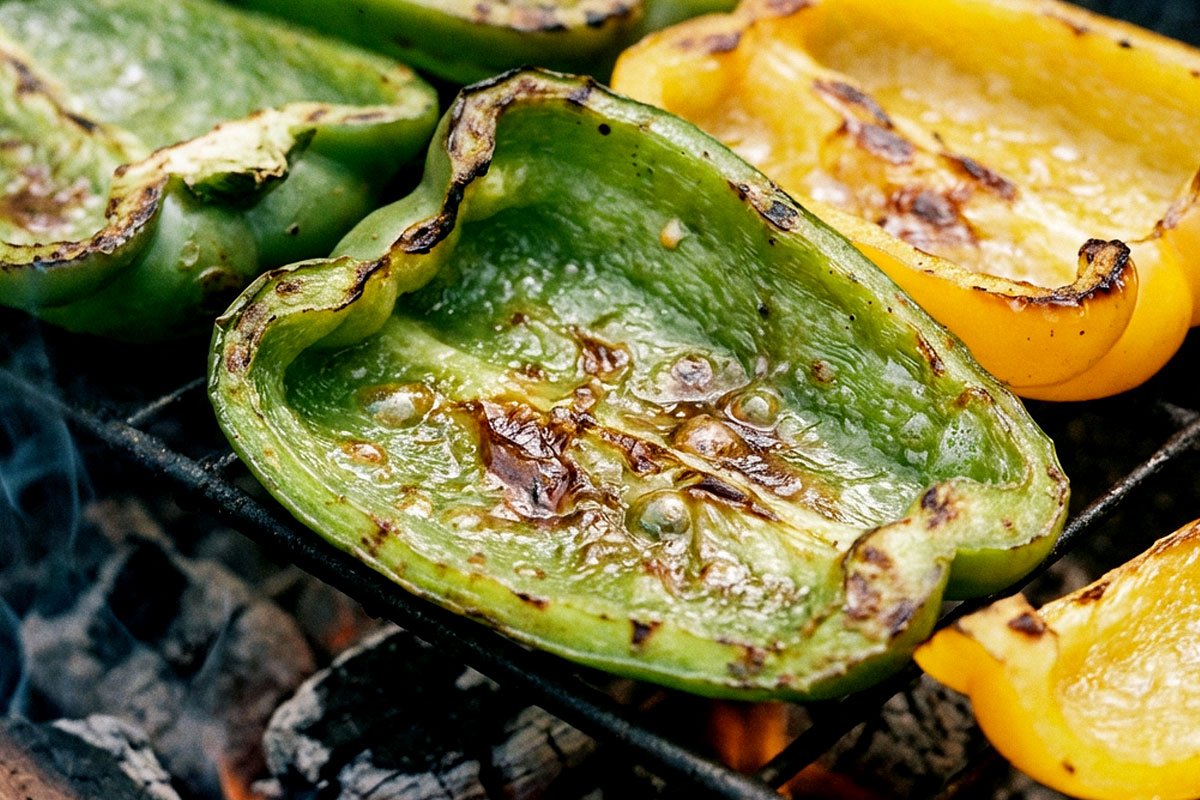
The Three Conditions You Need for the Maillard Reaction
To control browning, you need to control the environment. The Maillard reaction depends on three factors:
1. A Dry Surface
Moisture is the enemy of browning. Water must evaporate before browning can begin, and evaporation happens at 212°F (100°C). The Maillard reaction doesn’t meaningfully start until around 300°F (150°C).
If the surface is wet, you’re steaming—not browning.
As I noted earlier, there are instances where this can happen in wet conditions, but when it comes to browning or searing with live fire cooking, moisture is the enemy.
2. High Enough Heat
You need enough energy to push the reaction forward. On a grill or live fire, this usually means:
direct heat
preheated grates
a dry, hot cooking surface
strong airflow
3. Time
Even with high heat, the reaction needs a moment to develop. Moving food too early interrupts crust formation. This is where your wits and awareness come into play.
How to Control the Maillard Reaction on the Grill
Here are a few basic principles that should help you create crust on command—whether you’re cooking over charcoal, hardwood, or gas.
Dry the surface thoroughly — pat dry, air‑dry in the fridge, remove excess marinade.
Salt early or very late — salt early (45+ minutes) so moisture reabsorbs, or salt right before cooking.
Use the right heat zone — hot enough to brown, not so hot that it burns.
Avoid overcrowding — crowding traps steam and kills crust.
Leave it alone — crust forms when the surface stays in contact with heat.
Use airflow — more airflow = more combustion = more Maillard potential.
These are universal principles that are applicable to any fire tradition or dish.
How to Tell When the Maillard Reaction Is Working
Your senses are your best tools, so it pays to learn how to use them for cooking:
Sight: follow the progression by look, from blond → gold → brown → mahogany
Smell: nutty, toasty, savoury aromas
Sound: sharper sizzling as moisture evaporates
Touch: firmer surface as crust forms
This sensory approach is central to the Northern Barbecue™ curriculum because it builds intuition, not dependence on gadgets.
A Simple, Reliable Method for Better Browning
Want to test out your Maillard reaction abilities? Here is a good universal method to try that will work for steak, vegetables, fish, or bread:
Dry the surface thoroughly.
Preheat your grill or pan until it’s hot enough (not cool and not too hot).
Place the food and leave it undisturbed.
Watch for colour and smell cues.
Flip only when the crust allows the food to release naturally.
Finish in a lower‑energy zone if needed.
This method works because it respects the process.
Why the Maillard Reaction Matters for Live‑Fire Cooking
Live fire gives you something no oven or pan can: multiple forms of heat at once—radiant, conductive, and convective. This multi-heat situation creates a richer, more complex Maillard profile.
Understanding this process helps you:
build crust without burning
develop deeper savoury notes
create contrast between interior tenderness and exterior structure
pair wines more intelligently (structure meets structure)
learn how to cook with intuition, not guesswork
So the next time you want to get a nice crust or char on your food, keep all of this in mind and do some trial runs.
By Mike Belobradic
Creator of the Northern Barbecue™ Method