
Match the Wine to the Wood: The Smoke Fire Grill and Wine Approach
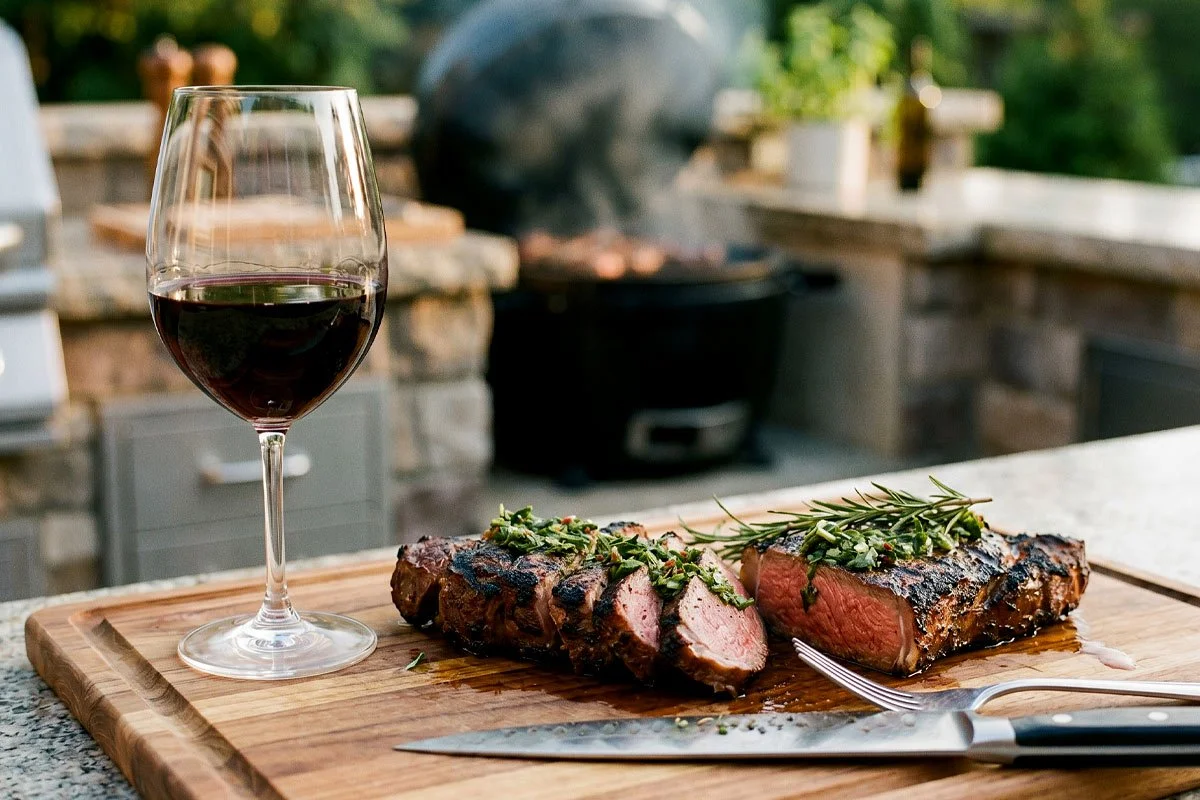
The most common piece of wine advice is also the one that falls short the most
"Red wine with red meat."
It's the most common piece of wine advice on the planet, and at a backyard barbecue, it's also the least useful.
I’ll bet that if you ask a room of grilling enthusiasts what wine goes with steak, you'll get a dozen confident, contradictory answers — Cabernet, Malbec, Zinfandel, Syrah. Every one of them will be right sometimes and wrong just as often. That happens because the question itself is incomplete.
It's not just the steak. It’s what are you grilling it with?
Lump charcoal or briquettes? Oak or maple hardwood? Reverse-seared low and slow, or hot and fast over an open flame? Because that same two-inch thick steak, cooked three different ways, is arguably three different dishes — and it deserves three different wines.
This is the starting point for everything I do under the SFG Wine banner: fire has structure, just like wine does. Once you learn to read both, "what wine goes with steak" stops being the question. The real question becomes something much more interesting.
Fire Has a Terroir Too
Winemakers talk about terroir a lot. Terroir is the specific combination of soil, climate, and site growing conditions that shape what ends up in the glass. It's treated as important information to say the least. No serious wine discussion would describe a wine without mentioning where the grapes grew.
Nobody talks that way about wood or fire. But they should.
Every wood species carries its own chemical signature — compounds like guaiacol, syringol, and other phenols that land on the surface of your food and shape how it tastes, independent of the meat itself. Oak burns moderate and balanced. Hickory is bold and assertive. Applewood is mild and slightly tangy. Mesquite is a heavyweight, almost tar-like if you're not careful with it. Change the wood and you've changed the dish, even if the protein, the seasoning, and the technique are still the same.
Fuel type adds another layer on top of that. Gas, charcoal, and true wood-fired cooking don't just differ in convenience — they differ in how much smoke compound actually reaches the food, and how the proteins on the surface respond to that heat. And technique changes it again: a slow smoke builds a deep, sustained layer of char and smoke penetration; a hot, fast sear delivers something sharper and more immediate.
The point is that wood, fuel, and technique aren't background details. Together, they're the terroir of the fire — the site-specific conditions that shape what's actually on the plate, the same way soil and climate shape what's in the glass. Want to get serious about barbecue? This is what you need to know.
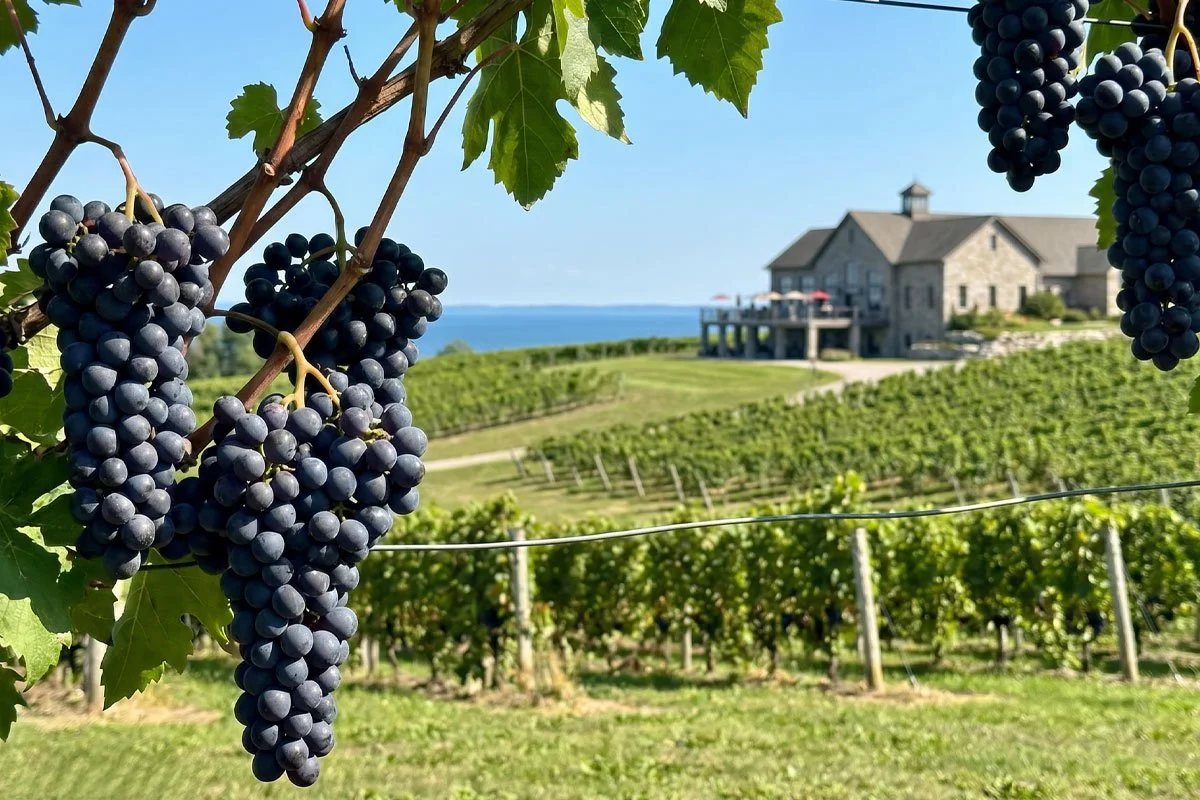
Wine has Structure Too — and Terroir Built it
This is where it gets interesting for anyone who already thinks in wine terms, because the other half of this equation is one you already know well.
A wine's structure — its acidity, its tannin, its body, how ripe or restrained the fruit is — isn't random. It's largely the product of where and how the grapes were grown. Cool-climate sites tend to preserve acidity and produce leaner, more taut wines. Warmer sites push toward riper fruit, softer acid, fuller body. Soil composition, elevation, and diurnal temperature swings all leave fingerprints on the finished wine, long before a winemaker's decisions ever come into play.
So a Niagara Pinot Noir and a warm-climate Cabernet aren't just "different reds." They're the products of two different terroirs, carrying two different structures — different acid, different tannin, different weight — into whatever you put them next to.
The SFG Wine Framework: Match Structure to Structure
Here's the whole idea in one sentence: match the wine to the wood, not just the meat.
More precisely: match the structure of the smoke to the structure of the wine. A wine's acidity is what cuts through fat and resets your palate — it needs a smoke profile it can stand up to, or it gets flattened. A wine's tannin is what grips and softens against protein and char — pair it with a smoke that's too delicate, and the tannin overwhelms everything. Pair it with something too aggressive, and the wine disappears entirely. Ripeness and body need to sit in proportion to the intensity of the wood.
Applewood's light, tangy smoke calls for a wine with its own acidity to match it — a dry Riesling or an unoaked Chardonnay for poultry and pork, a lighter red like Gamay or cool-climate Pinot Noir when it's on red meat. Hickory's bold, assertive smoke needs a wine with real fruit and structure behind it — think Zinfandel or Syrah. Oak-smoked beef or lamb pairs naturally with Cabernet Sauvignon or a Bordeaux-style blend, because the wine and the smoke are, quite literally, made of related wood.
That's the system. Everything else — the full wood-by-wood breakdowns, the fuel-type comparisons, the reasoning behind each pairing — is where I've already gone deep, and where I'll keep going.
Where to Go Deeper
If you want to learn more about each piece of this framework, start here:
Best Wines for Different Woods → — a wood-by-wood breakdown of hickory, oak, cherry, maple, mesquite, and applewood, and what each one demands from the glass
Gas vs. Charcoal vs. Wood-Fired → — how fuel type changes protein and smoke, independent of wood species
Red Wine List → and White Wine List → — ready-to-use pairing shortlists built on this framework
This is also (not surprisingly) the exact conversation I bring to wineries and events under the Smoke Fire Grill™ & Wine banner. A live tasting that’s built around this same idea — walking a room through wood, fuel, and technique the way a sommelier would walk them through a vertical tasting, that is what tells a story. If you're planning a Niagara-area event, a wine club night, or want a genuinely different kind of pairing experience for your guests, I'd love to talk.
Mike Belobradic is the creator of the Northern Barbecue™ Method and the Smoke Fire Gill™ & Wine approach to live-fire and wine pairing, WSET-certified, based near Niagara wine country.